ActionAid Tasks African Leaders On Collaboration To Tackle Debt Crisis

ActionAid has called on African governments to coordinate collectively for a resolution to debt crises, based on radical renegotiation or debt cancellation, including through advancing this case in climate negotiations; and to pursue alternative economic paths that place quality public services, social and economic justice at the heart of building sustainable and truly sovereign states. The resolution was made by AA Country Directors at the just concluded IMF/ World Bank Annual Meetings in Marrakech, Morocco. They further called on the two Institutions to move away from the failed neoliberal economic model, to stop imposing austerity policies and constraints to public sector wage bills, and instead to support debt cancellation and ambitious and progressive tax reforms nationally and internationally. “The IMF and World Bank have imposed a neo-colonial model of economic development based on exploitation and extraction from the Global South which has given rise to regular debt and economic crises. “These crises have then been used to justify the imposition of harsh loan conditions and coercive policy advice on African governments, perpetuating dependency and stripping away the capacity of States through cuts to public spending. “Although some of the rhetoric has changed in recent years, in practice the IMF and World Bank are still attached to this cult of austerity, undermining progress on health, education and other public services and blocking Africa’s ability to respond and adapt to the climate crisis. “ActionAid’s research has shown in particular that IMF enforced cuts and freezes to public sector wage bills have consistently blocked the recruitment of urgently needed teachers, nurses, midwives and other public sector workers. “We have documented the gendered impact of these cuts, with women being the first to lose access to services, the first to lose opportunities for decent work and the first to absorb the rising tide of unpaid care and domestic work. “Without access to low-cost financing, many African governments now find themselves facing a deeper debt crisis than ever before – with UNCTAD recently finding that the amount spent on interest payments is often higher than spending on either education or health,” they said.
Nigeria, Angola Strengthen Bilateral Economic Ties

Nigeria and Angola, in an effort to enhance economic growth and promote bilateral trade, have strengthened their cooperation. This was revealed during the inaugural Angola-Nigeria Business Forum held in Abuja recently. Speaking during the business forum in Abuja, the Secretary of State for International Cooperation and Angolan Communities, Domingos Lopes, who represented the Minister of External Relations, Angola, His Excellency Téte Antonio, stated that Angola will invest more in strengthening economic and commercial relationship with Nigeria in other to gain vast experience in the diversification of economic production. Angola’s Ambassador, Mr. Jose Bamoquina Zau, highlighted the determination to bring a significant number of Angolan investors to Nigeria, fostering strong partnerships in various sectors, including manufacturing, mining, oil and gas, commerce, tourism, and education. Nigeria’s Minister of Information and National Orientation, Alhaji Mohammed Idris, affirmed Nigeria’s eagerness to support Angola’s domestic and foreign aspirations, expecting reciprocity. An 8-man Angola-Nigeria Business Council was inaugurated during the event. During her vote of thanks, the president of the Angola-Nigeria Business Council, Fifi Ejindu, said the council was established to serve as a driver for economic cooperation between the two countries, with the private sector of both nations taking the lead. She said, “We will continue in the council to seek opportunities for investment and support entrepreneurship on a global level. So, the job has just begun, but I assure you that we are very committed to this cause.”
Shettima Departs To China For 3rd Belt, Road Forum

Nigeria’s Vice President Kashim Shettima on Sunday departed the country to represent President Bola Tinubu at the 3rd Belt and Road Initiative (BRI) Forum in Beijing, China which is scheduled to hold between October 16 and 18. Mr Stanley Nkwocha, Senior Special Assistant to the President on Media and Communications, Office of the Vice President, disclosed this in a statement in Abuja on Sunday. Nkwocha said that Shettima would join world leaders from over 130 countries in Africa, Asia, Europe and Latin America to deliberate on the theme, “High-quality Belt and Road Cooperation: Together for Common Development and Prosperity.” According to him, the vice president is expected to avail Nigeria of the platform provided by the forum to woo investors for more developmental projects. Nkwocha added that the Vice President would hold bilateral meetings with other world leaders to promote Nigeria’s trade and investment relations in line with the economic development agenda of the Tinubu administration. “The 2023 edition of the BRI will mark the 10th anniversary of the Belt and Road Initiative (BRI) championed by the President of China, Xi Jinping, as an initiative for global infrastructure development strategy. “Adopted and launched by the government of the Peoples Republic of China in 2013. “The initiative seeks international action to enhance cooperation and promote infrastructure investment in nearly 70 countries across Asia, Africa and Europe through land and maritime routes.” He recalled that in 2018, former President, Muhammadu Buhari, on behalf of Nigeria, signed the Belt and Road cooperation agreement with China. “Nigeria and other partner-countries across the world are to benefit from the initiative in areas of infrastructure investments such as ports, skyscrapers, railroads, roads, bridges, airports, dams and coal-fired power stations.” Nkwocha said that the delegation of the vice president to the forum includes the Minister of Foreign Affairs, Amb. Yusuf Tuggar, Minister of Budget and Economic Planning, Atiku Bagudu and the Minister of Transportation, Sa’idu Alkali. Others are the Minister of Works, David Umahi, Minister of Industry, Trade and Investment, Dr Doris Uzoka-Anite; the Managing Director of the Nigeria Railway Corporation, Fidet Okhiria, and the Director-General, Infrastructure Concession Regulatory Commission, Michael Ohiani. In a related development, Nkwocha said in pursuance of the food security and diversification policy of the Tinubu administration, the vice president will, from China, depart for the United States of America, USA. “While in US as the special guest, Shettima will deliver a keynote address at the African Development Bank (AfDB) and World Food Prize – facilitated Norman E.Borlaug International Dialogue slated to commence on October 24th, 2023. “Also, he will join other African international leaders, Heads of State and Government who in the past have delivered keynote addresses at the Borlaug Dialogue. “They include former United Nations Secretary-General, Kofi Annan; World Food Prize Laureates; Ghana President, John Kufuor, AfDB President, Akinwunmi Adeshina and former President Olusegun Obasanjo and others.” The media aide also stated that Shettima was expected to highlight reforms being instituted in the Nigerian Agrifood sector by the Tinubu administration. “The vice president will engage several stakeholders, partners and investors in opportunities for investments in Nigeria. “Several meetings and engagements have been slated for the vice president who is expected to be back to the country after his commitments in the US.”
IMF Assures Of Stronger Collaboration With Members To Tackle Global Headwinds

The International Monetary Fund (IMF) has said it is collaborating with 190 countries across the world to facilitate international trade, contribute to high levels of employment and real income, promote exchange stability, and help member countries address payments imbalances. In spite of uncertainty of global outlook, the IMF noted, the world economy has shown resilience, but in most countries near- and medium-term growth outlooks remain subdued and downside risks are elevated. In its 2023 report, the IMF stated that tightening monetary policy stances to bring down inflation continues to weigh on most economies. The Bretton Woods Institute noted that the impact of the Russia-Ukraine war has impacted on macro-financial stability, including financial sector stress, adding that though inflation has moderated somewhat, underlying price pressures remain sticky. “Debt vulnerabilities are elevated, with 60 percent of low-income countries and 25 percent of emerging market economies in or at risk of debt distress. Debt-restructuring processes have been sluggish. Meanwhile, inequality persists within and across countries, and a record 350 million people in 79 countries face acute food insecurity. “Rising geoeconomic fragmentation risks are making it more difficult to respond to shared challenges, which calls for decisive steps to rebuild trust. The global peace dividend is shrinking, and with it, the resources available to support the vulnerable. Protectionism is on the rise, hampering global trade and eroding hard-won gains from integration. Confronting shared challenges, such as the climate crisis and digitalization, will require overcoming differences and boosting international cooperation,” it said. The lender said it is committed to collaborating with its members to find pragmatic solutions to move the global economy onto a sustainable upward trajectory. “Ensuring sound domestic policies, bolstering global trade, and strengthening institutions will counter uncertainty and fortify macroeconomic resilience. Stepped-up international assistance and solutions to address high debt burdens will support vulnerable countries. Investing in digital technologies will help build a more prosperous and inclusive future. And jointly tackling climate change will sustain our planet,” the report stated.
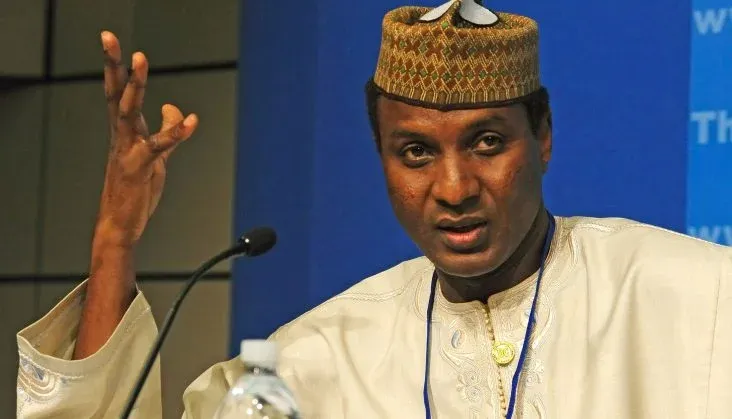
Niger will overcome ECOWAS sanctions, says new PM Zeine

Lamine Zeine, Niger’s newly appointed Prime Minister, has characterized the sanctions imposed on the nation’s military junta as an “unfair challenge,” while expressing optimism that Niger will ultimately overcome them. Despite this obstacle, Zeine reaffirmed Niger’s commitment to fostering economic cooperation with the Economic Community of West African States (ECOWAS). Following the military’s ousting of democratically-elected President Mohamed Bazoum on July 26, which led to the suspension of the constitution and the installation of a transitional government, ECOWAS responded with sanctions against the new military junta. The regional body demanded an immediate return to constitutional order and activated a standby force in preparation for potential military intervention in Niger. Prime Minister Zeine acknowledged the significance of possible negotiations with both ECOWAS and neighbouring Nigeria, which had taken a lead role in addressing the situation in Niger. He emphasized the importance of preserving the historical relationship between Niger and ECOWAS, originally founded as an economic group to promote prosperity in West Africa. Zeine expressed his hopes for maintaining the economic solidarity envisioned by ECOWAS but noted concerns if political and military considerations overshadow this objective. He highlighted Niger’s dedication to working within the framework of regional cooperation while also voicing the nation’s desire to address issues in a balanced manner.