Overhaul Power Sector to Unlock Nigeria’s Economic Growth in 2025 – Rewane

Bismarck Rewane, the renowned economist and CEO of Financial Derivatives Company Limited, has emphasized the need for power sector reforms as a critical factor in achieving Nigeria’s proposed 4.6% economic growth rate in the 2025 budget. In an interview, Rewane shared his economic outlook for 2025, explaining his projection of 25% inflation, despite hopes for a significantly lower rate. According to Rewane, inflation will persist due to factors such as slow GDP growth and the mismatch between money supply and goods production. However, he also suggested that inflation would ease gradually throughout the year, though it is unlikely to dip below 25%. “Inflation is beginning to moderate and will continue to decelerate, but it’s unlikely to meet the optimistic 15% target set in the 2025 budget,” Rewane stated. He predicts that inflation will decrease from 34.6% to 25% within a year, with a monthly easing rate of around 0.8%. Addressing the monetary environment, Rewane noted that a reduction in inflation could lead to a corresponding drop in the Monetary Policy Rate (MPR), potentially making the financial landscape more conducive for economic growth. Rewane also projected a Naira exchange rate of N1,550/$, based on the expectation that Nigeria’s economy would move closer to dynamic equilibrium. This would reduce the misalignment between the official and parallel exchange rates, as well as between interest rates and inflation. However, the economist emphasized that without significant reforms in the power sector, Nigeria’s growth targets would remain out of reach. Rewane underlined that resolving power sector challenges is vital for spurring productivity and ultimately ensuring the country’s economic expansion in the year ahead.
DisCos to halt charging customers for meter replacement

The Federal Government, through the Nigerian Electricity Regulatory Commission (NERC), has taken a firm stance against Distribution Companies (DisCos) that attempt to charge customers for replacing faulty or obsolete meters. This directive stems from Order No. NERC/246/2021, which outlines the responsibilities of DisCos in maintaining and replacing meters within their network. Under the order, DisCos are required to replace defective meters at no cost to the customer, provided the damage was not caused by the customer. The commission also prohibited the practice of moving customers with malfunctioning meters to estimated billing, stressing that such actions are not permissible under its regulations. NERC has urged affected customers to report cases where DisCos violate this order. It provided multiple channels, including phone lines and an email address, for lodging complaints. The commission reaffirmed its commitment to ensuring that DisCos adhere to regulatory standards and warned that any violations would attract penalties. This move is part of NERC’s broader effort to protect consumers and ensure that electricity providers comply with industry regulations.
Vandals Attack Disrupt power on Lokoja-Gwagwalada Transmission Line

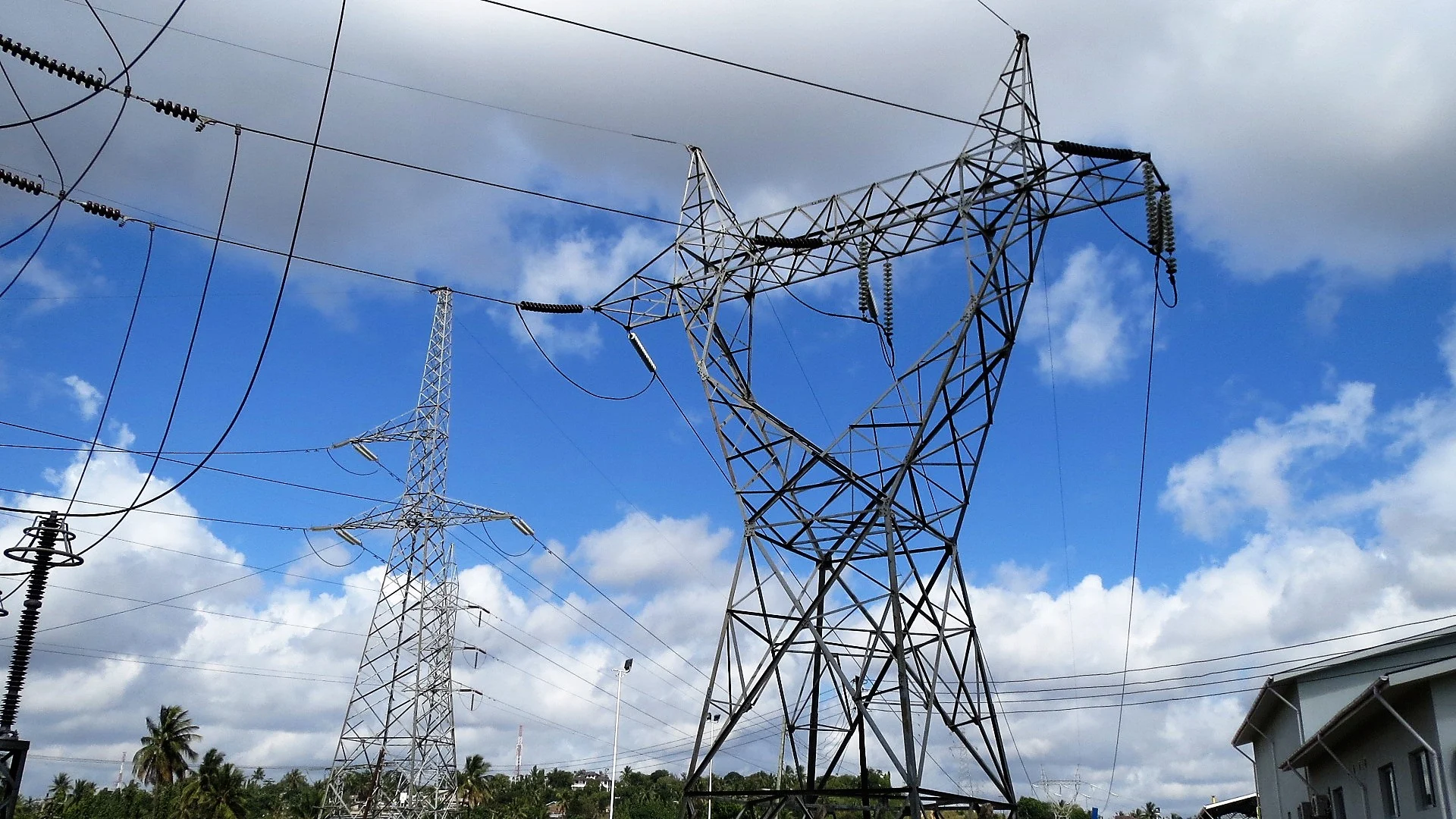
These are very difficult times for Nigeria, as the “giant of Africa” is buffeted by a barrage of security challenges nationwide. The latest is that the Lokoja-Gwagwalada transmission line, a key component of Nigeria’s power grid, has been disrupted due to vandalism. Three towers along this line were targeted, resulting in damaged infrastructure and missing spans of aluminum conductors. This incident affects power transmission on the main route, though power continues via an alternative circuit. The Transmission Company of Nigeria (TCN) is actively working to replace the stolen conductors and address the situation. Rising cases of vandalism on power infrastructure are posing challenges to Nigeria’s power stability, prompting TCN to call on local communities to assist security forces in safeguarding transmission facilities.
National Grid Collapses Again, Triggering Nationwide Blackout

Nigeria’s national electricity grid collapsed on Saturday, marking the third failure in just one week. The grid recorded zero megawatts as of 9:10 a.m., leaving the country in darkness once more. This latest collapse brings the total number of grid failures to eight in 2024, with earlier outages occurring in February, March, April, July, and August. The recurring power disruptions have been linked to outdated infrastructure. Nigeria’s power minister, Adebayo Adelabu, has stressed the need for improvements in power systems, including a push for decentralisation, allowing multiple regional grids to operate independently. This would reduce the widespread impact of failures. Despite earlier reports of a decline in system disturbances, the national grid’s failures remain a pressing issue.
Electricity tariff hike: NLC, TUC Picket NERC, DisCos offices today

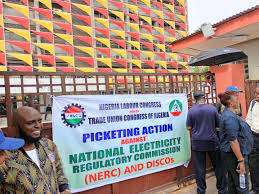
If they keep their words, the Nigeria Labour Congress (NLC) and the Trade Union Congress (TUC) will today, picket the office of the Nigerian Electricity Regulatory Commission (NERC) and the distribution companies (DisCos)’s premises nationwide over the hike in electricity tariff. This is following a hike in the tariff for electricity consumers who enjoy at least 20 hours of daily power supply. “We write to inform you of the picketing action scheduled to take place in the offices of the NERC and Electricity Distribution companies (DISCOS) in all states, including the FCT,” the unions said in a joint statement by NLC’s Ag General Secretary Chris Uyot and his TUC counterpart Anka Hassan. “The action will jointly take place on Monday, 13th of May, 2024 nationwide simultaneously. “Therefore, the two Labour centres are directed to work together to carry out this important action. “While counting on your usual cooperation, kindly accept the assurances of our goodwill and highest regards.” Though the NERC had reviewed the tariff, the labour unions said they were picketing the agency’s office as well as the premises of distribution companies after a Sunday reversal deadline failed. The recent tariff hike for electricity consumers has continued to draw comments from several quarters. With inflation rising to new highs and Nigerians grappling with the removal of petroleum subsidy, the increase in tariff was met with stiff opposition. Human rights lawyer Femi Falana (SAN) had claimed that the Federal Government was raising funds for the “cash-strapped” DisCoS with the tariff hike. But while defending the move, the Minister of Power Adebayo Adelabu said the Federal Government will pay about N1.8trn in electricity subsidy in 2024. He argued that the Electricity Act, 2023 made provisions for the review of tariffs twice yearly. “Review of tariff is actually legal once it is within the exclusive responsibility of the Nigerian Electricity Regulatory Commission (NERC),” he said on an edition of Channels Television’s Politics Today. “The Act actually provides for review twice in a year, every six months,” he said. Following the clapback generated by the move, the House of Representatives asked NERC to suspend the implementation of the tariff hike.
DisCos Record 95.21% Market Remittance In Q2 2023 –NERC

The Nigerian Electricity Regulatory Commission (NERC) has stated that electricity distribution companies (DisCos) recorded 95.21 percent market remittances in the second quarter of 2023. This represents the highest remittance by the distribution companies so far. The Commission, in its just published ‘Electricity on Demand; report, on Tuesday, indicated that the combined upstream bill that DisCos were expected to pay totaled N194.69 billion, comprising N154.04 billion for generation costs from the Nigerian Bulk Electricity Trading (NBET) and N40.65 billion for transmission and administrative services facilitated by the Market Operator (MO). Out of this amount, the DisCos remitted a total of N185.36 billion (N152.48bn for NBET and N32.88bn for the MO), leaving an outstanding balance of N9.32 billion, representing a remittance performance of 95.21 per cent in Q2 2023 compared to the 67.43 per cent recorded in the previous quarter. Industry analysts believe that the improved remittance by the DisCos in the quarter indicates that they did better in fulfilling their financial obligations to NBET and MO, ensuring a higher percentage of payments made in relation to the total amount due. On revenue generation, the report indicated that the DisCos collected a total of N267 billion in revenue in Q2 2023 reflecting a collection efficiency of 75.54 per cent for the quarter out of the total billing value amounting to N354.61 billion. The Commission reported that the improved revenue generation capacity showed an improvement of 6.79 per cent when compared to the first quarter of 2023, when the collection efficiency stood at 68.75 per cent. The NERC linked the boost in collection efficiency to two main factors, namely the increased metering of consumers, which ensured a more accurate measurement of electricity consumption, as well as the DisCos’ sundry collection campaigns targeting pre-paid customers, which encouraged timely and complete remittances. The report further said that the ATC&C loss stood at 38.41 per cent and comprised technical and commercial losses of 18.47 per cent and collection losses of 24.46 per cent. Even then the ATC & C loss still reflected an improvement, as it decreased by 7.98 percentage points when compared to the 46.39 per cent loss recorded in Q1 2023.
FG To GenCos, DisCos: No More Excuses Over Poor Power Supply

The Minister of Power, Adebayo Adelabu, has warned electricity generating and distribution companies over the poor distribution of electricity to Nigerians stressing that the government will no longer listen to their excuses. Adelabu, who made this known to Discos and generating companies during a meeting Saturday in Abuja, said the meeting was to find a lasting solution to the issues surrounding power distribution. According to a statement signed by the Minister’s Special Adviser, Strategic Communication and Media Relations Bolaji Tunji, Adelabu said: “We called this meeting to learn from you and the only way to salvage a bad situation is to understand the real issues on the ground. “Power is one of the most important things we need to energize the economy in terms of achieving the desired economic growth and Industrial development. ”The President has identified the power sector as a major driver of economic growth; therefore no excuse will be entertained for non-performance.” The minister also said that the meeting will become regular to create a stable and accessible environment that will enable discussions surrounding the generating, transmitting, and distribution value chain of electricity to be reviewed and decisions reached. He added that this development will make an impact in the power sector within two to three years.
DisCos raked in N247.33bn revenue in Q1 2023 -NBS

Data from the National Bureau of Statistics (NBS) has revealed that there was a slight increase in the number of total number of customers in the second quarter of 2023 with the number moving to 11.47 million from 11.27 million in the first quarter of 2023, indicting a 1.84 per cent increase. In its Nigeria Electricity Report Q2 2023: Energy Billed, Revenue Generated and Customers By DISCOS, the bureau stated that on a year-on-year basis, customer numbers in Q2 2023 rose by 6.17% from 10.81 million reported in Q2 2022. Similarly, metered customers stood at 5.47 million in Q2 2023, indicating a growth of 3.10% from 5.31 million recorded in the preceding quarter. “On a year-on-year basis, this grew by 10.40% from the figure reported in Q2 2022 which was 4.96 million. In addition, estimated customers during the quarter were 6.00 million, higher by 0.72% from 5.96 million in Q1 2023. “On a year-on-year basis, estimated customers increased by 2.58% in Q2 2023 from 5.85 million in Q2 2022,” it said. The coordinating agency for all statistics in Nigeria added that revenue collected by the DISCOs in Q2 was N263.08 billion from N247.33 billion in Q1 2023. “On a year-on-year basis, revenue generated in the reference period rose by 39.63% from N188.41 billion recorded in Q2 2022. “Electricity supply was 5,909.83 (Gwh) in Q2 2023 from 5,851.87 (Gwh) in the previous quarter. However, on a year-on-year basis, electricity supply increased by 13.06% compared to 5,226.97 (Gwh) reported in Q2 2022,” it said.
Poor power supply stunting growth of Nigeria’s vibrant manufacturing sector

The power sector that is the livewire of any economy has refused to work efficiently in Nigeria. This has rubbed off on the manufacturing sector as many have had to close shop due to the high cost of alternative energy. Experts are in consensus that except the power sector works efficiently, getting the manufacturing sector back to its feet would be a herculean task, BENJAMIN ORISEMEKE writes. Once a manufacturing hub in the West African sub-region, that has not been the case for over two decades as a sector that once stood strong is now lying prostrate due to several factors that still hold the Nigerian economy down. From the days of the Electricity Company of Nigeria (ECN) through the numerous attempts to commercialise the sector to when it was changed to the Power Holding Company of Nigeria (PHCN) and finally unbundled and privatized, one thing still remains constant, which is that the same structural issues continue to dug the sector. There was, however, a glimmer of hope when in November 2013, the Goodluck Jonathan administration sold the generation and distribution part of the sector. Many thought the sector would be able to achieve its potentials but alas, despite all the promises by investors of turning the sector around, it has been the same old stories. Dire Straits Current operating figures reveal that Nigeria’s power sector is in dire straits. The sector experiences many broad challenges related to electricity policy enforcement, regulatory uncertainty, instability in gas supply, transmission system constraints, and major power sector planning shortfalls that have kept it from reaching commercial viability. In 2022, the Nigerian Electricity Regulatory Commission (NERC) numbers showed that independent power plants (IPPs) accounted for 31.2% of total Generating Companys’ (GenCos) capacity. This indicates a 300 basis points decline from 2021 due largely to gas constraints and faulty machinery. In addition, on average, only five IPPs: Azura-Edo (26%), Odukpani (19%), Okpai (16%), Afam VI (15%), and Rivers IPP (8%) jointly accounted for circa 84% of the power generated from the 12 independent power producers in the last four years, due partly to gas constrain. The World Bank’s 2020 Ease of Doing Business report showed that 47 percent of Nigerians lack access to electricity supply. This drastically reduced the contribution of the private sector to the economy As of 2021, the African Development Bank (AfDB) in a report put Uganda’s electricity sector as the continent’s best-regulated sector. According to AfDB’s 2021 Electricity Regulatory Index, other strong performers included Kenya and Tanzania, Namibia, and Egypt. Nigeria placed 23rd on the ranking, South Africa (10th), and Ghana (17). Grid performance data from the Federal Ministry of Power in March showed that electricity generation on the national grid was 4,456.8MW. An analysis of randomly picked figures from the grid performance data indicated that power generation had stayed above the 4,000MW mark for months, while the country had yet to record any total grid collapse this year, unlike in 2022. Also, according to the data, on March 2 and 3, 2023, power generation on the grid was 4,859.8MW and 4,962.7MW respectively, while it was 4,753.9MW on February 23, 2023. A recent report by the electricity Think tank Group, comprising the Society for Planet and Prosperity, GCA Capital Partners Climate Advisors, indicates that about 75 percent of electricity consumed in Nigeria, comes from diesel and petrol-powered generators. The Manufacturing sector bears the brunt The lack of adequate power supply in Nigeria is crippling the economy. That significantly explains why many manufacturing companies have relocated to other countries in West Africa, where the power supply is stable. Recent data from the Manufacturers Association of Nigeria (MAN) revealed that between 2015 and 2019, 320 manufacturing companies shut down operations and others left the country due to unstable power supply. Diesel and petrol-powered generators are reported to account for about 25,000MW, while the national grid provides about 4,000MW, far less than what is needed for economic growth and development. Available records indicate that business owners spend about N6.05 trillion on generators. Experts say economic loss due to grid collapse is 2 per cent of Nigeria’s Gross Domestic Product (GDP). Also, most of the MSMEs have identified unreliable electricity as a major challenge to their businesses. Even MSMEs are willing to switch to renewable energy. Figures from the Nigeria Electricity Regulatory Commission (NERC) show that in one year, electricity consumers paid N750 Billion as tariffs, while the national grid reportedly suffered system collapse up to 50 times. According to a World Bank report, as a result of poor power supply in Nigeria, businesses lost an excess of N96.4 trillion in the last nine years. This amounts to an average yearly estimate of $29billion. Small and big businesses that depend on diesel for their operations are struggling to survive due to the high cost of the product. Changing the narrative Already, the epileptic power situation has caused quite a number of small businesses to close shops resulting in job losses. Creditors such as banks and other private equity also share in the losses when they can’t get their money back. The high cost of running manufacturing plants on generators is one of the reasons most local companies have failed to be competitive or carry out new employment. In spite of the scary scenarios, it is not all gloom and doom for the country’s manufacturing sector. Experts are confident that with the massive work in the sector in the last 8 years, it is bound to experience a new lease of life. This is coupled with the legislation that now empowers States to establish their own power plants. During his inaugural speech Monday in Abuja, President Bola Ahmed Tinubu, said “his administration shall continue the efforts of the Buhari administration on infrastructure. Progress towards national networks of roads, rail and ports shall get priority attention”, he said. Experts have opined that to get the country’s manufacturing sector working again, the present administration must fix the power sector. Experts Speak Regional Director for Infrastructure West &