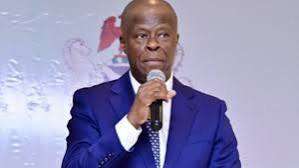
BREAKING: Tinubu effectively kicks off student loan scheme in Aso Rock

Tinubu Appoints 8 New Permanent Secretaries 

By Doris Isreal Ijeoma Following a mild amendment to the Student Loan Scheme, the Federal Government has effectively commenced the programme. As of the time of filing this brief report, the President, Bola Tinubu is currently inaugurating a presidential committee to drive the Scheme at the State House, Abuja. To kick start the programme, the President had recently approved ₦35 billion to be disbursed through specific criteria by the Nigerian Education Loan Fund, NELFund, targeting 70,000 initial applicants. Jim Ovia who was appointed by Tinubu to Chair the Governing Board of NELFund had approved the disbursement of loans to successful applicants during its inaugural meeting in Abuja last month. At the inauguration currently taking place in the Villa, Tinubu is expected to give the implementation team terms of reference to ensure the scheme does not derail from its mandate. Details later…

Tinubu’s anniversary: FG begins N75,000 cash payment to 75 million Nigerians

The Federal Government announced on Tuesday the reinstatement of the suspended social investment programme, aimed at providing direct payments to 75 million Nigerians across 50 million households. This initiative is intended to alleviate the hardships faced by citizens, particularly vulnerable groups, as disclosed during a ministerial sectoral briefing marking President Bola Tinubu’s first year in office. Wale Edun, the Minister of Finance and Coordinating Minister of the Economy, revealed that the cash transfer programme had undergone significant overhauls to address and mitigate fraud. This announcement follows the suspension of all National Social Investment Programme Agency (NSIPA) activities by President Tinubu on January 12 for a six-week period, due to alleged mismanagement. Concurrently, Betta Edu, the Minister of Humanitarian Affairs and Poverty Alleviation, was suspended on January 8. The intervention programmes affected by this suspension included N-Power, the conditional cash transfer scheme, the government enterprise and empowerment programme, and the home-grown school feeding initiative. On March 13, the House of Representatives urged the federal government to resume these social investment initiatives. To revamp the programme, President Tinubu established a Special Presidential Panel, led by Edun, to conduct an intensive review and audit of the existing financial frameworks and policy guidelines of the social investment programmes. Providing an update on the committee’s progress, Edun emphasised the government’s commitment to providing relief for poor Nigerians. “I am duty-bound to give you an overview of the strategy, policies, and implementation of Mr President’s reform programme,” Edun said. “Immediately upon assuming office, Mr President launched macroeconomic reforms to restore stability to the Nigerian economy, including subsidy reforms and foreign exchange market reforms. “These reforms caused a spike in costs for individuals and businesses, but Mr President is committed to counterbalancing the negative effects with interventions across the social spectrum.” Edun outlined the government’s restarted social investment programme, which includes direct payments to 75 million Nigerians in 50 million households. He also mentioned improvements in access to credit, with ₦1 billion allocated to consumer credit and grants of ₦50,000 being provided to 1 million nanoindustries.