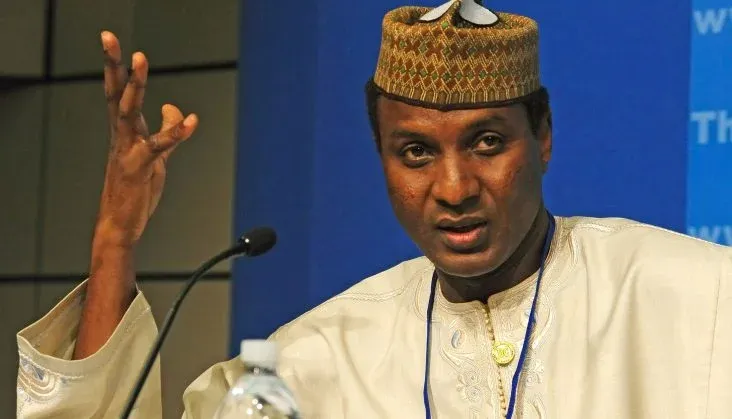
Niger will overcome ECOWAS sanctions, says new PM Zeine

Niger will overcome ECOWAS sanctions, says new PM Zeine

Lamine Zeine, Niger’s newly appointed Prime Minister, has characterized the sanctions imposed on the nation’s military junta as an “unfair challenge,” while expressing optimism that Niger will ultimately overcome them. Despite this obstacle, Zeine reaffirmed Niger’s commitment to fostering economic cooperation with the Economic Community of West African States (ECOWAS). Following the military’s ousting of democratically-elected President Mohamed Bazoum on July 26, which led to the suspension of the constitution and the installation of a transitional government, ECOWAS responded with sanctions against the new military junta. The regional body demanded an immediate return to constitutional order and activated a standby force in preparation for potential military intervention in Niger. Prime Minister Zeine acknowledged the significance of possible negotiations with both ECOWAS and neighbouring Nigeria, which had taken a lead role in addressing the situation in Niger. He emphasized the importance of preserving the historical relationship between Niger and ECOWAS, originally founded as an economic group to promote prosperity in West Africa. Zeine expressed his hopes for maintaining the economic solidarity envisioned by ECOWAS but noted concerns if political and military considerations overshadow this objective. He highlighted Niger’s dedication to working within the framework of regional cooperation while also voicing the nation’s desire to address issues in a balanced manner.

Niger Military Junta vows to prosecute ousted Bazoum for ‘high treason’

Niger Military Junta vows to prosecute ousted Bazoum for ‘high treason’

*Says it’s open to diplomatic resolution; decries ECOWAS sanctions Niger’s military junta announced late on Sunday its intention to press charges of “high treason” against former President Mohamed Bazoum, who was ousted from power, even as the regime also criticized the Economic Community of West African States (ECOWAS) for imposing sanctions on the nation. ECOWAS had placed sanctions on Niger as a response to the coup and had not ruled out the possibility of using force against the military officers responsible for toppling the democratically elected Bazoum on July 26. While ECOWAS had approved the potential deployment of a “standby force to restore constitutional order” in Niger, it maintained its commitment to pursuing a diplomatic resolution to the crisis. In a statement delivered on national television by Colonel-Major Amadou Abdramane late Sunday night, Niger’s military leaders conveyed their intent to prosecute Bazoum for “high treason” and for undermining both the internal and external security of Niger. The former president, aged 63, along with his family, has been confined to the official Niamey residence since the coup, raising international concerns about their well-being during detention. According to sources close to Bazoum, he received a medical check-up on Saturday, and the military authorities stated that the doctor found no health issues concerning the deposed president and his family. The military also decried the sanctions imposed on Niger, asserting that they had led to difficulties in accessing essential supplies such as medicines, food, and electricity. They characterized these sanctions as “illegal, inhumane, and humiliating.” The remarks from the military came shortly after a meeting between religious mediators and coup leader General Abdourahamane Tiani. During the meeting, Tiani expressed his regime’s openness to diplomatic discussions and peaceful resolution of the crisis. Sheikh Bala Lau, part of a Nigerian Muslim delegation that engaged in talks in Niamey, reported that Tiani stated their willingness to explore diplomacy and peace in addressing the situation. Tiani also contended that the coup had been executed with good intentions, aimed at averting an imminent threat that could have impacted both Nigeria and Niger. Tiani lamented that ECOWAS had issued an ultimatum demanding Bazoum’s restoration without giving them an opportunity to present their perspective on the matter. Nigeria’s President Bola Tinubu, who also serves as the head of ECOWAS, sanctioned the visit of the Muslim leaders to Niamey. Tinubu had adopted a resolute stance against the coup, marking the sixth instance of such an occurrence in an ECOWAS member state since 2020. ECOWAS had enacted stringent measures, including halting financial transactions and electricity supplies and sealing borders with Niger, causing significant disruptions to imports in one of the world’s most impoverished countries. The organization had set a seven-day ultimatum for the reinstatement of Bazoum, threatening a potential use of force, but the deadline passed without compliance from the new rulers. A crisis meeting scheduled for Accra, Ghana, was canceled for “technical reasons.” Support for the new military leadership has manifested in public demonstrations, with large crowds gathering in Niamey. Concerts at the Seyni Kountche Stadium saw thousands of individuals expressing backing for the National Council for the Safeguard of the Homeland (CNSP), the group of generals who have assumed control. The gathering, primarily composed of youth, waved flags of Niger, Burkina Faso, Mali, and Russia. The prospect of a military intervention to reinstate Bazoum has polarized ECOWAS members and evoked warnings from international powers, including Russia and Algeria. Neighboring countries Mali and Burkina Faso, both governed by military regimes resulting from coups, have cautioned that such an intervention could escalate into a declaration of war against them.