FG To Continue Borrowing Despite Rise In Revenue

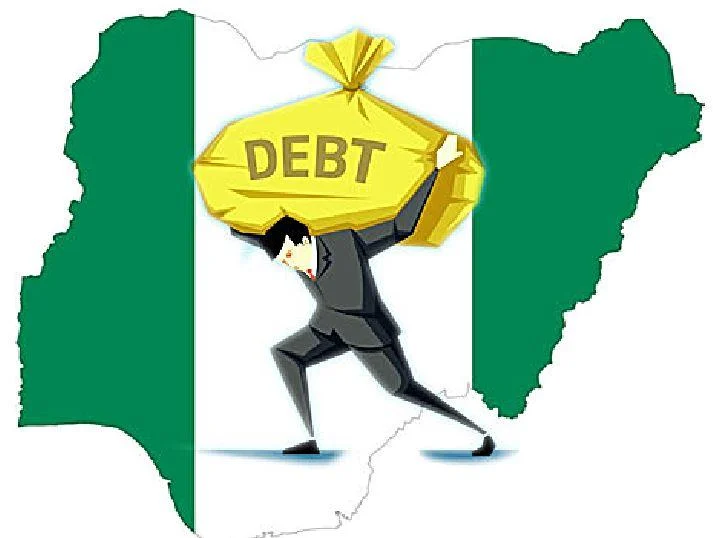
Despite the appreciable rise in revenue, the Federal Government has insisted that borrowing remains necessary to fund key policies.  Finance Minister Wale Edun and Budget Minister Atiku Bagudu disclosed this at a recent Senate meeting, where they outlined plans for managing Nigeria’s fiscal challenges in the coming years. Edun recognized the improvements in the country’s revenue collection but emphasized that these gains would not be enough to fully fund the government’s ambitious development agenda. He noted that additional loans would be required to support a range of initiatives, including infrastructure projects and essential social services such as healthcare and education. In particular, Edun highlighted the need for borrowing to address social safety nets designed to assist the most vulnerable Nigerians.  READ ALSO: EBONYI STATE GOVERNOR SUSPENDS TWO COMMISSIONERS, OTHERS He stressed that the government’s borrowing strategy would be aimed at ensuring sustainable economic growth, with a clear focus on meeting both immediate and long-term needs. Bagudu, for his part, pointed out that the government’s borrowing plans are designed to cover a deficit in the ₦35.5 trillion 2024 budget, which includes provisions for tackling poverty and promoting economic productivity.  He also referenced Nigeria’s long-term development goals, including increasing the GDP per capita to $33,000 by 2050, a vision that will require careful financial planning and, at least in the short term, more borrowing. While this strategy reflects the government’s determination to push forward with its development goals, it also raises concerns about the sustainability of Nigeria’s increasing national debt and the potential impact on future generations. Analysts argue that such borrowing must be committed to funding projects with capacity for repaying the loans.

VAT, vassal states and restructuring (2)

“Almost two years since his hare-brained twin policies, market forces are yet to fully determine the prices of petroleum products and the price of the Naira… The irony right now is that there are claims that the country is turning the corner, and that good days are on the horizon. Tinubu says so.” THERE are too many things wrong with the regime of Nigeria’s president, Alhaji Bola Ahmed Tinubu. For 18 months since the advent of the administration, it has been a case of stumbling from one problem to the other. The tragedy is that almost all the challenges that this regime has been grappling with were self-inflicted. It started off with an ill-conceived petrol subsidy removal, and it followed that almost immediately with allowing the national currency, the Naira, to be floated. Both policies turned out to be disastrous because the so-called petrol subsidy payment persisted in an opaque manner, and subsidizing the Naira did abate. Recently, the state oil corporation, the Nigerian National Petroleum Company Limited (NNPCL) insisted that it will continue to import petroleum products in spite of the existence of a domestic producer, Dangote Refinery and Petrochemical Company, Lagos, which said that it has the capacity to satisfy domestic consumption for petroleum products. Dangote’s 650,000 barrels of crude oil per day production should on full stream produce 50 million litres of petrol and 15 million litres of diesel per day. READ ALSO: THREE TRAGICALLY KILLED AFTER GOOGLE MAPS DIRECT CAR ONTO UNFINNISHED BRIDGE Experts estimate that petrol consumption in Nigeria should not exceed 35 million litres per day. But corruption puts it much higher, sometimes for as high as 70 million litres per day. This outrageous figure is not strange because Nigeria is widely acknowledged as a crime scene – a country hurting in the hands of its supposed care-givers. Private importers who work at the behest of collaborators inside the government have been known to ‘import’ shiploads of petroleum products without the ships being sited anywhere near the country’s territorial waters, not to talk of discharging any products. But such ‘importers’ file claims with excellent shipping documents, and collect hundreds of millions of dollars from the public treasury. NNPCL does the same. Then a cartel hijacks the little litres of petrol that were in truth brought in, ferrying such to neighbouring countries in 33000-litre trucks and in broad daylight where they make a kill. Nigeria has clearly delineated borders with its neighbours. We have all manner of tax-payer paid government officials at those borders. But the trade booms. Currently, an investigative reporter has been reporting on the daily massive smuggling of 50kg bags of rice into the country with the active involvement of immigration top shots. He has been doing so with video evidence. Last week the journalist reported that the leader of the smugglers was accorded a red carpet reception at the Abuja headquarters of the Nigeria Immigration Service. His reports have not been disputed and nothing has happened to the economic saboteurs. Back to the issue at hand. Alhaji Tinubu takes responsibility for his misadventures on petrol and Naira. Almost two years since his hare-brained twin policies, market forces are yet to fully determine the prices of petroleum products and the price of the Naira. Whilst the NNPCL moderates the prices of petroleum products especially petrol by importing and fixing different pump head prices for different parts of the country, the Central Bank defends the Naira through regular sales of the United States dollars to the bureaux de change, and through the aggressive mopping up of  Naira in circulation. The policies are obviously not working. The price of petrol at over N1000/litre is not sustainable. It has ruined the economy and will inflict more damage with the regime’s insistence that it will stay the course. Nigerian families are worse off. Bloomberg, an American news organization reported last week that about two -third of Nigerian households can barely manage to feed once a day. And the quality of the meal is suspect. Their report was drawn from the latest statistics from the Nigeria’s National Bureau of Statistics (NBS). PLEASE READ: NIGERIA, THREE OTHER COUNTRIES GO LIVE ON ECOWAS E-Certificate The irony right now is that there are claims that the country is turning the corner, and that good days are on the horizon. Tinubu says so. The central bank governor says the same. Finance minister who is also the coordinating minister for the economy sees the same signs of economic recovery. Even the national security adviser, yes the NSA, who should have his hands full with widespread insecurity pervading the land, parrots the same message of visible economic turn around. But they are the only people who see economic recovery on the horizon. And they all share one thing in common – they all binge on the public treasury. I wager that none of them had been to a gas station to buy either petrol for the government SUVs (armour- plated and bomb-resistant brands) that they are driven in or to purchase diesel to fire government – owned electricity generators in their residences which also are built and tastefully furnished with taxpayers money. It is not strange, therefore, that they are separated from reality and the daily grind of the majority of Nigerians. The case of the NSA is particularly painful and pathetic. Daily, he joins the security agencies including the secret police otherwise called the Directorate of State Services (DSS), the regular Police, the Civil Defence Corps, the Armed Forces, among others, to run political commentaries on the state of the country. In place of combating insecurity, what the NSA does is to warn non-state agents terrorizing Nigeria to know that Tinubu is not known to lose any battle. Is he for real? The man cannot be, and should not be, a national security adviser even in a banana republic. What our rulers are doing is beyond talking up the economy, they are deliberately deceiving Nigerians. Any sign of economic recovery must

Nigeria’s Economy Sees Robust Growth in Q3, 2024

The Nigerian economy has experienced an appreciable 0.27 percent expansion, hitting 3.46% in Q3 instead of 3.19% it averaged in Q2 of 2024. Latest data released by the National Bureau of Statistics (NBS) on reveals a consistent upward trend in the economy, surpassing the growth rate of 2.54% seen in Q3 2023.  Additionally, the current quarter also outperformed Q2, 2024, which had seen a growth of 3.19%. In real terms, the GDP stood at N20.1 trillion, reflecting an increase from N18.2 trillion in Q2 2024 and N19.4 trillion in Q3 2023.  The services sector played a crucial role in this performance, driving growth with a 5.19% increase and contributing 53.58% of the total GDP. PLEASE READ: FMBN SECURES N100BN OFFTAKER GUARANTEE FOR KARSANA RENEWED HOPE CITY PROJECT, ABUJA The data further revealed that the nominal GDP for Q3 2024 reached N71.1 trillion, marking a 17.26% increase from N60.6 trillion in the same quarter of the previous year.  This surge signifies a robust recovery and positive economic momentum. Among the key sectors driving the economy, crop production contributed 26.51%, trade accounted for 14.78%, and telecommunications made up 13.94%.  The oil sector also showed improvement, recording a 5.17% growth compared to a negative growth rate of -0.85% in Q3 2023, although it was slightly lower than the 10.15% increase seen in Q2 2024. Nigeria’s oil output for Q3 2024 stood at an average of 1.47 million barrels per day (mbpd), marking a slight increase from 1.45 mbpd in the same quarter of the previous year and surpassing the 1.41 mbpd recorded in Q2 2024. Despite a strong performance in the oil sector, the non-oil economy remains the dominant driver of Nigeria’s GDP, contributing 94.43% in Q3 2024.  The non-oil sector’s contribution has slightly decreased compared to 94.52% in Q3 2023, though it remains higher than the 94.30% seen in Q2 2024. Key areas like agriculture, trade, and services have fueled this growth.

Tinubu Seeks NASS Approval for N1.77tn External Loan

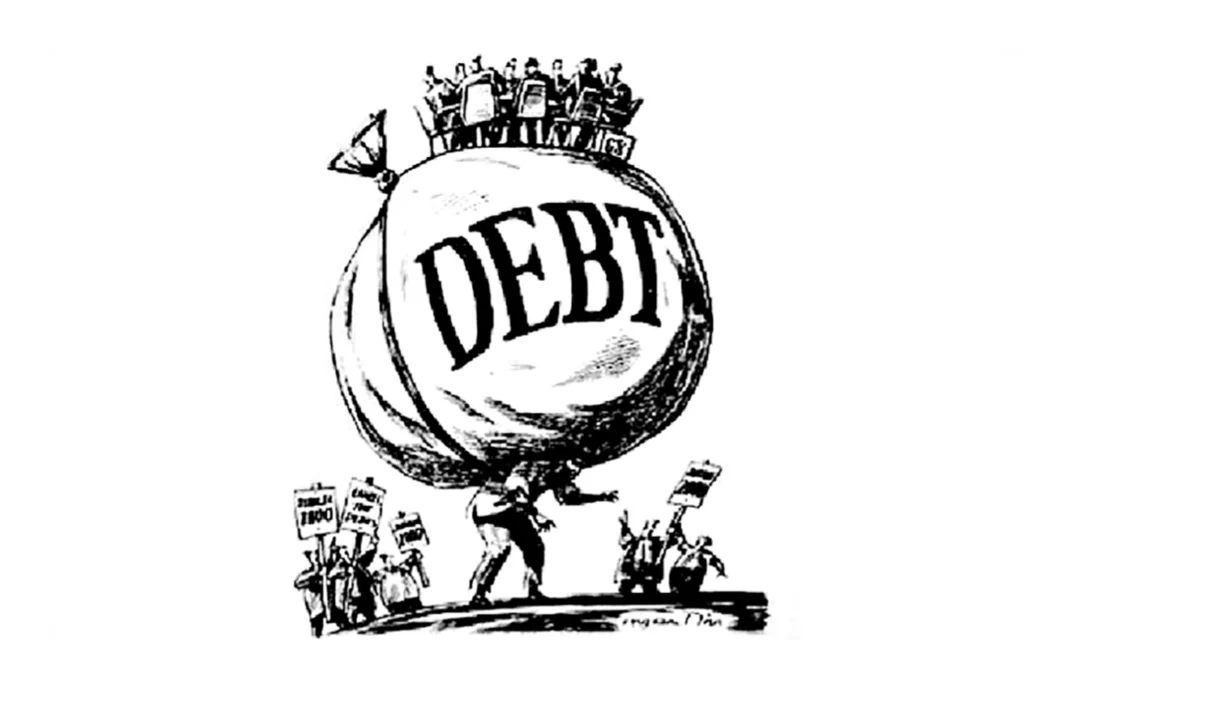
Nigeria sinks deeper into the debt trap as President Bola Tinubu submits a request to the National Assembly to approve additional N1.77trillion external borrowing.  A communication from the Presidency states the loan shall be used to cover and portion of the N9.7 trillion deficit plan for 2024. During Tuesday’s plenary, the Speaker read the president’s request, which also included the MTEF/FSP 2025-2027 and a bill to amend the National Social Investment Programme.  The proposed amendment aims to centralize the social register as the primary tool for welfare program implementation. Meanwhile, the Central Bank of Nigeria reported that Nigeria’s foreign debt servicing costs climbed by nearly 40% in the first nine months of 2024, amounting to $3.58 billion, up from $2.56 billion in 2023.  The country’s rising debt obligations are becoming more expensive, driven partly by fluctuating exchange rates, with January 2024 witnessing a dramatic surge in payments. In related developments, the debt of Nigeria’s 36 states and the Federal Capital Territory reached N11.47 trillion by June 2024, a 14.57% increase from December 2023.  The devaluation of the naira significantly contributed to the growth of the external debt, which rose to $4.89 billion, up from $4.61 billion. Domestic debt, however, saw a decline. The rising debt figures across the country reflect the growing fiscal pressures faced by both the federal and state governments, highlighting the need for sustainable economic management strategies.

Each Nigerian Owes N619,501 as Debt Profile Hits N134 Trillion  

Nigeria’s ever surging debt hits N134.297 trillion as of last June, dragging each citizen into a N619,501 debt burden without much to show for it. Nigeria’s Debt Management Office (DMO) reports that the figure stems from Nigeria’s total public debt, which surged to N134.297 trillion by the end of June 2024.   With the country’s population estimated at 216.7 million by the National Bureau of Statistics (NBS), the debt burden per capita reflects the mounting financial strain on citizens.  This amount is equivalent to nine times the newly approved minimum wage of N70,000.   A breakdown of the debt reveals that domestic liabilities stand at N71.2 trillion, while external obligations amount to N63 trillion.  The federal government accounts for a significant portion, with domestic debt at N66.9 trillion and external debt at N55.8 trillion. State governments owe a combined N11.3 trillion.   The N134 trillion debt figure represents a N13 trillion increase since March 2024, raising concerns about the country’s growing dependence on borrowing to finance its operations.

DMO auctions FGN bonds worth N360bn

FGN August Bond Auction hits N312.56bn subscription -DMO

The Debt Management Office (DMO), acting on behalf of the Federal Government of Nigeria (FGN), has recently conducted an auction for the subscription of four FGN bonds valued at a total of N360 billion for the month of August 2023. As outlined in the offer circular released by the DMO on Thursday, the first bond on offer is an April 2029 FGN bond, with a value of N90 billion and an interest rate of 14.55 percent per annum. This particular bond constitutes a 10-year re-opening of the existing issue. Similarly, the second bond available for subscription is a June 2033 FGN bond, also valued at N90 billion, and carrying an interest rate of 14.70 percent per annum, serving as a 10-year reopening. Furthermore, the DMO has presented a June 2038 FGN bond, valued at N90 billion, with an interest rate of 15.45 percent per annum. This bond represents a 15-year reopening of a previous issuance. The last offering is the June 2053 FGN bond, also valued at N90 billion, and featuring an interest rate of 15.70 percent per annum. This bond represents a 30-year reopening of the original issuance. “They qualify as securities in which trustees can invest under the Trustee Investment Act “They qualify as government securities within the meaning of the Company Income Tax Act and Personal Income Tax Act for tax exemption for pension funds amongst other investors. “They are listed on the Nigerian Exchange Limited and FMDQ OTC Securities Exchange. “All FGN bonds qualify as liquid assets for liquidity ratio calculation for banks,” the DMO said.  All of the mentioned FGN bonds are available for subscription at a unit cost of N1,000, with a minimum subscription requirement of N50 million and subsequent subscriptions in multiples of N1,000. For bonds that are re-openings of previously issued bonds with fixed coupons, bidders are expected to pay a price corresponding to the yield-to-maturity bid that successfully clears the auction volume, along with any accrued interest on the instrument. Interest on these bonds is paid semi-annually, and the principal repayment is set as a bullet payment due on the maturity date. It’s noteworthy that FGN bonds enjoy the full backing of the Federal Government’s faith and credit, with their security secured by the general assets of Nigeria. These FGN bonds have multiple benefits, including qualification as securities in which trustees can invest under the Trustee Investment Act. They also fall under the category of government securities in accordance with the Company Income Tax Act and Personal Income Tax Act, qualifying for tax exemptions for pension funds and other investors. Additionally, these bonds are listed on both the Nigerian Exchange Limited and the FMDQ OTC Securities Exchange. Furthermore, all FGN bonds are considered liquid assets for the calculation of liquidity ratios for banks. The DMO’s auction of these FGN bonds reflects the government’s continued efforts to manage its debt and financial obligations while providing investment opportunities for both institutional and retail investors.

DMO bags 3 EMEA awards, recommits to innovative debt strategies

Patience Oniha Pic

Nigeria’s Debt Management Office (DMO), has renewed its commitment to continue delivering innovative and comprehensive debt management strategies. In a statement signed by DMO’s Director-General Patience Oniha on Friday, the agency’s commitment to the fulfillment of its mandate has placed it on solid footing in the EMEA region and beyond. The DMO received three prestigious EMEA (Europe, Middle East and Africa) Finance Achievement Awards recently in London. While commending EMEA Finance for recognizing the work it was doing, she said the Office’s success has been down to its commitment to provide tailored debt management solutions to Nigeria. “As the DMO celebrates these remarkable achievements, it renews its commitment to continue delivering innovative and comprehensive debt management strategies, further solidifying its standing in the EMEA region and beyond,” she said. She said the awards are a recognition of DMO’s unwavering commitment to implementing effective debt management strategies in the emerging markets region encompassing EMEA. “The awards, bestowed by EMEA Finance, which is renowned in the emerging markets, highlight the outstanding performance of DMO in managing debt and optimising financial resources across diverse markets. “The accolades serve as a validation of the DMO’s tireless efforts in providing innovative solutions to meet the challenges of debt management in the ever-evolving economic climate. “Receiving these accolades mark a significant milestone for DMO, as it solidifies its position as a leading player in the field of debt management within the EMEA region,” she said. The three awards include: “Best Sovereign Borrower”; “Best Sovereign Bond in EMEA”; and “Best Local Currency Bond in EMEA’’.

Budget deficits, low revenue responsible for rising debt – DMO

DMO DG

The Debt Management Office (DMO) says decades of operating budget deficits by successive governments is responsible for Nigeria’s high debt profile. The Director-General of the DMO, Patience Oniha, said this on Sunday in Abuja. According to Oniha, a review of Nigeria’s fiscal data shows that not only has the government operated budget deficits which have been growing, but most of the deficits have been funded through local and external borrowing. “The records show that deficits in the annual budgets, including supplementary budgets rose to N10.78 trillion in 2023 from N1.62 trillion in 2015. “Between 82 per cent and 99 per cent of these were funded by new borrowing which ranged from N1.46 trillion in 2015 to N8.80 trillion in 2023. “These facts confirm that these budget deficits, funded by new borrowings, have been responsible for the rapid growth in the debt stock and the resultant increases in debt service,” she said. According to Oniha, this trend could have been avoided or at least moderated if revenues had been higher or expenditures lower. She tasked the incoming government of Sen. Bola Tinubu to take cognisance of the situation and prioritise increased revenue generation. “The budget deficits would have been much smaller, or Nigeria would have operated on a balanced budget. “It is therefore imperative that the incoming government takes into account the perennial budget deficits in the preparation of the Medium-Term Expenditure Framework (2024 – 2026) and the 2024 budget. “The government should also accelerate the growth in revenues to ensure debt sustainability,” she said.