Naira Plunges Across Forex Segments Amid Liquidity

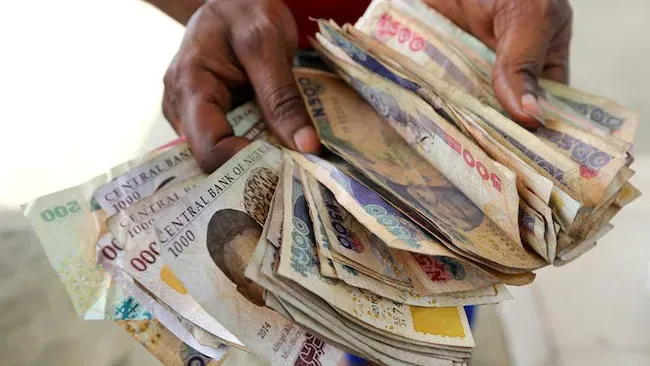
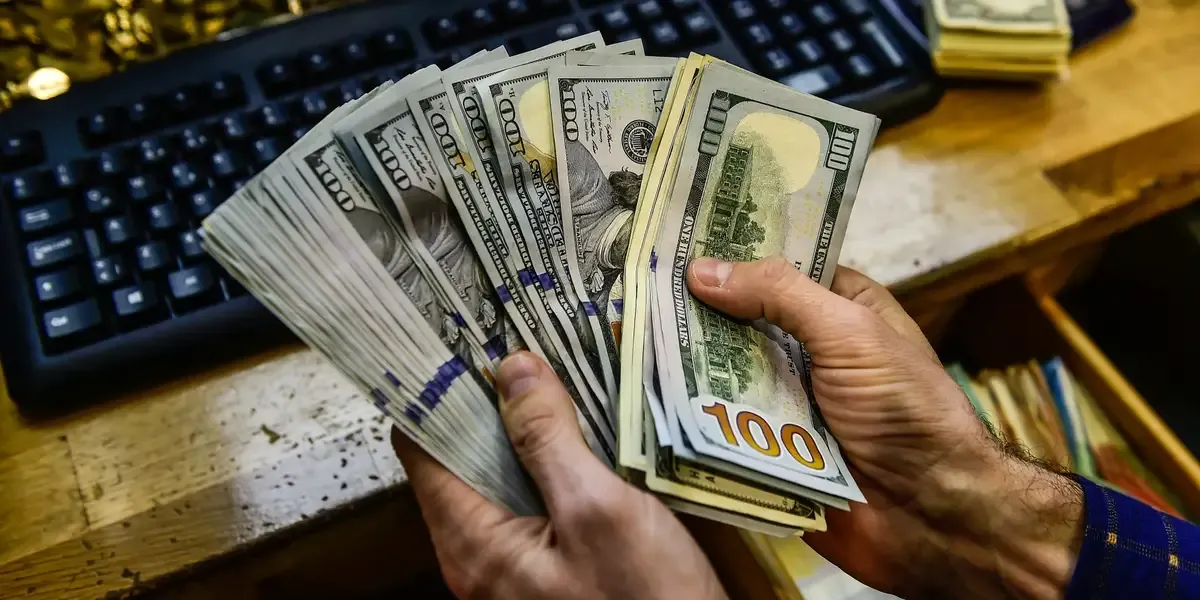
The naira closed last week on a losing streak, plunging in all segments of the foreign exchange (forex) market. “In the local currency market, the performance of the naira was underwhelming”, said analysts at Afrinvest. At the parallel market, the base currency (Dollar) appreciated 1.8 per cent week-on-week (w/w) against the price currency (naira) to N1,150.00/$. While at the NAFEM window, the base currency (dollar) rose 0.4 per vent w/w against the naira) to N794.89/$. Meanwhile, activity level in the NAFEM window improved by 11.1 per cent w/w to $817.7 billion from $736.3 billion in the prior week. At the FMDQ Securities Exchange (SE) FX Futures Contract Market, the total value of open contracts of the Naira remained at $4.2 billion. “We do not foresee any changes given that CBN has cleared all Non-Deliverable Forwards (NDFs) open contracts, shortly after rendering contracts for tenors between one and twelve months inactive in response to reforms in the NAFEM window. This week, we expect rates across different segments of the market to depreciate following demand-supply imbalance”, said Afrinvest. At the end of trading last week, system liquidity surged higher by 667.2 per cent to close at N527.1 billion. Nonetheless, the price of liquidity in the banking system, the OPR and OVN rates rose 2.9ppts and 2.4ppts w/w respectively to 23.8 per cent and 24.6 per cent. At the primary market segment for T-bills, the CBN offered bills worth N211.7 billion across the 91 (N9.7 billion), 182 (N1.8 billion), and 364-day (N199.9 billion) tenors. Demand was healthy across all ends of the curve as the average bid-to-cover ratio printed at 5.8x due to robust system liquidity. Stop rates across the 91-day and 182- day instrument improved, rising 100bps apiece to 7.0 per cent (91-day) and 11.0 per cent (182-day). Meanwhile, the stop rate remained unchanged at 16.8 per cent in the 364-day instrument. Meanwhile, the secondary market segment saw a bullish outing as the average yield across all tenors compressed 213 basis points (bps) w/w to 11.2 per cent. The bullish outing was driven by buy interest on the mid (182-day) and long-dated (365-day) instruments as yield saw a decline of 242bps and 221bps w/w respectively. In the coming week, we anticipate healthy liquidity conditions due to FAAC inflow and Bond coupon payment. Consequently, we expect buy sentiment to be sustained at the T-bills secondary market. Meanwhile, Brent crude oil price futures inched higher by 1.4 per cent to close at $81.75/bbl., as traders remained on the sideline ahead of next week’s Organisation of Petroleum Exporting Countries (OPEC+) meeting. The anticipated meeting would focus on output cut agreements for 2024, following the recent downturn in oil price due to strong supply from non-OPEC producers. Meanwhile, on the domestic front, Nigeria’s foreign reserves fell 28bps ($91.7m) w/w to $33.2bn (22/11/2023).
Naira Redenomination Is Speculators’ Antics

The issue of Naira redenomination started gaining traction on social media around September 2023. It was believed that the trending misinformation was the handiwork of some drunks in a Chinese bar”, idled, and needed to ruffle the economy’s feathers. The Central of Nigeria has denied the trending malicious story. Unperturbed though, the perpetrators retreated awhile, and recently, the malicious misinformation started gaining traction on social media. One may wonder what their motive is. No soothsayer is needed to know that economic saboteurs are at work again, but to gain what? The attack on the Naira is one of the many products of corruption bedeviling the nation. Others include untamed obnoxious taste for foreign items, and utter disdain for locally produced items (often of better quality than their foreign counterparts), mono-economy, – dependence on oil, forgetting that the foundation and strength of the economy was agriculture. Monumental legacies adorned the nooks and crannies of the country that are attestation to what agriculture did before the petrol-dollar craze. Agriculture was later neglected. The scramble for fast buck from oil till date incapacitated the economy. No effort was made to diversify the economy. At a time in the history of this economy, a regime once told the world that Nigeria’s problem was not money but how to spend it. Profligacy became the order of the day. Corruption crept in, and scrambles for power to get a bite of the oil ‘cake caused successive military coups. This was in connivance with corrupt civilians. Every successive administration embarked on primitive acquisition of wealth stolen from our commonwealth. Mediocrity reigned, leadership selection became “paddy-paddy, and merit took a flight. Some past leaders sought power for power’s sake, clueless of what to do with it. The economy was on autopilot, burdened, and still suffering from those uncoordinated and rudderless inactions. The economy has been in chains while the masses bear the brunt. The descent to this ignoble state started before1986 and became a reality with the introduction of Structural Adjustment Programme (SAP). It was the onset of gradual destruction of all economic fibers of Nigeria. A leader at the time frustratingly retorted that ‘the Nigerian economy defied all economic theories.’ Little did he know that vultures and vampires had taken over the economy, and ever since the economy has been under attack. Still the only legacy we hold onto, the Naira, is under serious threat now. They took over and destroyed all the refineries, made them non-functional despite trillions of Naira spent to fix them. They destroyed the Power Holding Company of Nigeria (PHCN),and bought them over under the disguise of privatization, leaving us with what we have today – darkness. The Nigerian Airways, and Nigeria National Shipping Line are all moribund, yet investors who professed competence and business acumen bought them. They hijacked the Nigeria National Petroleum Company (NNPC) making all refineries derelict. Fuel importation and subsidy was introduced through which the economy was sucked. No past regime had the political will to end the obnoxious regime. But since this regime took the bold decision to remove fuel subsidy and harmonize the exchange rate, the economic vampires and the vultures have swooped on the economy, baring their fangs ferociously on the Naira. While other oil producing nations are reaping bountifully from oil, building infrastructure, and bettering the welfare of their citizens, Nigeria, the 6th oil producing nation in the world is wallowing in poverty, corruption, darkness, yet its leaders are unperturbed. Those calling for the redenomination of the Naira are the faceless ‘owners’of Nigeria, attacking the economy with the main aim of wrecking it to enable them to take it over. They have gained, and still gaining bountifully from every crisis of the past.They are determined to destroy the Naira. Their grouse may have been the current administration’s gut to take away the fuel subsidy. They have the war chest – hoarded foreign and local currencies, through the BDCs they own. They are rich and entrenched individuals, using their ill-gotten wealth to attack the Naira. Their call for the redenomination is to cause disaffection between the government and Nigerians, thereby bending the hands of the government backward. When in 2006 the Republic of Zimbabwe redenominated its currency at the rate of 1,000 old Zimbabwean note to one Zimbabwean dollar, it was because of hyperinflation. The newly independent nation probably got carried away with the euphoria of independence and forgot to do the real business of governance. Things spiraled out of control, the currency began to lose value because of the taste for foreign goods, no effort to develop local capacity, and the currency suffered. The Republic of Ghana that plied same route thought it had no better option than to redenominate in 2007. If it must be recalled, Ghana’s hyperinflation between 1977-1983 hovered between 116% and 123%. The reason the government gave for taking the action was to reassert the monetary sovereignty of Cedi. The government was conscious of the fact that if Ghanaians should lose confidence in the currency and begin to embrace other foreign currencies as store of value, there will be problems. Another reason it gave was years of economic decline that took a toll on the Cedi. In fact, it was to arrest the spiraling hyperinflation that threatened the country, and to also make it easy for accounting and statistical purposes. According to the authorities, they believed it would be easier to maintain by setting 10,000 Cedis to be 1 Ghana Cedi. Has the Nigerian economic situation reached what can be compared to the Zimbabwe or Ghana situation? The answer is No. The problem with Nigeria is corruption and greed, self-centeredness, obnoxious foreign taste, and disdain for what she produces. Nigerians do not eat what they produce, nor produce what they eat. What the purveyors of this malicious misinformation set to achieve is to arm-twist the government and the CBN to do their bid and redenominate to suit their criminal desires.They are presently clueless about what the government is doing going forward
Crude Export Earnings Hit N5.6trn In Q2 Amid Naira Float

There was a major improvement in export earnings in the second quarter of 2023, as a result of the floating of the naira which ensured earnings from crude oil exports swells. Crude oil receipts rose 8.5 per cent to N5.6 trillion. This represents 79.6 per cent of total exports. “The improvement in export earnings was mainly spurred by crude oil receipts which rose 8.5 per cent quarter-on-quarter (q/q) to N5.6 trillion (about 79.6 per cent of total exports) though production level was unimpressive as per national Bureau for Statistics (NBS) data (down 19.2 per cent q/q to 1.22mbpd). “Noteworthy, we suspect that the improvement in oil receipt was also impacted by exchange rate revaluation gain given that the Central Bank of Nigeria (CBN) switched from a hard-pegged exchange rate regime to a managed float in June 2023, causing the official conversion rate of oil proceeds to rise from N461/$ to over N650/$. Hence, nullifying the effect of lower crude oil price in the second quarter ($78.13/bbl.) relative to the first quarter ($81.11/bbl.).”, said analysts at Afrinvest. Data from NBS showed that the value of Nigeria’s total trade (imports and exports combined) improved over the preceding quarter (up 5.8 per cent) but trailed the level attained in the corresponding period of 2022 by 7.6% to settle at N12.7 trillion. For the third consecutive quarter, Nigeria recorded a positive trade balance amounting to N1.3 trillion in the second quarter, aided by the faster growth in export earnings (up 8.1 per cent q/q to N7.0 trillion) as against import expenses (up 3.0 per cent q/q to N5.7 trillion). Similarly, non-crude oil and non-oil exports also grew 6.8 per cent and 5.6 per cent q/q to N1.4 trillion and N688.7 billion respectively. “We attribute these gains to the recovery in the broader economy from the negative knock-on effect of pre-election jitters and poor implementation of the naira redesign policy in the first quarter (GDP expanded 2.5 per cent vs. 2.3 per cent in the first quarter)”, said Afrinvest. It is important to highlight that Agricultural goods remain Nigeria’s largest source of non-oil export earnings (4.0 per cent of export share), while Manufacturing, Raw material goods, and Solid mineral goods trailed with 3.0 per cent, 2.1 per cent, and 0.5 per cent, respectively. Cashew nuts (shelled and unshelled), sesame seeds, and cocoa beans combined accounted for 65.7 per cent of the total N278.4 billion Agric exports in the period – an indication that cash crop exports could be a major source of non-oil foreign exchange (forex) earnings for Nigeria if adequate investment is made on procuring modern farming equipment and insecurity is wholistically checked. In terms of trade performance with other regions, the previous quarter’s trend was sustained as Nigeria booked a surplus with three of its five trading regions – America (N178.5 billion), Europe (N1.2 trillion), and Africa (N510.5 billion) – while a deficit was recorded in trade with Asia (N584.5 billion) and Oceania (N98 billion). In terms of destination, the Netherlands (11.2 per cent), the US (10.2 per cent), and Indonesia (7.8 per cent) were the top export hubs by share while China (22.2 per cent), the US (16.1 per cent) and Belgium (8.0 per cent) topped imports origin.
Dollar index decreases by 1.6% in July – OPEC

The Organisation of the Petroleum Exporting Countries (OPEC) has said the U.S. dollar index decreased by 1.6 per cent month-on-month (m-o-m) in July, erasing gains from the previous period. The dollar index rose for the second consecutive month in June, increasing marginally by 0.3 per cent m-o-m. OPEC said this in its Monthly Oil Market Report at the weekend. The report, while stating the impact of the dollar and inflation on oil prices, said the dollar receded, although the Federal Reserve hiked interest rates by 25 basis points (bp) in July. This, it said, underscored a shift in risk sentiment as investors’ global macroeconomic outlook improved, and financial markets wagered that the U.S. economy would avoid recession. According to the OPEC report, Year-on-Year (Y-o-Y), the index was down by 5.2 per cent. The OPEC report said the dollar experienced mixed movement against major developed market currencies for a second consecutive month in July. It said it recovered against the euro by 2.2 per cent m-o-m, but receded against the yen and the pound by 0.2 per cent and 2.2 per cent, respectively, over the same period. It said Y-o-Y, the dollar was up by 8.9 per cent and 3.0 per cent against the euro and yen, respectively; however, it was down by 7.1 per cent against the pound over the same period. “In terms of emerging market currencies, the dollar declined for a second consecutive month in July against the rupee and the Brazilian real by 0.1 per cent and 1.1 per cent respectively, m-o-m. “Meanwhile, it advanced against the yuan for a second consecutive month by 0.3 per cent m-o-m,” the oil market report said. It said Y-o-Y, the dollar was up by 3.2 per cent and 6.7 per cent against the rupee and yuan, respectively; however, it was down by 10.6 per cent against the real over the same period. It said the differential between nominal and real OPEC Reference Basket (ORB) prices widened m-o-m. It said inflation (nominal price minus real price) went from negative 1.78 dollars per barrel in June to negative 3.11 dollars per barrel in July, a 76.7 per cent increase m-o-m. It further stated that in nominal terms, accounting for inflation, the ORB price went from 75.19 per cent per barrel in June to 81.06 per barrel in July, a 7.8 per cent increase m-o-m. It added that Y-o-Y, the ORB was down by 25.3 per cent in nominal terms. In real terms (excluding inflation), it said the ORB went from 76.95 dollars per barrel in June to 84.17 dollars per barrel in July, a 9.4 per cent increase m-o-m. “Y-o-y, the ORB was down by 24.4 per cent in real terms,” it said.
Naira drops to new low of N923-950 per dollar

The naira extended its slump in black-market trading as the nation’s dollar shortage deepened two months after the central bank moved to a more flexible exchange rate to encourage inflows. The naira weakened to N923 per dollar, compared with N917 on Wednesday. Traders in Lagos said it worsened to an all-time low of N950 to one dollar at the parallel market on Thursday afternoon as against the N897 it traded at the previous day. At the official window, data showed that the naira closed at N782.38 per $1. The disparity is now N167.62/$1 one of the widest since the unification of the naira on June 14th, 2023. Banks have been unable to come up with the dollars to meet demand, and buyers are increasingly turning to the black market, widening the gap between the official exchange rate and the price on the street. On Tuesday, the naira plunged to a record low of N900/$1 on the parallel market on Tuesday, August 8, 2023, as demand for foreign currency outstripped supply with traders quoting the exchange rate as high as N900/$1 for “inflows” and N895/$1 for cash trades. The peer-to-peer market, where crypto-currency traders exchange forex, also saw the exchange rate soar above N900/$1. Meanwhile, in the official Investor and Exporter Window, the exchange rate closed at N774.78/$1 while the NAFEX rate was N776. The official market also faces supply constraints, with daily turnover averaging $80 million since July. Forex traders who attributed the depreciation of the naira to a scarcity of supply, said that there were more buyers than sellers in the market and that the situation was unlikely to improve anytime soon. When asked about the source of the increased demand, traders mentioned a diverse set of buyers, including importers, foreign travelers, and speculators. There are concerns among some traders that the state of depreciation is unlikely to improve as demand continues to rise unchecked. Forex analysts explained that there was a huge backlog of unmet forex demand in the official market, estimated at $8-10 billion. Some of this demand also spills over to the parallel market, as buyers struggle to find enough supply to meet their needs in the official market. The exchange rate between the naira and dollar has weakened by 16 per cent since the reunification of the exchange rate windows. This compares to a depreciation of 2.5 per cent between January 1 and June 14th. The exchange rate weakened by 22.9 per cent in the whole of 2022. The naira has been under pressure in the parallel market for several weeks, as the supply of forex from official sources remains inadequate. On July 1st, the beginning of the second half of the year, the exchange rate in the parallel market was around N772/$1. However, a surge in demand from various segments of the economy, such as importers, foreign travelers and speculators, has triggered exchange rate volatility.
Naira appreciates 4.31% at investors, exporters window

On Friday, the Naira displayed a remarkable appreciation of 4.31% against the dollar at the Investors and Exporters window, reaching an exchange rate of N743.07. This significant gain was in contrast to the previous day’s rate of N776.50. The open indicative rate also closed favorably at N782.28 to the dollar on the same day. During the day’s trading, the spot exchange rate peaked at N799 to the dollar before ultimately settling at N743.07. Interestingly, the Naira was observed to have been sold as low as N475 to the dollar within the same trading session, indicating some fluctuations in the market. The Investors and Exporters window witnessed substantial activity, with a total of $121.08 million being traded on Friday. This volume of transactions reflects the ongoing dynamics in the foreign exchange market and the interests of investors and exporters in Nigeria’s currency market. The Naira’s gain at the Investors and Exporters window indicates some positive sentiment and demand for the local currency in recent trading activities. However, it is essential to keep an eye on market conditions and various economic factors that could influence future fluctuations in the exchange rate. As with any currency, the Naira’s value can be influenced by factors such as the country’s trade balance, foreign direct investments, foreign reserves, and government monetary policies. A stable and competitive exchange rate is crucial for the Nigerian economy to attract foreign investments, ensure price stability, and enhance international trade. Overall, market participants, investors, and policymakers will continue to closely monitor the Naira’s performance in the coming days to gauge the currency’s strength and stability in the face of economic challenges and global market trends.