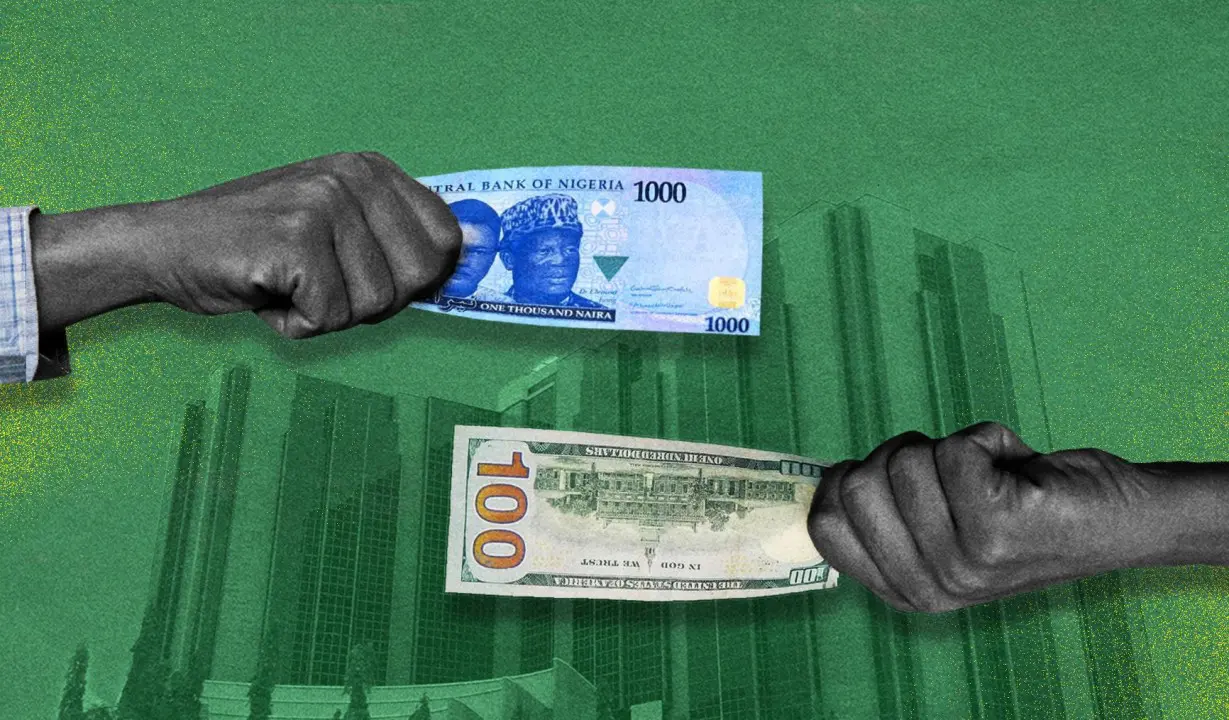
Naira Hits All-Time N1065/$ Low, As BDC Operators Seek Urgent Reforms

Naira To Reach ‘Fair Value’ Of N750/$ By Year’s End – FG

The nation’s currency, the Naira, experienced a historic low on Wednesday in the parallel market, with the unofficial exchange rate reaching an unprecedented N1065 to the US dollar. On Tuesday, the Naira closed at N1060 to the dollar on the unofficial market, driven by a shortage of dollars, leading to a rapid depreciation of the currency. Additionally, the Naira weakened by 8.9 percent to N848.12 against the dollar in the official Investors and Exporters (I&E) forex market on Tuesday, according to data from FMDQ. Foreign exchange trades took place within the range of N700 to N981 per dollar, with the dollar’s trading volume surging to $133 million, according to an investment note by the Lagos-based investment banking firm Chapel Hill. The Central Bank of Nigeria (CBN) had relaxed foreign exchange controls in mid-June following criticism of monetary policy measures by President Bola Tinubu and a pledge to end the multiple exchange rate regime. The official rate briefly aligned with the parallel market, plunging 40 percent, but the spread began to widen again. Until Tuesday, the official rate remained near N800 to the dollar, while the street rate surpassed N1,000 to a dollar. Foreign exchange operators attributed the Naira’s depreciation to persistent illiquidity in the market in the absence of central bank intervention. The widening premium between the official rate and the black market is a sign that the exchange rate has not found a clearing price. The Chairman of the Association of Bureau de Change Operators in Nigeria (ABCON), Aminu Gwadabe, explained that the Naira’s rapid devaluation is due to significant liquidity driving up demand for unavailable dollars in the market. He also pointed to uncertainties, loss of public and international confidence in the economy, rising inflation, and a low interbank market interest rate, which have reduced the appeal for alternative investments. Gwadabe recommended abolishing the I&E window and allowing willing buyers and sellers to dictate price mechanisms with legislative backing.

Naira Devaluation: Dangote, 8 others take N113.63bn hit

Naira Devaluation: Dangote, 8 others take N113.63bn hit

Dangote Cement led eight other companies on the NGX in foreign exchange losses recording a significant foreign exchange loss of N113.63 billion, representing a 179.47 per cent year-on-year increase, the highest in the past five years as a result of the devaluation of the Naira. The Naira went from N465/$ at the end of May 2023 to N756/$ in June 2023, resulting in a net exchange loss of N116.1 billion on third-party loans and payables within the Nigerian entities. While some companies experienced significant declines in some performance indicators, others performed relatively better. A review of the financial performance of Berger Paints, Beta Glass, BUA Cement, CAP, Dangote Cement, MEYER, Notore, and WAPC, reveals that among these companies, Dangote Cement, Notore, and BUA Cement, reported a combined foreign exchange losses of -N129.811 billion, while Beta Glass, CAP, and WAPCO reported an aggregate foreign exchange gain of N3.49 billion. However, when considering the cumulative impact of foreign exchange fluctuations, it led to an overall reduction of 8.19 per cent in their total pre-tax profit, which amounted to N372.573 billion in the first half of 2023 Dangote Cement led in foreign exchange losses recording a significant foreign exchange loss of N113.63 billion, representing a 179.47 per cent year-on-year increase, the highest in the past five years. According to the first half of 2023 financial notes, the net exchange loss on foreign-denominated transactions was primarily attributed to the sharp devaluation of the Nigerian Naira in June 2023. These losses had a direct effect on the decline in pre-tax profit, which decreased from N264.89 billion to N239.86 billion during the reviewed period. Notore also reported a substantial foreign exchange loss of N14.05 billion in the first half of 2023. Coupled with low revenue and a significant increase in finance costs, this contributed to a pre-tax loss of N38 billion, representing a 1,558 per cent decline. The company managed to generate revenue of N7.92 billion, a substantial decline of 68.97 per cent for the first half of 2023. BUA Cement reported a foreign exchange loss of N2.137 billion in the first half 2023, marking a significant year-on-year increase of about 103 per cent. Coupled with elevated interest expenses, this dampened pre-tax profit, resulting in only a marginal increase of 2.75 per cent to N76.425 billion when compared to the first half of 2022. WAPCO – Lafarge led the foreign exchange gainers, recording a N2.237 billion gain in foreign exchange. This contributed to a growth of 18 per cent in pre-tax profit. However, despite this positive performance, the company experienced a year-on-year decline of 5.16 per cent in profit after tax, primarily due to high-income tax expenses.