High Cost of Governance as an Impediment to Development

By Dr. Sam Amadi As Nigeria’s first lawyer, Sapara Williams stated, the lawyer lives for the wellbeing and direction of his society. The obligation to promote the wellbeing of the society is not just for the lawyer. It is for all professionals. There is a special obligation on the professional to work for the good of the society. Because Just Friend Club is a club of professional men and women, I think I should say something about professionalism, the professional and the future of Nigeria. The Professions, Professionals and the Public Good We have many professionals in public and private leadership in the country. With such array of well educated and nurtured people you would expect a high degree of ethics and competence in corporate and public leadership in Nigeria. But that is not the case as shown by Nigeria’s poor rating in corruption perception index and other indicators of public probity. Nigeria is also very poor in the rating of state effectiveness. The Transparency International rated Nigeria 14th out of 180 countries in the world in the 2023 Corruption Perception Index. This comes to 25% where 0 is highly corrupt and 100% is very clean. Nigeria is also doing badly on the Mo Ibrahim Index of African Governance (IIAG) and the World Intellectual Property (WIPO) ranking on Global Innovation Index. In the former, Nigeria ranked 33 out of 54 African countries, with 45.7% out of 100%. On state effectiveness index, Nigeria does very badly. In 2022, Nigeria’s score was -1.04, which was a decline from -1.03. The world average score was -1.05. State effectiveness is a measure of the capacity of the state’s public sector to formulate and implement policies in a manner that achieves good governance and development. An ineffective state means that the bureaucracy is not strong enough to implement transformative policies. Nigeria faces an acute crisis of values which reflects in the gross lack of productivity in both its private and public sectors. Nigeria is abundantly blessed in natural resources. As a world leading producer of oil, we ought to be richer than we are. But we know that the wealth of nations does not come mostly from natural resources. Countries like Singapore and South Korea are not so much naturally endowed. In fact, they are geographically constrained in many ways. But Nigeria won the geographical lottery in many ways. Yet are in many ways victim of Dutch Disease. Natural resources have not translated into wealth. They have mostly turned into a curse. Natural resources in themselves are not a curse. They are a blessing. But a blessing that call for more work to turn them into lasting benefit to the people. Some of the Scandinavian countries are endowed with oil like Nigeria. They turned theirs into a blessing through smart policies and management. For them, oil resources have lubricated national innovation system that has made them high income economies. Examples are Norway and Finland. Nigeria’s travail is partly the lack of good leadership that can mobilize citizens towards a virtuous path of productivity. Such leadership is often described as transformative or redefining. In his book on public leadership titled ‘The Myth of the Strong Leader, Achie Brown, Oxford University emeritus professor of politics, argues that redefining leaders are those who lead their country away from the unpleasant past and toward a better future. Such a journey requires adaptivity, which could be very difficult. It is the genius of redefining leadership that the people get to learn the hard lesson and embrace new values and practices that will ensure economic development and social transformation. At the heart of leadership, whether transformative or redefining, are values and value-based practices. These values and value-based practices are usually sourced from the practice of the professions. The professions are human endeavours that highlight the highest levels of expertise, responsibility and corporateness. These are the three elements of a profession. We expect that a professional is a person of high expertise in a specialized area of human activity. A professional is also a person with overriding sense of responsibility, first to his or her craft, and second to the society which the profession serves. A professional is also guided by a deep sense of corporateness. That is, he or she is trained to subordinate his or her personal interests for collective good. These three elements of professionalism influence the direction of national politics and the economy. Where professionals manifest high levels of technical and ethical expertise and show a high degree of responsibility to the ethics of their profession and able to subordinate the pursuit of personal interest to the good of their profession and society, we see an uplift in the productivity and probity. We see the society rate high in state effectiveness and low on corruption perception index. Arising from the above, is the proposition that the problem of high cost of governance in Nigeria relates to the problem of the crisis of value, which is partly a problem of the crisis of professionalism. Anyone who reviews the economic and social indicators of development for Nigeria in the First Republic and early in the Second Republic will see a marked difference with contemporary indicators. There is a great decline in any of these vital indicators of human and social development. These declines are somewhat parallel to the decline in professionalism in the same period. If we measure the quality of professionalism by the ratings of Nigeria’s tertiary institutions and the level of knowledge production and ethical conducts of Nigerian professionals, we can conclude that loss of professionalism leads to stagnation in development. It is Bureaucracy, Stupid: There are three importance elements of public governance. The first is institution. The second is policy. The third is bureaucracy. Institution is now an important buss word in political economy discourse. Two economists and a political scientist were awarded the 2024 Nobel Prize in economics for their work that illuminate the importance of institutions to economic development. Daren Acemoglu, James Robinson and

High Cost of Governance Stunts Nigeria’s Development, Experts Warn

Experts at the 6th Annual Lecture of the social club, Just Friends held today at Bolingo Hotels in Abuja asserts that the escalating cost of governance is a major obstacle to Nigeria’s development.  The event convened professionals and stakeholders across various sectors to discuss the implications of the high cost of governance on economic growth and social welfare. The guest speaker, Dr. Sam Amadi, a notable advocate for ethical leadership, emphasized that the financial burden of governance detracts from the effective allocation of the country’s resources.  Referencing Transparency International’s 2023 Corruption Perception Index, which ranked Nigeria 14th out of 180 countries, the speaker pointed out that despite Nigeria’s wealth in natural resources, it continues to grapple with poverty and underdevelopment. “The inefficiencies and corruption in our governance systems result in significant resource wastage, hindering economic progress and diminishing the quality of public services,” the speaker stated. “What we require is transformative leadership that prioritizes accountability and professionalism over personal interests.” The discussion also highlighted the urgent need for systemic reforms to improve public sector efficiency. Participants agreed that strengthening institutions is vital for creating a favorable environment for sustainable growth.  The speaker drew comparisons between Nigeria and countries like Norway and Finland, where effective governance has led to significant advancements in development and quality of life for citizens. (From left): Chairman of the Occasion, Olorogun Peter Igho; President of Just Friends Club of Nigeria(JFCN), Mr Fred Ohwahwa; Guest Lecturer, Dr Sam Amadi; Mrs. Eugenia Abu; Mr.Abdulhakeem Mustapha SAN and Managing Director, News Agency of Nigeria (NAN), Mallam Ali M Ali, during the 6th Annual JFCN Lecture in Abuja on Tuesday (5/11/24). Earlier, the President of the club, Mr. Fred Ohwahwa told the gathering that the choice of the keynote topic was informed by the Club’s concern for the deplorable condition of the Nigerian state. “From whatever angle you look at it, Nigeria is an apology to its vibrant citizens, the African continent, and the Black race. We are far behind in virtually all metrics of development. And this is in spite of abundant human and material resources the country is blessed with,” he lamented. Mr. Owahwa, a veteran journalist who was the Editor of the Guardian Newspaper, said apart from the public lectures, the club also indulges in charity works. “For us in Just Friends Club in Nigeria, apart from the Public Lecture Series, we place a lot of emphasis on reaching out to the needy in the society. We have made it a duty that every year, sometimes multiple times in a year, to reach out to them. We have visited Old Peoples Home in Kado, Orphanages in Gwarinpa, Karu, Kuje; children with disabilities in Kubwa and Anawim Home in Gwagwalada run by Catholic nuns.” A panel discussion featuring notable professionals and moderated by legendary broadcaster, Mrs. Eugenia Abu exhaustively deliberated on the subject of cost as well as governance models suitable for Nigeria and concluded that the greatest challenge to development of the Nigerian state was the failure of leadership. As the event concluded, attendees were called to action, urging them to advocate for a governance framework that emphasizes ethics and accountability, aligning with the aspirations of the Nigerian populace.  The Just Friends Club’s initiative to foster such critical discussions reflects an increasing recognition of the essential role of governance in driving national development.

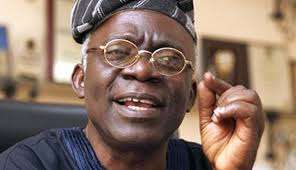
Why Oronsaye Report Won’t Reduce Governance Cost — Falana

A Senior Lawyer and Human Rights Activist, Femi Falana, SAN has stated why the Oronsaye reported adopted for implementation by the Tinubu led federal government will not reduce the cost of governance.  Falana, described the 12-year old Steve Oronsaye Report as outdated.  In a statement on Tuesday, the Senior lawyer, said the report won’t “substantially reduce the enormous costs of governance in the country as it does not reflect the current situation in the public service,” contrary to the belief in official circles.  The Federal Executive Council (FEC) chaired by President Bola Tinubu had on Monday approved the full implementation of the Oronsaye report. According to the Special Adviser to the President on Policy Coordination, Hadiza Bala Usman, the move was in line with the need to reduce cost of governance and streamline efficiency across the governance value chain. Falana said, “No doubt, the implementation of some of the recommendations of the Panel will take appreciable time as the merger of certain bodies require constitutional amendments or repeal of a number of statutes. “The 800-page report of the Steve Oronsaye Panel recommended the reduction of statutory agencies from 263 to 161, scrapping 38 agencies, merging 52, and reverting 14 to departments in different ministries, “Since the Goodluck Jonathan administration produced a White Paper on the Steve Oronsaye Report in 2014, the Federal Government has created more ministries, departments and agencies. “Whereas the Report recommended the reduction of 263 agencies to 151, the number of ministries, departments and agencies has increased to 1316. Even the current administration has increased the number of ministries and created new agencies. To that extent, the Steve Oronsaye Report is completely outdated. “However, in implementing the Oronsaye Report the Federal Government should ensure that the crisis of insecurity is not compounded through the retrenchment of hundreds of thousands of workers. “Instead of downsizing the public service the Federal Government should ensure that the two houses of the National Assembly are merged while the number of Ministers, Special Advisers, Senior Special Assistants and Special Assistants is significantly reduced.”

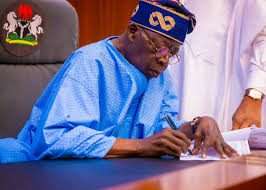
Economy: President Tinubu Enforces 60% Cut in Official Travels

President Tinubu has taken a significant step towards curbing government expenditure by enforcing a sharp reduction in travel expenses for all government officials. This decision, disclosed by Ajuri Ngelale, the presidential spokesman, aims to reduce both domestic and international travel costs by 60%. Addressing State House Correspondents on Tuesday at the Presidential Villa in Abuja, Ngelale highlighted that the directive was a cost-cutting measure specifically targeted at official travels. The reduction in travel expenditure will not spare any government office, affecting the President, Vice President, First Lady, ministers, and their respective entourages. “This directive from Tinubu mandates a substantial reduction in state entourages,” Ngelale emphasized, clarifying that it is not a mere request but a firm directive from the office of the President. The move will impact the President’s office, the Vice President, and all appointees. The breakdown of the enforced travel reductions indicates a substantial decrease in the number of individuals allowed on both foreign and local trips: Foreign Trips: – President: 20 persons – Vice President: 5 persons – First Lady: 5 persons Local Trips: – President: 25 persons – Vice President: 15 persons – First Lady: 10 persons This directive signals a proactive effort by the administration to streamline expenses and ensure more prudent use of public funds in official travels, echoing Tinubu’s commitment to fiscal responsibility and efficient governance.