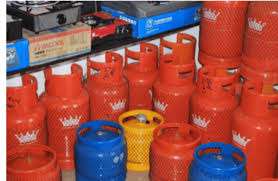
FG Bans Cooking Gas Export to Tackle Soaring Prices

In a move to stabilize domestic gas prices, the Nigerian government has imposed a ban on the exportation of cooking gas. Minister of State, Petroleum Resources, Ekperikpe Ekpo, revealed this initiative at a workshop in Abuja, emphasizing that halting the export will increase the volume available in the domestic market, leading to a natural reduction in prices. His words: “We are interacting with critical stakeholders to ensure that there is no exportation of LPG. “All LPG produced within the country will have to be domesticated. And when this is done, the volume will increase and of course, the price will automatically crash. “I am in contact with the regulation, NMDPRA, we hold meetings almost on daily basis, and the producers such as Mobil, Chevron, and Shell. So there is that hope that things will turn around. We don’t need to make noise about it.”
12.5kg Cooking Gas To Hit N18,000 By December —NALPGM

President of the Nigerian Association of Liquefied Petroleum Gas Marketers (NALPGM), Oladapo Olatunbosun has warned that the price of 12.5kg of cooking gas could go as high as N18,000 if the present scarcity persists. According to Olatunbosun, scarcity of the product is biting hard in Lagos and some other states in the country, noting that the scarcity has pushed up the price from the previous N900 per kilogram to as high as N1,400 in Lagos. He stated further that there is no justification for the current increase in refill prices. He said that stakeholders along the value chain were using the foreign exchange rate somersault as a reason to increase LPG prices, adding that 12.5kg refill prices could reach N18,000 by December 2023. “There is a ridiculous hike in gas prices going on right now, and I am afraid that if the federal government does not step in to checkmate the activities of these terminal owners, prices could reach as high as N18 million per metric ton by December. This means that a 12.5kg could go as high as N18,000″. The cost of LPG is tied to the exchange rate between the Naira and the Dollar. As the Naira weakens against the Dollar, it directly impacts the price of LPG. In just a year, the Naira weakened considerably against the Dollar, escalating from N565 to N1040 in October 2023. These shifts affect the price of LPG. Nigeria’s LPG market is supplied by both local production and imports. Local production covers a significant share, and imports bridge the supply gap. Nigeria’s Liquefied Natural Gas (NLNG) contributes about 40 per cent of LPG demand through domestic production. The remaining 60 per cent is imported. The price of a 12.5kg cylinder of cooking gas surged by 26 percent in two weeks to N15,000 from N11,850 owing to high global crude oil and gas prices and Nigeria’s forex crises. This recent surge will further squeeze cash-strapped consumers, erode their purchasing ability and amplify a cost of living crisis in Africa’s most populous nation. It will also accelerate October inflation when the figures are released. The World Bank, in its latest Nigeria Development Update report for June 2023, said the loss of purchasing power from high inflation has increased poverty in the short term, pushing an estimated four million Nigerians into poverty between January – May 2023. The global bank estimates based on the NBS data show that 89.8 million Nigerians fell below the poverty line at the start of 2023, with an additional four million making it 93.8 million in May of 2023.