Israel/Hamas Conflict Could Distort Global Commodity Markets –World Bank

Israel/Hamas Conflict Could Distort Global Commodity Markets –World Bank

Although the global economy is in a much better position than it was in the 1970s to cope with a major oil-price shock, an escalation of the latest conflict in the Middle East—which comes on top of disruptions caused by the Russian invasion of Ukraine—could push global commodity markets into uncharted waters, the World Bank has said. In its latest Commodity Markets Outlook, released on Monday morning, The Washington based lender said the effects should be limited if the conflict doesn’t widen. The Bank note that oil prices are expected to average $90 a barrel in the current quarter before declining to an average of $81 a barrel next year as global economic growth slows. “Overall commodity prices are projected to fall 4.1% next year. Prices of agricultural commodities are expected to decline next year as supplies rise. Prices of base metals are also projected to drop 5% in 2024. Commodity prices are expected to stabilize in 2025. “The conflict’s effects on global commodity markets have been limited so far. Overall oil prices have risen about 6% since the start of the conflict. Prices of agricultural commodities, most metals, and other commodities have barely budged. “The outlook for commodity prices would darken quickly if the conflict were to escalate,” it said. The report stated that effects would depend on the degree of disruption to oil supplies. According to the global Bank, in a “small disruption” scenario, the global oil supply would be reduced by 500,000 to 2 million barrels per day—roughly equivalent to the reduction seen during the Libyan civil war in 2011. Under this scenario, the oil price would initially increase between 3% and 13% relative to the average for the current quarter—-to a range of $93 to $102 a barrel, the report said. “In a “medium disruption” scenario—roughly equivalent to the Iraq war in 2003—the global oil supply would be curtailed by 3 million to 5 million barrels per day. That would drive oil prices up by 21% to 35% initially—to between $109 and $121 a barrel. In a “large disruption” scenario—comparable to the Arab oil embargo in 1973— the global oil supply would shrink by 6 million to 8 million barrels per day. That would drive prices up by 56% to 75% initially—to between $140 and $157 a barrel. “The latest conflict in the Middle East comes on the heels of the biggest shock to commodity markets since the 1970s—Russia’s war with Ukraine. That had disruptive effects on the global economy that persist to this day. Policymakers will need to be vigilant. If the conflict were to escalate, the global economy would face a dual energy shock for the first time in decades—not just from the war in Ukraine but also from the Middle East,” said World Bank’s Chief Economist and Senior Vice President for Development Economics, Indermit Gill. The World Bank’s Deputy Chief Economist and Director of the Prospects Group, Ayhan Kose, noted that “Higher oil prices, if sustained, inevitably mean higher food prices. If a severe oil-price shock materializes, it would push up food price inflation that has already been elevated in many developing countries. At the end of 2022, more than 700 million people—nearly a tenth of the global population—were undernourished. An escalation of the latest conflict would intensify food insecurity, not only within the region but also across the world.”

3 Die As OPC, Amotekun Clash In Oyo

3 Die As OPC, Amotekun Clash In Oyo

A violent clash which erupted in Iwerele, Iwajowa Local Government Area of Oyo State, involving multiple groups including the Oodua Peoples Congress (OPC), Amotekun, Operation Burst, Soludero, and a group of herdsmen, has resulted in three dead and many casualties. The cause of the conflict remains unknown. Confirming the clash, a prominent titled Chief in the community revealed that the turmoil began when a group of herdsmen invaded a local farm with their cattle, leading to a dispute that tragically claimed the life of the farm’s owner. Responding to the escalating situation, combined security forces consisting of Operation Burst, OPC, Amotekun, and Soludero were called in to restore peace to the area.  Reports suggest that these security operatives were ambushed by the herdsmen during their intervention efforts. The exact number of casualties resulting from this conflict is yet to be determined, as the situation continues to develop. 

Death Toll Of Palestinians In Gaza Rises To Over 1,200

Death Toll Of Palestinians In Gaza Rises To Over 1,200

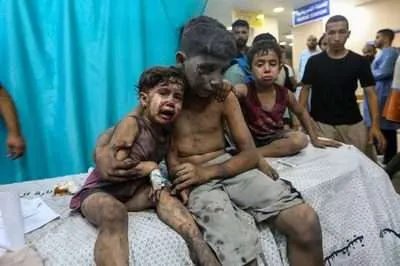
The death toll of Palestinians in Gaza has tragically climbed to over 1,200 as Israeli airstrikes continue to devastate the region. According to the Gaza Health Ministry, approximately 5,800 people have also sustained injuries. This escalating violence marks the sixth day of intense conflict between Israel and Hamas, the ruling militant group in Gaza. In their efforts, Israel has relentlessly targeted the densely populated and economically disadvantaged Palestinian coastal enclave, further exacerbating the humanitarian crisis. Vital supplies, including food, fuel, and medicines, are severely restricted from entering Gaza, leading to grave concerns about the welfare of innocent civilians. Additionally, Israeli officials report that 1,200 Israelis have lost their lives since the onset of Hamas’ violent attacks on communities and an electronic music festival near the Gaza Strip over the weekend. Among the casualties, 189 Israeli soldiers have tragically perished in the ongoing conflict.

Niger Coup: Tchiani asserts defensive stance against ECOWAS

Niger Coup: Tchiani asserts defensive stance against ECOWAS

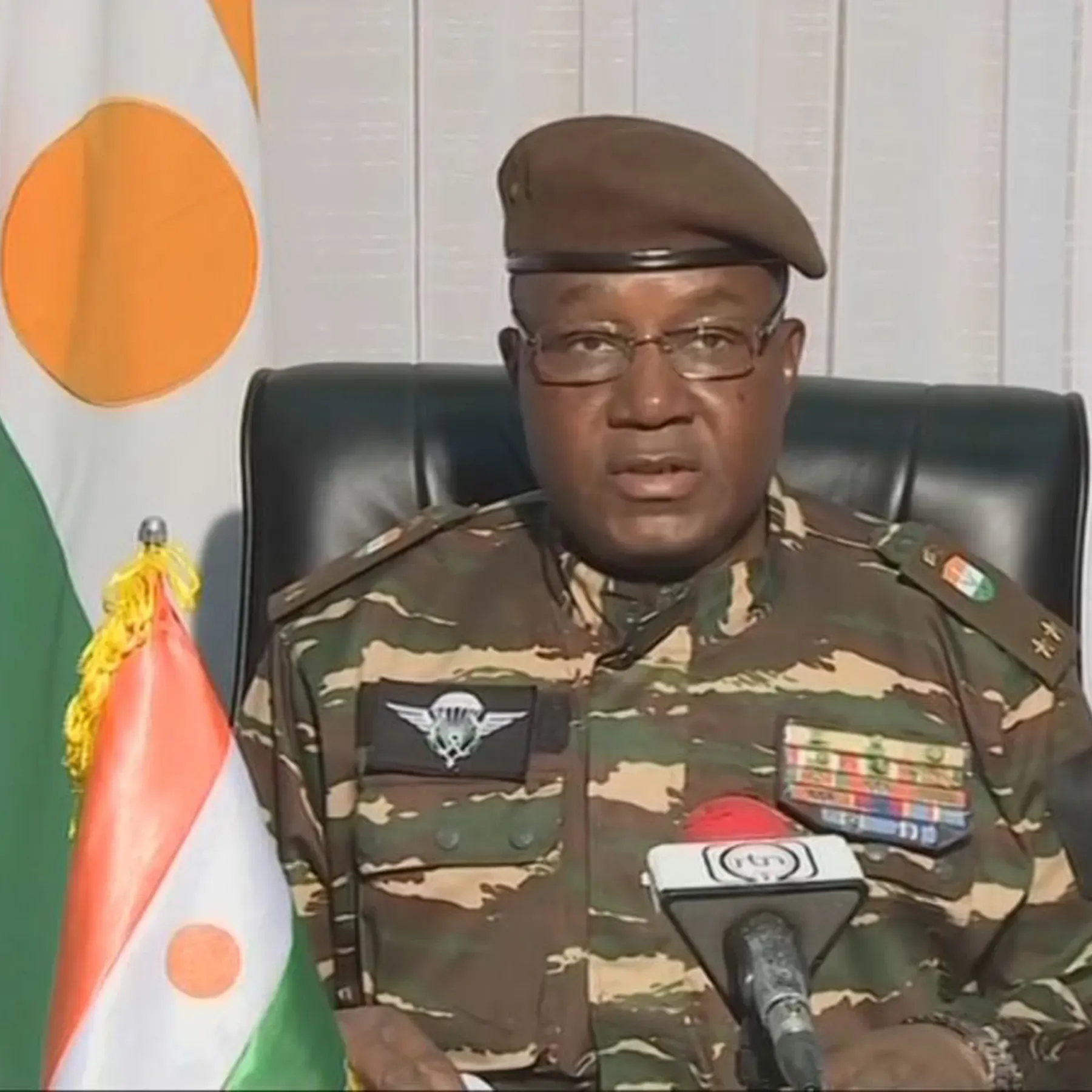
In the wake of the recent coup in Niger, General Abdourahamane Tchiani, the leader of the mutineers who assumed control, emphasized his nation’s reluctance for conflict but readiness to safeguard itself when necessary. Tchiani conveyed that both the military and the populace of Niger are averse to the prospects of war, yet they remain steadfast in their determination to counter any signs of aggression, as reported by Al Jazeera. The head of the junta underscored the unawareness of member states within the Economic Community of West African States (ECOWAS) regarding Niger’s pivotal role in preventing regional destabilization amidst a surge in terrorist activities. He expressed skepticism towards the imposed sanctions on his country, suggesting that they aimed to exert pressure on the rebels rather than resolve the ongoing crisis. Tchiani further clarified that the insurgents’ objective isn’t to seize power but to facilitate a solution that aligns with the best interests of the populace. The coup leader disclosed that an ECOWAS delegation visited Niger’s capital and held discussions both with the deposed President Mohamed Bazoum, who was removed and detained by his own guard led by Tchiani, and with Tchiani himself. Since the coup’s occurrence on July 26, ECOWAS has responded by suspending financial aid to Niger, freezing rebel-held assets, and imposing travel restrictions on flights to and from the nation. A subsequent summit in Nigeria’s Abuja resulted in ECOWAS leaders agreeing to ready a standby force to potentially compel the Nigerien military to reinstate Bazoum. On a recent note, ECOWAS Commissioner for Political Affairs, Abdel-Fatau Musah, indicated that the general staff chiefs within ECOWAS have set a date for an undisclosed military intervention. This decision comes as tensions and uncertainties persist within Niger’s political landscape. General Abdourahamane Tchiani’s statements echo a stance against war while highlighting the nation’s resolve to defend itself against aggression, as Niger navigates through these challenging times of political transition and unrest.