Nigeria @63: NLC Issues Powerful Message To Nigerians Ahead Nationwide Protest

NLC, TUC Suspend Industrial Action For 1 Month

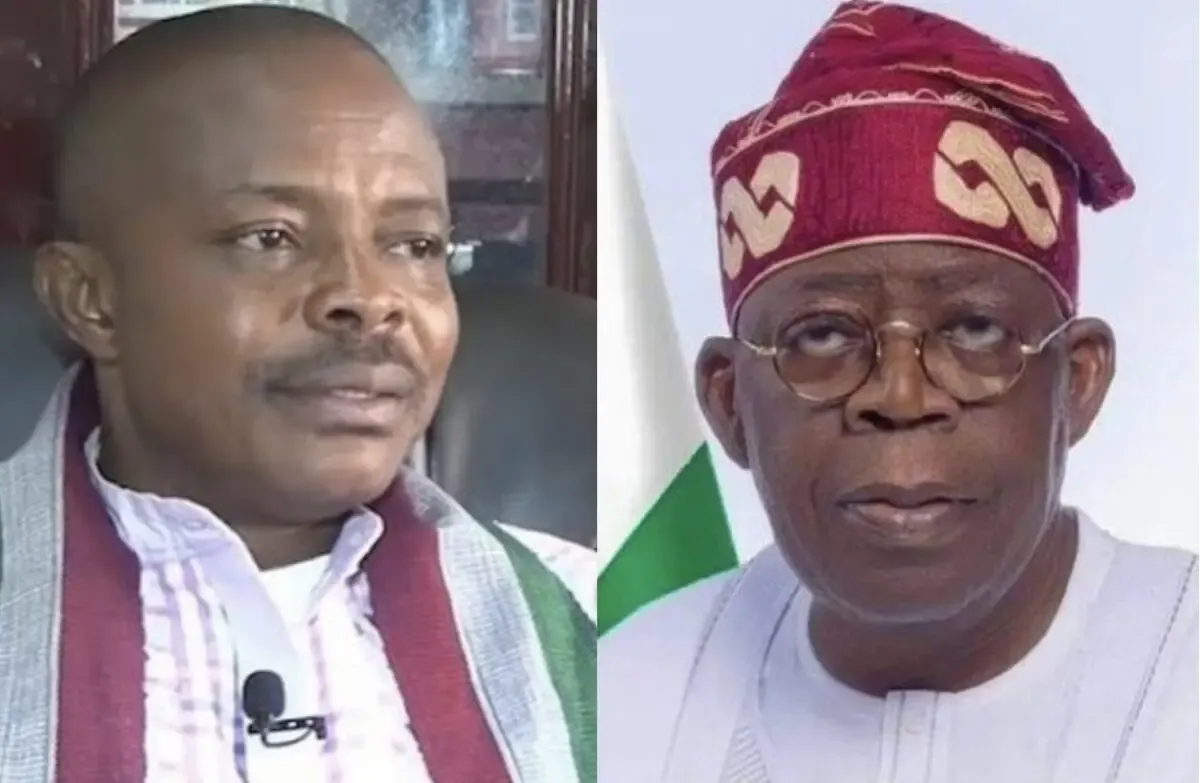
The Nigeria Labour Congress (NLC) has released a powerful message to mark the 63rd Independence Day of Nigeria. In this message titled “63RD INDEPENDENT DAY MESSAGE TO ALL NIGERIAN WORKERS AND PEOPLE BY THE NIGERIA LABOUR CONGRESS (NLC)… NIGERIA: THE TRAVAILS OF A MISMANAGED GIANT”, the NLC President, Comrade Joe Ajaero, addressed the country’s downward spiral since its early days of independence, emphasizing the critical need for reforms and a nationwide strike to demand change. According to Ajaero, Nigeria, which was once seen as a promising giant on the world stage, has suffered from mismanagement and corruption over the decades. He recalled the optimism of the nation’s early years, with thriving agriculture, industries, and a population full of hope. The healthy competition among regions drove progress and prosperity. “However, the promise of Nigeria’s early independence years soon gave way to a series of missteps, corruption, and missed opportunities. The erosion of ethical governance, widespread corruption, and political instability became the hallmarks of the nation’s trajectory. “One striking example of this decline is the demise of Nigeria Airways, a once-thriving national airline with a global presence. Today, Nigeria has neither a national airline nor a national shipping line, which has led to embarrassing situations like the ill-fated Nigeria Air project. The country’s once-strong currency, the Naira, has also weakened significantly in comparison to the U.S. Dollar,” Ajaero said. The press release further questions the privatization of key assets, including power generation and distribution companies, aluminum smelter companies, and steel manufacturing companies, which seem to have failed to deliver the expected benefits to the Nigerian people. On the healthcare and education fronts, the NLC expressed concern about the declining state of public hospitals and the exorbitant cost of quality education, leading to many Nigerians seeking education and healthcare abroad. The message also raises the issue of insecurity, particularly the challenges in combating Boko Haram insurgency, despite the military’s past successes in conflicts like the Nigerian Civil War. Furthermore, the NLC said it has not overlooked the plight of Nigerian workers, who face unfair labour practices, inadequate wages, and the burden of rising fuel prices. They argue that the minimum wage of N30,000 is insufficient to meet basic needs. The NLC extended its message beyond criticism, as it called on Nigerians from all regions to unite, demand transparency and accountability from their leaders, and work toward a brighter future. The NLC’s nationwide strike, scheduled for October 3rd, aims to draw attention to these issues and rally citizens to be active participants in reshaping their nation. Comrade Joe Ajaero reminded Nigerians that the path to a better future for their nation requires collective effort. He called on the people to join hands and build a coalition to address the nation’s challenges, transforming Nigeria into a truly independent and prosperous nation once more. See Full Statement Below: 63RD INDEPENDENT DAY MESSAGE TO ALL NIGERIAN WORKERS AND PEOPLE BY THE NIGERIA LABOUR CONGRESS (NLC)  NIGERIA: THE TRAVAILS OF A MISMANAGED GIANT Our nation with all its flaws at conception possesses a great potential to be amongst the best economies of the world. It had the promise of a nation destined to be prosperous and continually developing. At independence, it began to demonstrate the signs that it was going to fulfill these expectations especially with all the giant strides being recorded in all the regions that made up the country. There was a healthy competition amongst the diverse regions for progress with pacesetting and record-breaking achievements all around the nation. When Nigeria gained independence on October 1st, 1960, the world watched in awe as a nation endowed with abundant human and natural resources took its place on the global stage. With a thriving agricultural sector, burgeoning industries, and a diverse and vibrant populace, Nigeria held immense promise. The spirit of unity and hope that characterized those early years was palpable, and it seemed that we were poised for greatness. The famous groundnut pyramids became the symbol of a prosperous north while the famous Cocoa House standing on the Cocoa output and the Western Television showed the readiness of the Western region to outpace others with the Eastern region demonstrating its prowess in Palm produce and its rich technological start-ups. It was indeed a nation poised for greatness as the sky beckons. Our Hospitals and Educational institutions were top notch as royalties thronged our shores for medical treatments while Asian and other African students found home in our citadels of learning. We had a nation that could feed, house and cloth her people; a nation whose citizens lived in prosperity and enjoyed a life that was comparable to that possible in all parts of the globe. Our currency which was originally the British Pounds and was changed in 1973 to the Naira was stronger than the U$ Dollars but was at par with the British Pounds. Going abroad for studies or to live was not attractive and foreign nationals thronged our shores for greener pasture. Social infrastructure was efficiently maintained and the public utilities remained functional. As we celebrate Nigeria’s 63rd independence anniversary, it is important that we drew our attention to the fact that this nation was once a great nation filled with great hope inspired by great leaders until inept and corrupt leaders took over the helms of affairs and ran the country aground. The crisis of leadership is truly the crisis of our national development.  The continued mismanagement of our resources has made it difficult for us a nation and as a people to make sustainable progress rather, we have continued to march backwards with every preceding year looking worse than the previous one.  Regrettably, the decades that followed were marked by a series of missteps, mismanagement, and missed opportunities. The erosion of ethical governance, rampant corruption, and political instability became defining features of our nation. Instead of harnessing our potential for the collective good, our leaders often pursued personal interests, leaving the masses to grapple with the consequences. There is no other way

Shelve Planned Strike, Tinubu, Sultan Beg NLC, TUC

Shelve Planned Strike, Tinubu, Sultan Beg NLC, TUC

President Bola Tinubu has appealed to the labour unions to give government more time to address the issues bedeviling the country. The Nigeria Labour Congress (NLC) and the Trade Union Congress (TUC) have fixed October 3rd to embark on an indefinite strike following the removal of fuel subsidy by the Federal Government and the attendant hardship it has brought on Nigerians. Tinubu, who was represented by the Deputy Senate President, Sen. Barau Jibrin, at a public lecture to mark Nigeria’s 63rd Independence Anniversary on Friday in Abuja, announced that the Federal Government is determined to address the socio-economic challenges facing Nigerians. Whilst urging them to sheathe their swords “in the interest of the masses”, Tinubu said his government was doing everything within its power to bring succour to Nigerians. “I want to emphasise as well that this government is new and the government is doing all within its powers to make sure it brings succour to the entire people of this country. “Government has already gone ahead to provide N500 billion to states to cushion the effects of subsidy removal. The President enjoined members of the unions to consider dialogue as the best way to resolve the issues. “The Sultan also talked about the issue of strike by the NLC. Please, on behalf of the President and the entire government, this is not the time for strike. It is too early. “Please let’s dialogue, let’s get together, let’s understand ourselves and let us look at the prevailing situation in the country,” he said.  Earlier in his remark, Alhaji Sa’ad Abubakar, the Sultan of Sokoto and President-General, Supreme Council for Islamic Affairs (NSCIA), had appealed to labour unions to shelve the nationwide strike slated to commence on Tuesday. Abubakar urged Labour not to embark on the industrial action but continue to dialouge with the Federal Government. He emphasised the need for dialogue to find solutions to the issues “instead of embarking on a strike”. “I am an advocate of dialogue because strikes don’t solve problems; they make them worse. Our leaders must tighten their belt, the common man is suffering. “I don’t think this government will just decide to make life bad for the people; as leaders and elders, we will always call on stakeholders not to embark on journeys that will make life worse for the common man. “I don’t think government can take it upon itself to make life unbearable for the common man, let’s give them chance and see what they can do,” he said. According to him, strike will add more problems to the existing economic situation. “If people are on strike, there wouldn’t be electricity, water, hospital and transportation system. “Please, let’s reach out to our brothers and sisters who are clamouring to go on strike. They should have a rethink,” Sultan appealed.

Shelve proposed warning strike, FG appeals to NLC

Shelve proposed warning strike, FG appeals to NLC to suspend

The Federal Government has appealed to the Nigeria Labour Congress (NLC) to suspend its proposed 2-day nationwide warning strike over economic hardship. The Minister of Labour and Employment, Mr Simon Lalong, made the call at a news conference on Monday in Abuja. The NLC in a communique issued at the end of its National Executive Council (NLC) said it would commence a 2-day nationwide warning strike from September 5 to September 6. The NLC also threatened to embark on indefinite nationwide strike within 14 working days or 21 days from when the communique was issued unless the Federal Government addressed the excruciating suffering of Nigerians. Lalong said that the appeal had become necessary in order to ensure robust line of communication with Nigerians and in particular the organised labour to forestall a breakdown of industrial peace. He noted that the planned industrial action would no doubt reverse some of the gains already made by the administration. According to him, in this context, it has become pertinent to appeal to the leadership of the NLC to suspend its intended two days warning strike. “As such action would be detrimental to the gains already being recorded on our course to securing a greater future for Nigerian workers and citizens at large. “Furthermore, I would request that the Comrade Leadership of the NLC gives this government some time to settle and address the issues on the ground holistically. “It should be realised that the Cabinet of this administration was only recently sworn in by Mr President and all cabinet members have hit the ground running by receiving briefings from their MDAs. “Therefore, the issues raised by the leadership of the NLC are some issues that I and the Minister of State for Labour and Employment are being briefed upon,” he said. The minister however reassured Nigerian workers that this government would never take them for granted nor fail to appreciate their support and understanding. He also said that this administration would continue to pursue policies aimed at massive employment generation in all sectors of the economy. Lalong added that this would enable government look into immediate challenges that have emerged out of its policies, saying “we cannot do this in an atmosphere devoid of industrial peace. He also said that as a Minister of Labour and Employment, he was yet to be served official communication of the NLC communiqué, following its NEC meeting as required by law. He further urged the NLC to do the needful by following laid down processes for handling such matters since the cabinet was on ground. He assured that all the issues raised by the NLC would be looked into one after the other. “Allow me to first express my sympathy and that of the government of President Bola Tinubu to Nigerians and in particular the workers. “That is over the challenges that have arisen from the removal of petrol subsidy and other policies of the government aimed at renewing hope for the future of our dear nation. “In light of these matters, I would like to reiterate my appeal to the leadership of the NLC to suspend the warning strike and subsequent future actions. “To allow us to work together to amicably resolve these issues rather than embark on actions that would further worsen the conditions of the citizens of Nigeria,” he said. He therefore announced that government would be meeting with the NLC by 3 p.m. on Monday (September 4)

Subsidy Removal: NLC declares 2-day warning strike

NLC, TUC Strike Not In National Interest – Presidency

The Nigeria Labour Congres (NLC) has declared a two-day warning strike, beginning on Tuesday, September 5, in protest against the Federal Government for failing to address the challenges caused by the removal of fuel subsidy. The NLC President, Joe Ajaero, made the declaration on Friday during a press conference at the Labour House in Abuja, while speaking on resolutions by the NLC National Executive Committee (NEC) meeting the previous day. The labour union is accusing the Federal Government of abandoning the negotiations and failing to implement some of the resolutions from previous meetings with the government. On August 2, organised labour protested what it described as the anti-people policies of the administration of President Bola Tinubu. The Nigeria Labour Congress (NLC), Trade Union Congress (TUC) and their affiliate unions demonstrated in the Federal Capital Territory (FCT) and several states, including Lagos, Abia, Plateau, Kaduna, Kano, Rivers, Zamfara, Katsina, Cross River, Ebonyi, Enugu, Kwara, Ogun, Imo, Ondo, and Edo. The protest followed a seven-day ultimatum issued to the Federal Government demanding “the immediate reversal of all anti-poor policies of the federal government including the recent hike in PMS (Premium Motor Spirit) price, increase in public school fees, the release of the eight months withheld salary of university lecturers and workers”. The union also demanded an upward review of the minimum wage from N30,000 to N200,000, saying that since the President’s “subsidy is gone” inauguration speech of May 29, 2023, the peace of mind of Nigerians has gone. Several meetings between the Presidency and the unions on palliatives for Nigerians suffering hardship in the wake of the petrol subsidy removal proved abortive. Last month, NLC president Joe Ajaero argued that the N5 billion approved for each state and the FCT to cushion the impact of fuel subsidy removal was inadequate to impact on the people. Ajaero had argued that if calculated, the N5 billion would not amount to N1,500 per person. According to him, it is unclear whether the money is a loan or a palliative to the states or to Nigerians. “The first increase in the pump price of petroleum products and the last one moved a lot of people from the borderline to a very high level of poverty,” he said. “Now, if you calculate it, you will discover that this will not translate to N1,500 per person and you ask: is that the impact? Is that really what we want to achieve? Let’s assume it’s a loan. What is really going to happen? Is it garbage in, garbage out? “If it is N5 billion, I think organised labour would want anybody to do the calculation and tell us how it is going to impact Nigerians on what is happening currently. If it is a loan, then it is too bad.”

Subsidy: NLC in dilemma over planned strike amid CSOs’ pullout

Just In: NLC, TUC Declare Nationwide Strike November 14

The Nigeria Labour Congress (NLC) and Trade Union Congress (TUC) are facing a tough decision on whether to proceed with their planned nationwide protest or cancel it. The Federal Government is making efforts to thwart the protest, with the Chief of Staff to the President, Bola Tinubu’s representative, Femi Gbajabiamila, urging the labour unions to call off the proposed strike. He cited palliative measures announced by the President the previous night as reasons to shelve the protest. He said, “We have laid out the plans, the interventions of Mr. President, as you all heard in his broadcast yesterday, we made it clear that this was just Mr. President’s initial rollout and interventions and that conversations will be ongoing as we go along. “And we appealed to Labour, we did appeal to labour to call off the protests for tomorrow. We found listening ears here and they did agree that they all accepted that Mr. President’s broadcast was a welcome development and that they will go back home to talk to the other leaders that are not present today. So we’re hopeful that they will do the right thing and call off the strike tomorrow.” Adding to the complexity, a Coalition of Civil Society Organisations/Labour Centre has cautioned the NLC and TUC against proceeding with the strike. They expressed concerns about the potential consequences on the nation, fearing that the protest could be hijacked by disgruntled Nigerians benefiting from fuel subsidies, leading to loss of lives and property. This cautionary message was conveyed in a communique issued after a meeting at Lagos Airport Hotel, Ikeja, attended by representatives of various civil society groups. It was attended by Razak Olokoba of Campaign for Dignity in Governance (CDG), Nelson Ekujumi (Centre for Social and Economic Rights), Titi Akosa (Centre for 21st Century Issues), Linus Okoroji (Humanity Services Project), Raji Rasheed Oyewunmi (Yoruba Citizen Action for Change), Gbenga Soloki (Campaign Against Impunity and Domestic Violence), Razaq Oladosu (Grassroots Democratic Initiatives), Ramat Abdulrazak (Women Grassroot Network), among others. Furthermore, 16 Northern-based civil society groups under the Coalition of Arewa Civil Society Organisations have also pulled out from supporting the strike, afraid that it could harm the already fragile economy and inflict further hardship on ordinary citizens. The Federal government, on its part, has pleaded with Organised Labour to suspend the strike, assuring them that they are taking measures to address the hardship caused by the removal of petrol subsidies. However, the NLC remains adamant and insists on proceeding with the national protest, asserting that the palliatives presented by the President are inadequate to alleviate the suffering in the country. In a press briefing at the end of the Presidential Steering Committee on Palliatives, the Chief of Staff to the President, Rt. Hon. Femi Gbajabiamila, expressed hope that the labour unions would reconsider their decision and call off the planned strike after discussions with absent leaders. Meanwhile, the NLC, led by its Deputy President, Comrade Titus Amba, maintained that the President’s palliative measures were insufficient to address the issues at hand.