CBN Boosts Forex Market with $500 Million Injection

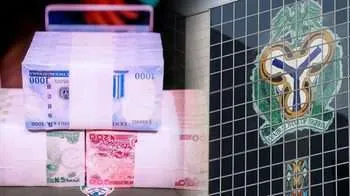
The Central Bank of Nigeria (CBN) has infused an additional $500 million into the foreign exchange market to tackle the persistent backlog of confirmed forex transactions. This revelation was made by Mrs. Hakama Sidi Ali, Acting Director of the Corporate Communications Department at the CBN, during a press briefing held in Abuja on Monday, January 29. Mrs. Sidi Ali underscored the commitment of the central bank, stating, “The Management of the CBN is resolute in clearing all legitimate foreign exchange backlogs within a short time frame.” She assured the public that the CBN is executing a comprehensive strategy designed to enhance liquidity in the Nigerian foreign exchange markets across short, medium, and long-term horizons. The strategy, as explained by Sidi Ali, is laser-focused on addressing longstanding issues that have hindered the efficient operation of the Nigerian forex markets. Key components include streamlining and unifying multiple exchange rates, promoting transparency, and reducing arbitrage opportunities. The governor emphasized on resolving fundamental issues, Sidi Ali stated, “The CBN’s focus is squarely on addressing the underlying challenges that have impeded the effective operation of the Nigerian FX markets over the years.” She expressed confidence that achieving a stable exchange rate would not only boost investor confidence but also attract foreign investment. “We believe that a stable exchange rate will bolster investor confidence and attract foreign investment,” she remarked. Sidi Ali urged all participants in the forex market to abide by the rules, emphasizing that transparency would facilitate a fair determination of exchange rates, ensuring stability for businesses and individuals alike. This $500 million injection by the CBN is the latest in a series of measures implemented in recent months, underscoring the central bank’s ongoing commitment to addressing the forex backlog and maintaining stability in the forex market.
CBN Mulls New Recapitalisation For Banks

The Central Bank of Nigeria (CBN) says it is planning to implement a new round of banking recapitalisation for the Deposit Money Banks (DMBs). Mr Olayemi Cardoso, the CBN Governor, announced this at the 58th Annual Bankers’ Dinner organised by the Chartered Institute of Bankers of Nigeria (CIBN) on Friday night in Lagos. The planned recapitalisation means that DMBs will be required to raise additional capital to meet the demands of Nigeria’s economy. Cardoso noted that President Bola Ahmed Tinubu in his Policy Advisory Council report on the national economy, had set an ambitious goal of achieving a Gross Domestic Product (GDP) of one trillion dollars by 2030, with clearly defined priority areas and strategies. According to him, it is important that banks have a role to play in the anticipated one trillion dollars economy by 2030. Cardoso said going by the huge developmental role the apex bank would want the banks to play in the next seven years, it had become imperative to demand their recapitalisation. To achieve the target, Cardoso said that Nigeria needed to experience a more rapid and inclusive economic expansion. “The administration has already commenced this journey through fiscal reforms, including the removal of petrol subsidies and the unification of the foreign exchange market rate. “Considering the policy imperatives and the projected economic growth, it is crucial for us to evaluate the adequacy of our banking industry to serve the envisioned larger economy. “It is not just about the stability of the financial system in the present moment, as we have already established that the current assessment shows stability. “However, we need to ask ourselves: Will Nigerian banks have sufficient capital relative to the financial system’s needs in servicing a $1.0 trillion economy in the near future? In my opinion, the answer is “No!” unless we take action. “Therefore, we must make difficult decisions regarding capital adequacy. As a first step, we will be directing banks to increase their capital,’’ he said. The CBN governor also announced the approval of another round of Open Market Operations (OMOs) to mop up excess liquidity from the banking system. OMOs are the main monetary policy instrument, through which the central bank buys or sells securities with financial institutions in the open markets, thereby influencing the amount of money in circulation and/or interest rates. Cardoso said, “An OMO auction was recently held with a stop rate of 17.5 per cent for the one-year tenor, attracting oversubscription of N350 billion. “Another round of OMO has been approved to further reduce excess liquidity. “Offering N108.1 billion worth of Treasury Bills with three tenors to the investing public, which can help reduce liquidity in the banking system and support government fundraising.’’ Cardoso said the apex bank would use its monetary policy tools to keep inflation low and stable. He said, “the Central Bank of Nigeria is committed to achieving monetary and price stability. This is not just a technical objective, but it has real-life implications for the well-being of our citizens. “Through targeted policies, transparent market operations, and coordination between monetary and fiscal authorities, we can ensure a more stable exchange rate, control inflation, and create an enabling environment for businesses and individuals to thrive.’’ He noted that the apex bank had taken steps to improve the effectiveness of its monetary policy tools and to strengthen the transmission mechanism so that its policy decisions have a greater impact on the economy Cardoso added that the ability of the monetary policy committee to influence the economy through its decisions had been weakened because the channels through which monetary policy was transmitted had become disrupted. The CBN governor said the apex bank was planning to make changes to the country’s foreign exchange regulations by developing new guidelines and legislation. He stated that banks and foreign exchange operators would be consulted before making any final decisions.
CBN Didn’t Liquidate New Banks, Clarifies NDIC

The Nigeria Deposit Insurance Corporation (NDIC) has explained its role in the 20 banks liquidated by the Central Bank of Nigeria (CBN). In a signed statement by the Director, Communication & Public AffairsBashir A. Nuhu, the Corporation stated that the report in various social media platforms was misleading. The statement reads: “The Nigeria Deposit Insurance Corporation (NDIC) wishes to address the recent misleading news reports circulating on various social media platforms under the headline “CBN Liquidates 20 Banks – NDIC (Names).” “Contrary to the misleading headline, we would like to clarify that the 20 banks mentioned in those reports were among the banks that had been previously closed due to the revocation of their operating licenses by the Central Bank of Nigeria (CBN) between 1994 and 2018. “The general public should be aware that the NDIC has fulfilled its commitment by paying the guaranteed sums owed to depositors. Additionally, the Corporation has made cumulative payments of liquidation dividends totalling N45.45 billion as of July 2023, representing amounts exceeding the guaranteed sums to depositors of the 20 banks. “In light of further recoveries from debtors of the liquidated banks, the Corporation has announced an additional N16.18 billion in liquidation dividends to be paid to depositors, creditors, and shareholders of the 20 banks in liquidation. It’s important to note that the liquidation dividend represents the amount in excess of the insured sums paid by the NDIC to depositors of a closed bank. This amount is derived from recoveries made from the realization of assets of failed financial institutions and covers payments to creditors and shareholders after the full payment to depositors of the defunct bank. The deposit insurer urge relevant stakeholders to visit any of its offices or access the claims page on our website, www.ndic.gov.ng, to download, complete, and submit the verification form along with the prescribed supporting documents. Submissions should be sent to the dedicated email: claimscomplaints@ndic.gov.ng, it said. The affected banks are; Liberty Bank, City Express Bank, Assurance Bank, Century Bank, Allied Bank, Financial Merchant Bank, Icon Merchant Bank, Progress Bank, Merchant Bank of Africa (MBA), Premier Commercial Bank, North South Bank, and Prime Merchant Bank. Others are Commercial Trust Bank, Cooperative and Commerce Bank, Rims Merchant Bank, Pan African Bank, Fortune Bank, All States Trust Bank, Nigeria Merchant Bank, and Amicable Bank in-liquidation.
No Plans To Re-Denominate Naira, Says CBN

The Central Bank of Nigeria (CBN) has insisted that it has no plans to re-denominate the Naira, saying such reports are misleading. According to a statement by the Director, Corporate Communications of the Apex Bank Dr. Isa AbdulMumin, he wondered why a narrative that had been refuted by the Bank continues to gain traction. “The attention of the Central Bank of Nigeria (CBN) has been drawn to the wide circulation of a text message suggesting that the Bank plans to redenominate the country’s legal tender, the Naira, with effect from January 2024. “We are concerned that this narrative, which we had refuted before now, appears to be gaining traction with several debates on the implication of such a policy for the Nigerian economy. “We wish to reiterate that the contents of the message are misleading,” it said. The Apex Bank noted that the “authors of the message, in their mischief, modified text eked from an old policy move by a previous CBN Governor in 2007 to make it appear recent. “For the avoidance of doubt, there is currently no plan by the Bank to restructure and redenominate the naira as it considers reforms”, according to laid down procedures in line with the provisions of the CBN Act, 2007. The regulator advised Nigerians to ignore the news report, “as it is speculative and calculated to cause panic in the polity.”
Former CBN Dep Gov, Moghalu Gets APSS Appointment

Kingsley Moghalu, a former Deputy Governor of the Central Bank of Nigeria, (CBN) has been appointed to head the board of directors of the Africa Private Sector Summit, APSS. His appointment was announced by the founder and outgoing Chairman of APSS, Judson Wendell Addy. Addy expressed confidence in Moghalu’s leadership experience, credibility, and networks. This private sector-led non-profit organization, headquartered in Accra, Ghana, is dedicated to promoting trade and investment across the African continent. In response to his appointment, Professor Moghalu expressed his honour and commitment to working with African companies, governments, international organizations, and other stakeholders to advance the vital role of the private sector in the structural transformation of African economies.
9 Years After, CBN Removes Restriction To FX On 43 Items

The Central Bank of Nigeria says it has removes restriction to foreign exchange placed on forty-three in 2015. According to a statement signed by Director, Corporate Communications, Isa AbdulMumin, importers of those items are now free to access the FX market to purchase foreign exchange. Former CBN Governor, Godwin Emefiele had in 2015, placed a restriction on 43 items that cannot access forex at the FX market. According to Emefiele, at the time, it was part of effort to encourage local production. “Importers of all the 43 items previously restricted by the 2015 Circular referenced TED/FEM/FPC/GEN/01/010 and its addendums are now allowed to purchase foreign exchange in the Nigerian Foreign Exchange Market,” the Apex Bank said. The regulator added that it will continue to promote orderliness and professional conduct by all participants in the Nigerian Foreign Exchange Market to ensure market forces determine exchange rates on a Willing Buyer – Willing Seller principle. “The CBN reiterates that the prevailing Foreign Exchange (FX) rates should be referenced from platforms such as the CBN website, FMDQ, and other recognised or appointed trading systems to promote price discovery, transparency, and credibility in the FX rates. “As part of its responsibility to ensure price stability, the CBN will boost liquidity in the Nigerian Foreign Exchange Market by interventions from time to time. As market liquidity improves, these CBN interventions will gradually decrease. “The CBN is committed to accelerating efforts to clear the FX backlog with existing participants and will continue dialogue with stakeholders to address the issue. “The CBN has set as one of its goals the attainment of a single FX market. Consultation is ongoing with market participants to achieve this goal. Participants and the general public are to be guided by the above,” it further said.
Naira Weakens Despite CBN’s Intervention

Since the unification of all the official foreign exchange (FX) windows, the Naira has continued to depreciate against the US dollar, down by 39.6 per cent to N765.83/$ as of 11 October 2023 from N462.88/$ at the I&E Window. Based on the half-year financial markets report of the Central Bank of Nigeria, it has maintained its intervention in the foreign exchange market in an attempt to alleviate demand pressures and ensure exchange rate stability. A total of $6,439.33 million was sold at the foreign exchange market made up of spot sales of $1,557.47 million and forward sales of $4,881.86 million. The spot sales comprised $612.41 million sold at the inter-bank Secondary Market Intervention Sales (SMIS) window, $455.31 million sold to Small and Medium Enterprises (SMEs), $441.75 million for Invisibles, and $48.00 million sold at the I&E window while the bank purchased a total of $655.53 million in the FX market. However, the shocks of the policy have been more pronounced at the parallel market leading to a steep depreciation of the Naira to N1020/US$ on 10 October 2023. With little control over the depreciation of the nation’s currency, the then acting governor of the Central Bank of Nigeria (CBN), Mr. Fola Shonubi, announced plans to put in place new policies that would guide the dealings of FX to boost supply in the market. Apparently, the measures put in place have not been effective as demand for FX continues to rise amidst an acute shortage of supply. “We have always argued that while we believe the unification of the various FX rates is a pro-market policy that will be positive for the economy in the long term, the short to medium-term impact will be hard too hard on the average consumer. “A focus on rate convergence without structural reforms to increase the supply of FX will be a case of treating the symptoms while ignoring the underlying cause of the problem which is an acute shortage of supply amidst a growing demand for FX. Meanwhile, while crude oil sales and Foreign Portfolio Investments (FPIs) are two major sources of FX that have declined significantly, Oil production remains depressed, reported at 1.57 mbpd in September (highest so far this year) and are yet to see any significant foreign capital inflows. According to the Nigerian National Petroleum Company Limited (NNPCL), between September 30 and October 6, 128 crude oil theft incidents were recorded across the oil-producing areas of the Niger Delta. In the specific timeframe mentioned, there were numerous illicit activities in the oil sector. These included 17 cases of unauthorized connections, 27 illegal refineries, 11 infractions related to vessel tracking systems (AIS), and 49 instances of wooden boat arrests.
Cardoso Pledges Conducive Atmosphere For Foreign Investments

Following his confirmation as the Governor of the Central Bank of Nigeria (CBN), Mr. Olayemi Cardoso has said that the CBN will do all within its statutory functions to address identified distortions and ensure a conducive atmosphere for different categories of investors. He gave the assurance in his office on Thursday, when a group of investors paid him a courtesy visit, noting that under his leadership, the new management team at the Bank will do its best to tackle the impediments to liquidity in the foreign exchange market in Nigeria. While disclosing plans to formally unveil his agenda for the monetary and financial sector in the days ahead, Mr. Cardoso stressed the importance of credibility and transparency in implementing the Bank’s monetary policy. To achieve this, he said the Bank would focus on strengthening its data-gathering system to ensure that only verifiable data will be relied upon for evidence-based decisions. According to him, the CBN would also adhere to rules that are known, acceptable and transparent for the conduct of monetary policy. Speaking further on liquidity management, he said his team had a short-term goal of addressing structural issues within the financial system that gave rise to the liquidity challenge in the first instance. On the relationship between the monetary and fiscal authorities, the new CBN Governor said there would continue to be consensus between both authorities to harmonise their positions on the interest rate and inflation. He, however, said the Bank would remain open to different views in its push for greater transparency. Meanwhile, Mr. Cardoso said the Bank would only provide strategic policy support to critical sectors of the economy while allowing experts to take charge of such critical sectors, given that the expertise lies within other relevant agencies. In their remarks, the investors, led by Mrs. Ireti Samuel-Ogbu, said they were at the CBN to discuss ways of strengthening collaboration to boost foreign investment in Nigeria. The group also emphasised issues around the Bank’s independence and the need to grow the country’s foreign exchange reserve, among other issues.
Senate Confirms Olayemi Cardoso As CBN Governor

In a significant development, the Senate has officially confirmed the appointment of Dr. Olayemi Cardoso as the Governor of the Central Bank of Nigeria (CBN). This confirmation comes after thorough screening and evaluation on Tuesday, during which Cardoso’s qualifications and suitability for the role were thoroughly examined. Dr. Cardoso’s confirmation also marks the approval of four nominees for the positions of Deputy Governors at the CBN. These appointments collectively signify a crucial step in shaping the direction of the apex bank’s operations over the next five years. It’s worth noting that Dr. Cardoso had assumed the role of Acting CBN Governor last week, pending his formal screening and subsequent confirmation by the Senate. This confirmation solidifies his position as the head of the CBN and underscores his mandate to lead the nation’s central banking institution. In addition to the CBN appointments, the Senate has set a date for the screening of two additional ministerial nominees, a move proposed by President Bola Tinubu. Dr. Jamila Ibrahim and Ayodele Olawande have been appointed as the Minister of Youths and Minister of State for Youths, respectively, by Tinubu during the National Assembly’s break. Their upcoming screening which will take place on Tuesday, October 3, 2023, will further reshape the composition of the federal cabinet.
Senate Screens CBN Gov Cardoso, Deputy Nominees Tuesday

The Senate will on Tuesday (today) screen former Chairman of the Board of Citi Bank Nigeria, Dr Olayemi Cardoso for the position of the Governor of the Central Bank of Nigeria (CBN). The senate will also screen four nominees for the positions of CBN Deputy Governors, who will join forces with Cardoso to steer affairs of the apex bank in the next five years. In a statement by the Media Office of the Senate Leader, Opeyemi Bamidele, the Senate will screen all the nominees following its resumption from its annual recess. The senate had on August 8, adjourned sitting for its annual recess. The statement reads: “The senate of the Federal Republic of Nigeria will resume plenary on Tuesday, September 26. We will consider the screening of Dr Cardoso at the Committee of the Whole. “Cardoso will be screened alongside four deputy governors namely: Mrs Emem Usoro, Mr Muhammad Dattijo, Mr Philip Ikeazor and Dr Bala Bello. “Besides, the senate has scheduled to screen the ministerial nominees: Dr Jamila Ibrahim and Mr Ayodele Olawande, respectively designated as Minister of Youth and Minister of State for Youth on October 3.” President Bola Tinubu had on September 15, approved the nomination of Cardoso to serve as the new Governor of CBN. Tinubu also approved the nomination of four deputy governors for a term of five years each at the first instance, pending their confirmation by the Senate.