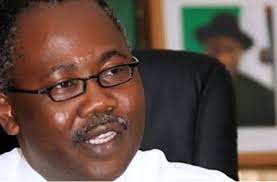
Emefiele arrives in Lagos court for arraignment over alleged fraud

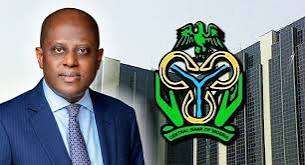
The embattled former governor of the Central Bank of Nigeria, Godwin Emefiele, has arrived at the Ikeja State High Court in Lagos for his arraignment over alleged abuse of office and allocation of billions of dollars. Emefiele, alongside his co-defendant, one Henry Isioma Omole, will be arraigned on fresh 26 counts before Justice Rahman Oshodi this morning. In the charge marked ID/23787c/2024 and dated April 3, 2024, the EFCC alleged that Emefiele abused his office between 2022 and 2023 in Lagos. The commission alleged that the former CBN governor “directed to be done in abuse of the authority of your office, as the Governor, Central Bank of Nigeria, an arbitrary act, to wit: allocating foreign exchange in the aggregate sum of $2,136,391,737.33 without bids, which act is prejudicial to the rights of Nigerians.”
Nigeria records 1,580 human rights violations in March alone – NHRC

The National Human Rights Commission (NHRC) Friday revealed that the country recorded 1,580 human rights violations in the six geopolitical zones in the March alone. The rights violations included killings , kidnapping, domestic violence , abductions, and children’s rights, among others. According to the Commission, North Central topped the list of the complaints of human rights violations recorded with 468 cases. The senior human rights advicer, Mr Hilary Ogbona, made this known at the National Human Rights Commission headquarters in Abuja. At the presentation of the findings attended by the Executive Secretary of the Human Rights Commission and Senior Advocate of Nigeria SAN, Dr. Tony Ojukwu, Ogbona explained that the police, military, and Department of State Service DSS grouped as state actors recorded 94 rights violations cases. The human rights adviser who explained that the killings of the military and police personnel in Delta State formed part of the report revealed that 542 cases of violation of children’s rights were also recorded during the period. Besides, Ogbona explained that domestic violence, which he said was becoming too rampant in some parts of the country, had 471 cases recorded. He said that the non state actors and private actors have 32 and 36 respectively while 3 cases of violation of rights were recorded against disabled people. According to him, other sectors, including social economic and cultural rights, accounted for 157, while referred cases were put at 24. He said that killings and kidnapping accounted for 499, while another 71 violations of rights to life were also recorded by the commission during the period. Ogbonna said that the 1,580 human rights violations were the entire figures recorded in the 36 states offices of the commission and Abuja. Expressing worry over the increasing cases of human rights violation, Ogbonna said that about 301 school children were abducted in kaduna state alone while 40 people were killed in Benue state. He expressed dismay that rights to life were being violated in various ways and manner because four deaths were recorded in Nassarawa State during the sharing of palliative. He then called for restraint on both State and Private Actors, adding that reprisal attacks contributed to the recorded rights violations. Ogbona also appealed to police and military to always conduct their investigations in compliance with the rules of engagement and rule of laws as provided for in the national and international laws. Earlier in his welcome address, the Executive Secretary of the Commission Ojukwu reaffirmed the commitment of the commission to the promotion and protection of human rights in the country. He promised to partner with other stakeholders, including the government, in the bid to step up efforts to protect lives and properties and in ensuring downward size in the violations of human rights. The NHRC monthly dashboard aimed at making the human rights situation public is supported by the United Nations Development Program, the Office of the United Nations High Commission for human rights, and others.
Nigeria To Begin Local Production Of Passport

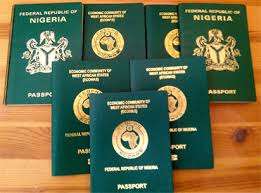
The Nigerian Government has rolled out plans to begin the local production of international passports in the country. The Minister of Interior, Olubunmi Tunji-Ojo, made this known in a post via his official X handle on Wednesday night. Tunni-Ojo revealed that he met with a local technology company that presented a proposal for localizing international passport production. “Today, I had a meeting with an indigenous technology company presenting a proposal on localizing our international passport production,” he wrote. The production of international passports by Nigeria in other countries appears to be constituting a delay in the process of acquiring the document. The Nigeria Immigration Service (NIS) unveiled the fully automated passport application system on March 8, 2024. With this, applicants, including Nigerians in the diaspora, are expected to enjoy a seamless experience registering for new passports and renewing expired ones. In another development, Tunji-Ojo recently convened a brainstorming session with the Ministry of Interior’s technical partners, top immigration officers, and ministry officials. The minister said the mission is to revolutionize the visa application process, particularly for short-stay visitors, so that Nigeria can streamline procedures, reduce stress, and enhance accessibility through automation. “It is my belief that by fostering a more welcoming environment for tourists eager to explore our vibrant culture and rich artistic heritage, we are on another step towards achieving the Renewed Hope agenda of President Bola Ahmed Tinubu,” he said.
EFCC Launches Investigation into Bobrisky’s Alleged Naira Abuse

The Economic and Financial Crimes Commission (EFCC), Lagos Zonal Command, has launched a probe into the actions of Idris Okuneye, popularly known as Bobrisky, for purportedly spraying Naira notes. The investigation stems from a video circulating online, showing Bobrisky allegedly flaunting bundles of new Naira notes at the premiere of the movie “Ajakaju,” produced by Nollywood actress and producer Eniola Ajao. The event took place at Film One Circle Mall in Lekki, Lagos, on March 24, 2024. According to sources, this is not an isolated incident, as Bobrisky is suspected of engaging in similar activities at various event centers and parties on multiple occasions. Responding to the EFCC’s invitation, Bobrisky arrived at the Lagos Zonal Command on Wednesday morning, April 4, 2024, for questioning and provided his statements voluntarily. Upon the conclusion of investigations, Bobrisky is expected to be formally charged in court.
Tinubu Signs Students Loan Bill Into Law

President Bola Tinubu, on Wednesday, signed the Student Loans (Access to Higher Education) Act (Repeal and Re-Enactment) Bill, 2024, into law. This development follows individual reviews by both the Senate and the House of Representatives of the report from the Committee on Tertiary Institutions and TETFund. The Bill sponsored by Senator representing Ekiti Central Senatorial District of Ekiti State, Bamidele Opeyemi aims to improve the execution of the Higher Education Student Loan Scheme in Nigeria by tackling issues related to the management structure of the Nigerian Education Loan Fund, applicant eligibility criteria, loan purposes, funding sources, and procedures for disbursement and repayment. Under this Bill, the Nigerian Education Loan Fund (NELFUND) would be established as a legal entity with the authority to litigate and be litigated in its own name, and it would possess the power to acquire, hold, and dispose of both movable and immovable property to fulfill its functions. In essence, the Bill enables the Fund to offer loans to eligible Nigerians for their tuition, fees, charges, and living expenses while studying in approved tertiary institutions and vocational training centers in Nigeria. In contrast to the previous 2023 Act, which placed the Fund’s administration under a Special Committee chaired by the Governor of the Central Bank of Nigeria, this Bill proposes changes in the management structure. Furthermore, the Bill eliminates the income-based eligibility criterion set by the existing law, which required an annual income of less than N500,000 for applicants or their families. The Bill also broadens the scope of eligibility, allowing students from federally or state-established tertiary institutions and government-approved vocational institutions to apply, with specific criteria to be determined by the Fund. Additionally, unlike the 2023 Act, which limited loan applications solely to tuition fees, the new Bill permits applicants to request loans to cover various institutional charges and maintenance allowances.
Detained Employee Not Part of Binance Management – Crypto Firm

Binance has refuted claims linking its detained employee, Tigran Gambaryan, to its management team, asserting that Gambaryan is solely a law enforcement officer without decision-making authority within the company. In a statement, the cryptocurrency exchange clarified Gambaryan’s role and emphasized his commitment to law enforcement despite his arrest in Nigeria on suspicion of involvement in money laundering activities alongside colleague Nadeem Anjarwalla. While Gambaryan remains in custody, Anjarwalla has fled the country, prompting inquiries about his whereabouts, to which Binance has yet to respond. Binance outlined Gambaryan’s contributions to compliance efforts since his hiring in 2021, including assisting in freezing and seizing assets worth billions of dollars globally. Part of Binance’s statement reads, “Tigran is a strict law enforcement professional and is not part of Binance management. While he has left the official service of the U.S. government, he has remained fully committed to the role of law enforcement officer ever since, operating as a global advocate for good governance and transparent regulatory financial practices. “Binance respectfully requests that Tigran Gambaryan, who has no decision-making power in the company, is not held responsible while current discussions are ongoing between Binance and Nigerian government officials. “In 2022 and 2023, Tigran’s Financial Crime Compliance team assisted global law enforcement in freezing and seizing more than $2.2b worth of assets, including more than $285m in cooperation with United States agencies like the FBI, DOJ, DEA, and others,” it said.
Cost of governance: Tinubu initiates the sale of presidential jets

In a bid to cut the cost of governance, President Tinubu’s has announced plans to divest three aircraft from the Presidential Air Fleet (PAF), a senior official revealed over the weekend. This strategic move forms part of the administration’s wider efforts to streamline government expenditure. Presently, the fleet comprises a total of 10 aircraft, including six jets and four helicopters, with intentions to reduce the fleet to seven through the proposed sale. This decision mirrors a previous attempt made during the tenure of President Muhammadu Buhari to sell off two aircraft in the fleet, namely a Dassault Falcon 7x executive jet and a Beechcraft Hawker 4000 business jet, back in October 2016. However, the sale faltered after preferred bidders revised their offer from $24 million to $11 million, a sum rejected by the government at the time. To alleviate the burden of maintenance costs, the administration had explored alternative avenues, including the possibility of chartering some of the aircraft to interested governors to generate revenue. The fleet comprises various aircraft models, including Boeing Business Jets (BBJ) 737, Gulfstream G550, Gulfstream G500, Falcon 7X, HS 4000, Agusta 139, and Agusta 101. Notably, the BBJ 737 serves as the Nigerian Air Force One, exclusively utilized by the President for official travel. While specific details regarding the replacement of the BBJ 737 remain undisclosed, it is noteworthy that the aircraft was acquired for approximately $43 million during the tenure of President Olusegun Obasanjo. Escalating concerns over maintenance costs, which have soared to over $5 million in recent months, have prompted President Tinubu to take decisive action. The decision to divest three aircraft deemed the most financially burdensome is aimed at curtailing excessive spending on maintenance. Over the years, the presidency has allocated significant sums for PAF maintenance, with budgetary provisions ranging from N3.65 billion in 2016 to N25.7 billion in 2023. However, precise expenditure figures remain unconfirmed. Furthermore, in a separate move geared towards fiscal prudence, President Tinubu has enforced a three-month travel ban on publicly-funded foreign trips by Federal Government officials, with immediate effect. The utilization of the fleet falls under the purview of the Office of the National Security Adviser (ONSA), ensuring efficient management and utilization.
CBN Orders Banks to Raise Capital or Face Downgrade

In response to the macroeconomic challenges facing the nation, the Central Bank of Nigeria (CBN) has issued a directive for leading banks to bolster their capital reserves or risk downgrade. The move targets Tier 1 Banks, including UBA, GTB, ACCESS Bank, First Bank, and ECO Bank. Under the new regulations, commercial banks with International Banking licenses must increase their authorized capital base to N500 billion, up from previous levels ranging between N115,815 million and N270,745 million. This mandate, effective immediately, stipulates that the revised capital comprises only paid-up capital and share premium, excluding shareholders’ funds. Additionally, banks with national licenses must raise their capital to N200 billion, affecting institutions like FCMB, Fidelity, and Stanbic IBTC. Furthermore, those operating with Regional Licenses face a requirement to boost their authorized capital to N50 billion. The CBN’s directive also extends to merchant banks, which must maintain a minimum capital base of N50 billion for national licenses and N20 billion for non-interest banks. Regional license holders are mandated to maintain a minimum share capital of N10 billion. According to Haruna Mustafa, Director of the CBN’s Financial Policy and Regulation Department, these measures aim to promote a safe, sound, and stable banking system in line with existing legislation. Banks are now presented with limited options to comply with the directive, including injecting fresh equity capital through private placements, rights issues, or offers for subscription, engaging in mergers and acquisitions, or undergoing license authorization upgrades or downgrades. Executives are bracing for the challenge, with a two-year deadline set by the CBN to meet the new capital requirements. The banking industry now faces a period of restructuring and strategic decision-making as it navigates these regulatory changes.
OPL 245 Saga: Mohammed Adoke discharged, acquitted

Abubakar Kutigi of the Federal Capital Territory (FCT) high court, has dismissed and acquitted the former Attorney General of the Federation (AGF) Mohammed Bello Adoke, of the charges of fraud, bribery and conspiracy brought against him by the federal government. The Economic and Financial Crimes Commission (EFCC) prosecuted Adoke on alleged N300 million bribe said to have been given to Adoke. This is expected to finally bring litigation over the OPL 245 saga to an end. The court ruled that the EFCC did not provide any evidence to prove its case. Ruling on the “no case” submission made by Adoke, Kutigi said the EFCC failed to prove its charges of fraud, bribery and money laundering and ruled that the defendant has no case to answer. Consequently, he discharged and acquitted the former minister on all counts. The judge said the allegation of illegal tax waivers granted to Shell and Eni was not collaborated by the Federal Inland Revenue (FIRS) or any authority in government. Nigeria has now lost virtually all the cases it filed or joined in Italy, the UK and Nigeria. The EFCC had earlier conceded that it did not have sufficient evidence to oppose the applications by Adoke. Meanwhile, the court insisted that Rasky Gbinigie had a case to answer over the alleged forgery of company documents to remove the name of Mohammed Abacha as a director.
The Strengthening Naira: Poetic Justice for Greedy Speculators and Economic Saboteurs

The precipitous decimation of the value of the Naira in the past several months since the Tinubu regime came on board was driven largely by irrational and insanely greedy speculators combined with vested corrupt moneybags who had stacks of Naira in their basement and were hell bent in discrediting and undercutting the Tinubu regime by attacking our currency. We also can not forget unpatriotic governors who were alleged to be converting their increased federal allocation into the greenback, which they stacked away in their governor residences. Their evil plot and greed caused the poor masses and the middle class so much grief with galloping inflation pricing them out of basic consumer goods like bread not to talk of critical commodity like cement whose price went as far as above 12,000. It also did tremendous damage to the Tinubu regime with shouts of “ Ebi npawa” we are hungry rendering the land. Even one of his most ardent supporters, Fuji maestro Wasiu Ayinde (aka Kwam 1), even jumped on the critic wagon. It is, therefore, poetic justice that the evil plot of these greedy speculators and economic saboteurs has now backfired. Betting against resilient, convention-busting Nigeria remains a bad bet. We have for decades befuddled conventional economists who struggled unsuccessfully to unravel the logic behind Naijanomics, which seems to defy gravity. People might have forgotten that not so long ago, as recently as July last year, the Naira to dollar rate war was around 750. So the Naira falling as low as nearly 1900 against the dollar defied conventional economic theory. People pointed to the removal of the oil subsidies. The sudden rebound of the Naira against the dollar, with the oil subsidies removal still in place, sticks a sharp needle into that balloon. What’s most important now for the economy’s health is stability and predictability in the forex market to allow investors to make long-term investment plans and to curtail the price gouging behavior of Nigerian retailers. The question now is will the prices that shot through the roof on the excuse of the skyrocketing dollar to Naira rate for even non-import dependent products like gari and bush meat, come down to earth now that the Naira has regained some of its lost value. Knowing our people, I am not raising my hope too high. Another unknown is the rumors making the round about the huge minimum wage hike being proposed for federal employees. No doubt, long suffering, underpaid Nigerian workers deserve their long overdue due raise to a living wage. The risk is that if it is not properly calibrated to the ability of the state and the private sector to pay, it might lead you to inflationary pressure and instability in the forex market. The Caddoso and CBN have their work cut out for them and have many sleepless nights ahead of them. Finally, my heart goes out to recent “japanerians” who flung their houses and other valuables assets at hugely discounted prices to finance their japaing by the lure of earning high flying foreign currencies, but many finding out that the green grass across the fence might just be fake artificial turf. The strengthening of the Naira against the dollars throws another wrench to totally mess up their calculus.