Court dismisses Emefiele’s medical leave application

By Vivian Michael A Federal Capital Territory (FCT) High Court, sitting in Maitama, Tuesday, refused the suspended Governor of the Central Bank of Nigeria (CBN), Godwin Emefiele’s request to travel to the United Kingdom for medical treatment. Ruling on the application, Justice Hamza Muazu held that although Emefiele stated he would be away from July 28 to September 10, no medical appointment or invitation was presented to the court. Muazu hinted that the court had the discretion to grant leave but highlighted that Emefiele is standing trial in three courts, two in the FCT and one in Lagos. Muazu stated, “The letter of invitation for medical follow-up is not attached. As it stands now, I cannot use my discretion to grant the application, and he is standing trial in three courts. “The application is hereby dismissed, and the adjourned date for continuation of trial still stands.” The embattled former CBN boss is charged by the Economic and Financial Crimes Commission (EFCC) with criminal breach of trust, forgery, conspiracy to obtain by false pretence, and obtaining money by false pretence during his tenure as the apex bank’s governor. The anti corruption agency also alleged that Emefiele forged a document titled “Re: Presidential Directive on Foreign Election Observer Missions” dated January 26, 2023, and purported it to have come from the office of the Secretary to the Government of the Federation (SGF). According to the prosecution, he was using his office to confer unfair and corrupt advantages on two companies: April 1616 Nigeria Ltd and Architekon Nigeria Ltd. Emefiele is alleged to have obtained $6,230,000.00 by false pretence on February 8, 2023, claiming it was requested by the SGF for a contingent logistic advance in line with the President’s directive.

CBN Extends Use Of Old Naira Notes Indefinitely

Supreme Court Affirms Old, New Naira Notes As Legal Tender 

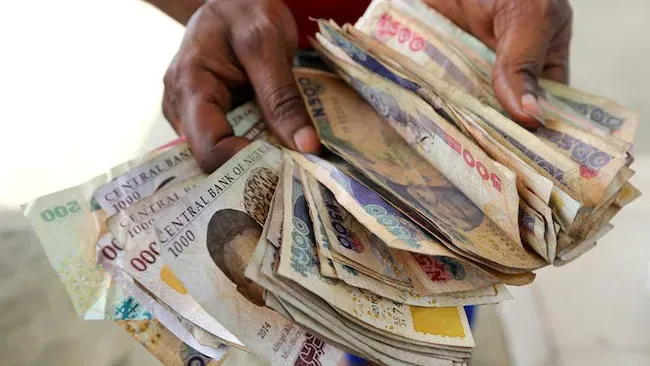
The Central Bank of Nigeria has said that old design naira banknotes will continue to be legal tender beyond December 31, 2023. In a statement signed by Director, Corporate Communication Dr. Isa AbdulMumin on Tuesday, all banknotes issued by the Central Bank of Nigeria (CBN), in accordance with Section 20(5) of the CBN Act 2007, will continue to remain legal tender, ad infinitum, even beyond the initial December 31, 2023, deadline. According to the Apex Bank, it is not only in line with international best practices, it would also forestall a repeat of earlier experiences. “Please recall that the Central Bank of Nigeria introduced the redesign of N200, N500 and N1,000 denominations in October 2022 and certain deadlines were set for the old design of these denominations to cease as legal tenders. “Without prejudice, the Central Bank of Nigeria wishes to inform the general public of its desire to extend the legal tender status deadline of the old design of N200, N500 and N1,000 denominations, ad infinitum. “The Central Bank of Nigeria is working with the relevant authorities to vacate the subsisting court ruling on the same subject. Accordingly, all CBN branches across the country will continue to issue and accept all denominations of Nigerian banknotes, old and redesigned, to and from deposit money banks (DMBs),” the statement read. The regulator enjoined Nigerians to continue to accept all Naira banknotes (old or redesigned) for day-to-day transactions and “handle these banknotes with utmost care, to safeguard and protect the lifecycle of the banknotes. Also, the general public is encouraged to embrace alternative modes of payment, e-channels, for day-to-day transactions.”

No Shortage Of Naira Notes In Circulation, Says CBN

FAAC: FG, States, LGs Share N906.955bn October Revenue

The Central Bank of Nigeria (CBN), has assured Nigerians that there is adequate supply of Naira notes in the economy. The bank’s Director, Corporate Communications, Isa AbdulMumin, said this in a statement on Thursday in Abuja. Some bank customers in recent times have been complaining about scarcity of Naira notes at the counters, Automated Teller Machines (ATMs), Point of Sale (PoS), and Bureaux de Change (BDCs). According to Abdulmumin, the seeming currency scarcity is occasioned by large volume withdrawal of cash from various CBN branches by Deposit Money Banks (DMBs). He said that panic withdrawals by bank customers was also partly responsible for the seeming scarcity. “The attention of the CBN has been drawn to reports of alleged scarcity ofcash at banks, ATMs, PoS and BDCs in some major cities across the country. “Our findings reveal that the seeming cash scarcity in some locations is due largely to high volume withdrawals from the CBN branches by DMBs and panic withdrawals by customers from the ATMs. “While we note the concerns of Nigerians on the availability of cash for financial transactions, we wish to assure the public that there is sufficient stock of currency notes for economic activities in the country. “The branches of the CBN across the country are also working to ensure the seamless circulation of cash in their respective states of operation,” he said. The director advised members of the public to guard against panic withdrawals as there was sufficient stock to facilitate economic activities. He also advised Nigerians to embrace alternative modes of payment, which would reduce pressure on using physical cash. 

Court Orders EFCC, CBN To Release Ex-NNPC Boss, Andrew Yakubu’s $9.8m Cash

Court Orders EFCC, CBN To Release Ex-NNPC Boss, Andrew Yakubu’s $9.8m Cash

Justice Inyang Ekwo of the Federal High Court sitting in Abuja, on Monday ordered the Economic and Financial Crimes Commission (EFCC) and the Central Bank of Nigeria (CBN) to immediately release the $9.8 million belonging to the former Group Managing Director (GMD) of the Nigerian National Petroleum Company (NNPC), Andrew Yakubu. The anti-graft agency had refused to release the cash they took from Yakubu’s house, despite an earlier judgment ordering the release of the money. The court said the money must be deposited with the Chief Registrar of the court, in the interest of justice. Yakubu had approached the court seeking an order compelling the Economic and Financial Crimes Commission (EFCC) and two other defendants to release his money. Yakubu in April 2023 sued the EFCC, Central Bank of Nigeria and Guaranty Trust Bank for failing to release the money after a court acquitted him of money laundering charges filed against him by the anti-graft agency. Recall that EFCC had urged Justice A.R Mohammed to convict Yakubu after it discovered $9, 772, 800 (9.7 million dollars) and £74, 000 from an apartment linked to him in 2017. In his defense, Ahmed Raji SAN, asked the court to dismiss the EFCC’s case for lacking in merit. Justice A.R Mohammed, on March 31, 2022, had quashed the money laundering charges instituted against Yakubu. Yakubu also testified before the judge that the monies found in his house were gifts from friends and associates. The judge had agreed with the defendant’s submissions; acquitted him and ordered the release of his money. But Yakubu’s lawyer approached another court presided by Justice Inyang Ekwo over the non-release of the money as directed by the other court. By way of originating summons, he had urged the court to order the release of his money or in the alternative, direct that the money be deposited with the FHC registrar pending the determination of the suit. But the EFCC, through its lawyer, Faruk Abdullah, raised an objection to the application, saying appeals have been entered against the subsisting trial court judgment. The EFCC also contended that the court lacked jurisdiction to hear the matter. Passing his judgement on Monday, Justice Inyang Ekwo dismissed the preliminary objection of the EFCC, saying the arguments of the respondents contradicted themselves and called to question the whereabouts of the money. Ekwo held it would be in the interest of justice if the sum is kept in a neutral custody pending the conclusion of proceedings, in line with rules of court. Ekwo held that based on the contradictory arguments of the respondents about on whose custody the money was domiciled, the justice of the case demands that they must produce the money. “The plaintiff has made a compelling case and it succeeds and I so hold. “An order is hereby made directing the first and second defendant to immediately transfer $9.8 million into the account under the control of the Chief Registrar of this court,” the Judge held.

CBN Earns N912bn Income From W&Ms Loans To FG

CBN’s Monetary Policy Committee Meeting And The Frenzy

The Central Bank of Nigeria (CBN) has earned a total of N912.32 billion from interest payments in the first quarter of 2023 on the Ways and Means (W&Ms) advances to the Federal Government, according to the Budget Office report. This substantial figure was reported in the first quarter’s 2023 Budget Implementation Report, released by the Budget Office of the Federation. The interest payment amount marks a substantial increase of 161.47 percent when compared to the N348.92 billion spent during the same quarter in 2022. Nigeria had initially allocated N1.2 trillion to service the CBN Ways and Means Advances in this year’s budget, translating to approximately N300 billion per quarter. However, the government had already expended about 76.03 percent of its budgeted amount for interest payments on these loans during the first quarter. Ways and Means Advances serve as a loan facility extended by the Central Bank to support the government during periods of temporary budget deficits, subject to legal limits. According to Section 38 of the CBN Act, 2007, the central bank can provide temporary advances to the federal government to address temporary budget shortfalls at interest rates set by the bank. The Act stipulates that the total outstanding advances should not exceed five percent of the previous year’s actual revenue of the Federal Government. Furthermore, all advances must be repaid as soon as possible, and in any case, no later than the end of the Federal Government’s financial year in which they were granted. Failure to repay these advances by year-end would limit the central bank’s ability to grant further advances in subsequent years unless outstanding advances are settled.

As CBN Gets A New Boss

As CBN Gets A New Boss

It is a new dawn at the Central Bank of Nigeria as the Senate, the upper chamber of the National Assembly, screened and approved the nominees of President Bola Tinubu to pilot the affairs of the monetary institution. The President appointed the new Governor, Dr. Olayemi Cardoso, and four Deputy Governors to assist him to run the affairs of the Bank. They are Mr. Philip Ikeazor, Mr. Mohammad Sani Datti, Mrs. Nnana Usoro, and Dr. Bala M. Bello. Their appointment came on the heels of the suspension and subsequent resignation of the former Governor, Mr. Godwin Emefiele. The former Acting Governor, Mr. Folashodun Shonubi, Mr. Edward Adamu, Mrs. Aishah Ahmad and Dr. Kingsley Obiora also resigned their appointments after the announcement of the new managers to pave way for their screening, and eventual assumption of office. The CBN in recent times has been in the eye of the storm following the former governor’s tenure in office. His foray into politics was contentious. If it could be recalled, the former governor was alleged to have procured a nomination form during the last political exercise of 2023 to contest for the presidency of the country. The move attracted the wrath of politicians and critical financial stakeholders who considered the move an aberration by a sitting governor of the Bank. Public outcry subsequently made him jettison the ambition. Ever since the Bank knew no peace. All its subsequent pronouncements and actions were tagged political. Mr. Emefiele’s Naira redesign policy, a good initiative though poorly implemented, repulsed Nigerians who felt humiliated, frustrated, lost businesses, and considered their monies confiscated.  They were miffed; the anguish was visible and unbearable. That singular action turned people against the CBN. At the same time, the political class who felt the policy was targeted at them saw it as a vendetta for their opposition to his ill-fated political ambition. They never forgave him, and Nigerians equally called for his head. As the Bank gets a new driver, it is hoped that the Naira, which is currently badly battered, will start to regain its breath. It is also expected of the political class to allow the currency a fresh breath of air. The politicians have strangulated the Naira, and it needs strength. They are classically its problem and can still rescue it. They have lost faith in the Naira, our national identity, preferring to hold the dollar and other currencies as stores of value.  It is no gainsaying that the task ahead has been cut out for the new CBN governor, and Nigerians will be leveraging his pedigree as a financial technocrat to prove his mettle and rescue the domestic currency from its current travails. However, the job is not for Mr. Cardoso and his team alone, the fiscal authority must help the Naira to live. The government must come forward with policies to energize the economy.  The problem of the Naira is Nigeria’s overdependence on proceeds from oil. The opaquely riddled sector has been a curse rather than a blessing to the nation.  Crude oil theft has remained unabated, oil subsidy a scam, and poor, yet unprivileged Nigerians, bore the brunt.  Nigeria was also not producing to feed or export, but heavily reliant on importation of what it can produce and eat. The desire to diversify the economy has not been matched with action. The intractable insecurity challenge has consumed the food producing belt of the country due to the repressive activities of bandits, and other ancillary issues that have eroded the potency and viability of the economy. The new CBN Governor no doubt has a daunting task ahead of him. It is not a good time to be appointed for such an onerous job. The economy is challenged, and Nigerians are on the edge, frustrated, and forlorn, thus, the touted synergy and alignment of purpose by the fiscal and monetary authorities is more desirable now than before. Working at cross purposes to outdo each other will further hurt the economy. Urgently desirable also is the solution to banditry. It has wreaked havoc on the economy and must be addressed now. It has taken too long. Foreign investors have taken flight, even local counterparts have either shut down or relocated, forcing the economy to its knee. Equally desirable is adequate, and not epileptic power supply. Most manufacturing firms have been operating under excruciating conditions, and cost of alternative energy to remain in production is adding more pains, not to mention the scarcity of forex to procure materials and machinery. The situation is overwhelming; thus, it is not a time to play politics, but for every hand to be on the deck to rescue Nigeria. No foreign investor will bring his/her hard-earned money to an unsafe economy. It is also imperative, and expedient, for the government to have respect for the independence of the CBN. The overbearing attitude of past administrations on the Bank was visibly nauseating that made stakeholders ask where the independence of the Central Bank is. As the government financial advisor, and banker, mandated to ensure and maintain price and financial stability, it should be left to perform its duties as it is best practiced globally. Political interference would not give us a desirable central bank. Nigerians have lost confidence in the Bank considering happenings in and around the Bank lately, and it will assuage their feelings if this conundrum is rested by these fresh appointments.  *Ademola Oyetunji writes from Ibadan

CBN Approval Delaying Release of H1 2023 Statements -Access Holdings

Access Holdings’ Half-Year Profit Hits N940bn

The board of Access Holdings Plc has announced that it is awaiting approval from CBN to release its Half-Year (HY) financial results for the period ended 30th June 2023 after completion of the audit of its subsidiaries. In a statement signed at the Nigerian Exchange Limited by the Company Secretary, Sunday Ekwochi, the results would be filed on or before September 30, 2023. “Access Holdings Plc (the Company) wishes to notify the investing public and the Nigerian Exchange Limited (NGX) of a potential delay in the publication of the Company’s Audited Interim Financial Statements for the Half Year ended June 30, 2023 (the Results’). The Company had, on August 14, 2023, requested and obtained the approval of NGX for the Results to be filed on or before September 15, 2023, subject to the approval of the Central Bank of Nigeria (CBN’), due to post-audit completion matters. In line with NGX’s approval, the Company had submitted the Results to the CBN for its approval. However, given the time estimated for the CBN to review the submitted Results, it is envisaged that the Company may be unable to meet the September 15, 2023 timeline for publication of the Results. Based on the foregoing, the Company has sought and obtained an extension of time to file the Results on or before September 30, 2023, subject to CBN’s approval of the Results. In mid-July, Access Holdings completed its acquisition of a majority stake in Finibanco Angola after receiving necessary regulatory approvals from CBN and Angola’s apex bank. The group noted that the bank had signed necessary agreements with minority shareholders of Finibanco Angola S.A. who expressed interest in selling their shares. With the completion of the acquisition, Access Holdings now owns more than 51 per cent stake in Finibanco Angola S.A. Also, Access Bank Plc (flagship subsidiary of Access Holdings) reached an agreement to acquire the sub-saharan subsidiaries of Standard Chartered Bank. In the acquisition deal, Standard Chartered will sell its shareholding in its subsidiaries in Angola, Cameroon, Gambia, and Sierra Leone to Access Bank as well as its consumer, private & business banking business in Tanzania. Recall that the Access Holdings’ initial delay in releasing its results was due to ongoing audit activities of the newly acquired sub-subsidiaries of the banking group. Following the completion of its audit activities, it is now seeking final approval from the apex bank before publishing its results to the investing public.

MPC: Aligning fiscal, monetary policy for economic growth

Russia-Ukraine war pushing up global inflation rates -CBN 

The benefits of collaboration in any human endeavour cannot be over-emphasised. Every part jointly fitted together produces the whole.Monetary policy affects financial conditions and the level of bank reserves. Whereas, fiscal policy can put money directly into or out of people’s pockets. Without fiscal policy as a tool to fight inflation, the federal government is working with one hand tied behind its back.The fiscal approach is anchored by the Federal Government whose role is mainly to moderate the excesses of other operators in the economy, and provide law and order and enabling operating environments.The Central Bank acts alone when it hopes that its policies would change the economic dynamics without any input from the fiscal side.Fiscal policy can slow spending directly by raising taxes or reducing government direct payments without necessarily having the intermediate step of raising the unemployment rate.Modest upfront fiscal contraction would reduce the cumulative amount of monetary tightening necessary, thereby improving the odds of avoiding recession.In this regard, analysts opine that the CBN must not operate in isolation, but collaborate with fiscal authorities to achieve sustainable economic results. Ineffective policiesMost economic policies were not as effective as they ought to be during the last administration due to the lack of collaboration on the part of fiscal and monetary authorities as everyone seems to be running their ‘own thing’ as it were.While the Finance Ministry appears to be focused only on borrowing from all possible quarters and increasing tariffs to raise more revenue for the government, the CBN was preoccupied with shielding the Naira from unnecessary pressure through rampant importation of items that could have been produced locally, thereby depleting the foreign reserves and spiking exchange rate.Analysts note that one of the dilemmas of Nigeria is fiscal indiscipline that is seen in the actions of the political office holders. In the last dispensation, while the CBN was trying to grow the economy through expansionary policies targeted at increasing capital flows (or credit) to the real sector, the fiscal authorities, on the other hand, were raising taxes on many items that affect their activities, which the CBN was trying to expand.And that was why at every opportunity, suspended CBN Governor, Godwin Emefiele always called for an alignment between fiscal and monetary policies.According to Emefiele, the country’s monetary and fiscal authorities must “collaborate and work in harmony to accelerate Nigeria’s economic development even as he added that “finding a sustainable solution requires a broadened participation of colleagues from the fiscal side.”Speaking at the 149th meeting of the Monetary Policy Committee of the Central Bank of Nigeria (CBN), the Apex Bank’s Acting Governor, Folashodun Shonubi, said there was a need for fiscal and monetary authorities to align together to be able to address present economic challenges.Reading the communiqué at the end of the two-day meeting, Shonubi noted that subsidy removal, exchange rate liberalization and disbursement of palliatives, would have pass-through effects on inflation. He therefore, called “monetary and fiscal authorities to sustain collaboration towards addressing the inflationary pressure and incentivize domestic investment to reduce unemployment and boost output growth.The Monetary Policy Committee “…enjoined the Federal Government to continue to explore policies to improve investor confidence in the Nigerian economy and pave the way for foreign and domestic investments.“Members emphasized the need to attract investments, particularly, to auto manufacturing, aviation, and rail industries to boost non-oil revenues.”Experts have continuously argued that all these can only happen when both of them work in harmony. For instance, from time to time, the Federal Government comes up with its fiscal policies based on national economic philosophy and objectives, to aid or readjust the economy.CBN then makes monetary policies to ensure availability of money at the right cost, adequate volume and appropriate type to facilitate the cost effectiveness of production and trade. However, we saw monetary authority make incursions repeatedly into the economic policy territory hitherto exclusively reserved for the fiscal authority in Nigeria.This has then made the CBN a punching bag for every frustration in the economy in regards to monetary and fiscal balancing of macroeconomic issues. Breaking from the pastIn trying to break away from the past mistakes, President Bola Tinubu quickly appointed seasoned economist Wale Edun as his Special Adviser on Monetary Policy. The objective was to have the two sides coming together to align policies before they become public document.And true to type, Nigerians did see it in the MPC decision as the monetary policy rate hike was by 25 basis points contrary to what analysts and industry players had projected.In arriving at the decision, the MPC considered the outlook for the domestic economy with the policy options to either hold or hike the policy rate to offset the moderate increase in headline inflation.With headline inflation still on the rise due to the effect of fuel subsidy removal and the naira float which is driving the prices of goods and service upwards, the Apex Bank new that raising rates like in previous times will be counter-productive to what the monetary authorities wanted to achieve with the policy reforms that has been embarked upon by the fiscal authorities.Knowing that when the palliatives begin to flow, there would be much liquidity in the system, the Committee had to be proactive in line with current thinking.According to the CBN Governor, “Considering the option to hold, the Committee reviewed the impact of the continued rise in inflation on various macroeconomic variables, noting the potential dampening effect on output growth. Members agreed unanimously that the previous series of rate hikes had indeed greatly moderated the pace of price increases.“The option to continue to hike the policy rate, albeit moderately, also presented a strong alternative. This is premised on the expected liquidity injections into the economy from the recent policy developments and the likely impact on inflation.“The Committee remained cautious in arriving at a policy decision as Members noted the need to continue to support investment which will ultimately lead to the recovery of output growth. The balance of these arguments thus leaned in favour of a