President Tinubu urges ECOWAS colleagues to emulate Ghanaian peaceful election

In a humble act of statemanliness President Bola Tinubu, the beneficiary of the highly discredited 2023 Nigerian election has commended Ghana’s recent peaceful elections, describing it as a model of democratic maturity. President Tinubu who spoke while opening the 66th Ordinary Session of ECOWAS on Sunday in Abuja, urged other African leaders to draw inspiration from the Ghanaian example.  “I urge all of us in the region to learn from this good democratic practice and prioritise our country’s national unity to ensure political stability of the region so that this manner of peaceful transition becomes the culture of democracy not only in West Africa but also in the entire Africa continent,” he stated. “Despite the challenges of interrupted democratic governance in some West African countries, the region has continued to record democratic gains. Just a week ago, on December 7 2024, Presidential and Parliamentary elections took place in Ghana, the second-largest democracy in our region,” Mr. Tinubu reminded the gathering of Heads of State of Governments of West African countries of which he is the chairman. PLEASE READ: Government Raises Duty Tour Allowances, Others for Public Officials “One of the leading candidates who happens to be the incumbent Vice President, His Excellency Mahamudu Bawumia, together with the leadership of the ruling party, New Patriotic Party (NPP), conceded defeat and accepted the outcome of the Presidential election by congratulating the President-elect, His Excellency, John Dramani Mahama of National Democratic Congress (NDC) for his victory, even before the official announcement of the election results.  “This gesture, as it happened in Nigeria in 2015, demonstrates political maturity and respect for the will of the people of Ghana,” President Tinubu stressed.  In a press statement, the Special Adviser to the President on Information & Strategy, Mr. Bayo Onanuga praised President Akufo-Addo for the electoral feat. President Tinubu, in his second term as ECOWAS Chair, highlighted achievements from his first term, to include strides in regional integration, economic growth, conflict resolution, and counterterrorism efforts.  He said the ECOWAS Trade Liberalisation Scheme (ETLS) and Common External Tariff (CET) have strengthened trade and economic cooperation. “Similarly, regional infrastructure projects such as the West African Gas Pipeline, the West Africa Power Pool, and modernising key border posts with advanced equipment and joint border operations utilising state-of-the-art technology have significantly enhanced connectivity and promoted greater regional integration. “Furthermore, our efforts in stabilising our region through peacekeeping missions currently in the Gambia and Guinea Bissau, as well as previous operations in Liberia and Sierra Leone, have demonstrated our capacity to act decisively in the face of adversity.  President Tinubu said the ECOWAS Regional Action Plan on the Fight Against Terrorism has provided a comprehensive framework to combat violent extremism and enhance regional security.  As ECOWAS nears its 50th anniversary in 2025, President Tinubu urged member states to recommit to the bloc’s founding ideals of economic integration, peace, and prosperity.  “As a regional community, we must maintain our fundamental responsibility: to protect our citizens and create an enabling environment where they can prosper.  “As leaders, we know that security is not a luxury but a necessity. Equally, enhancing the living standards of our people is not an aspiration but an obligation,” he said. The Presidents of Cote d’Ivoire, Ghana, The Gambia, Guinea Bissau, Liberia, and Senegal attended in person alongside the Vice President of Sierra Leone, the Finance Minister of the Benin Republic, the Minister of foreign affairs of Togo, and the Ambassador of Cape Verde to Nigeria.  ALSO READ: Zamfara Bombungs Linked to Lakurawa Terrorists The President of the ECOWAS Commission, Dr Omar Touray, commended Nigeria for paying 100 per cent of its community levy for 2023 and substantial remittances for 2024, reflecting Nigeria’s leadership and commitment under President Tinubu. “For the first time in 19 years, Nigeria has paid 100% of its community levy from 2023.  I’m therefore pleased to announce that on Friday, December 13, 2024, Nigeria paid N85 billion and $54 million, representing 100% of the 2023 levy and the 2024 levy up to July 2024.  “We all agree that this payment underscores the leadership and commitment of President Tinubu, the government and the people of Nigeria to our community. At a more personal level, it represents confidence in the management I have been privileged to lead since 2022.  He encouraged other member states to meet their financial commitments diligently.

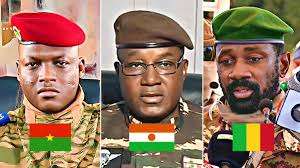
Mali, Niger, and Burkina Faso, Exit ECOWAS

Mali, Niger, and Burkina Faso, nations that were recently brought under military dictatorships have unilaterally withdrawn their membership of the Economic commission of West african States (ECOWAS). The military regimes of these countries jointly released a statement on Sunday, characterizing their departure as a “sovereign decision” that will be promptly executed. The move follows a series of coups in the region, with Niger experiencing a coup in July 2023, Burkina Faso in 2022, and Mali in 2020. ECOWAS responded by suspending all three nations and imposing severe sanctions, intensifying the already strained relations. The military regimes argue that ECOWAS’ measures hinder their ability to address pressing issues, leading to this decisive withdrawal. The exit is seen as a bold assertion of sovereignty by these countries aiming to tackle their challenges independently. However, concerns arise about potential disruptions to regional cooperation and integration, given ECOWAS’ pivotal role in fostering economic collaboration, regional security, and political stability. The departure of these nations may undermine these efforts, causing fragmentation in regional initiatives. The Sahel region, grappling with persistent jihadist violence, faces heightened security risks due to the absence of a unified regional approach. Moreover, the withdrawal may impact the international standing of these countries, limiting their access to diplomatic relations and foreign investments facilitated by ECOWAS. This decision has garnered international attention, sparking debates among experts and analysts. The uncertainty surrounding its consequences will be closely monitored in the coming months, as the withdrawal signifies a pivotal moment in the region’s political dynamics. The potential impact on regional stability, security, and development remains a subject of intense scrutiny.

Without France there’d be no Mali, Burkina Faso, Niger – Macron

Without France there’d be no Mali, Burkina Faso, Niger – Macron

French President, Emmanuel Macron has said that France has played an important role in the survival of African countries Mali, Burkina Faso and Niger. According to Macron, “Without France’s military operations in the Sahel there would probably no longer be a Mali or Burkina Faso, and I’m not sure there would still be Niger”, French President Emmanuel Macron told French publication Le Point. Macron is referring to the former colonial power’s interventions in the mid-2000s, Operations Serval and Barkhane. French troops were moved from Mali to Niger after its military leaders cut ties with the former colonial power. He said the interventions were done “at the request of African states” and were “successful” as his policy is facing scrutiny in the face of losing the allyship of last remaining ally, Niger, and increasing negative sentiment from Africans. He went on to explain that while these operations reflect France’s “honour” and “responsibility”, France could no longer remain involved “when there is a coup d’état, and the priority of the new regimes is not to fight terrorism” even though this is “tragic for the states concerned”. In the interview, Macron defended his administration’s policy in the Sahel as one of partnership rather than focusing on security. France refuses to acknowledge coup leader General Abdurahman Tchiani’s announcement that all military deals between Niger and France are terminated, and more than a thousand French troops remain stationed at a military base there. 

2023 AFCON: Thrilling weekend sees 14 nations book tickets

2023 AFCON: Thrilling weekend sees 14 nations book tickets

*Ten places still up for grabs The thrilling weekend of TotalEnergies CAF Africa Cup of Nations Cote d’Ivoire 2023 Qualifiers saw more African football giants’ countries book their place in the continent’s biggest event set to take place between 13 January and 11 February 2024. The qualification of most of the former African champions this past weekend is again another indication that the upcoming TotalEnergies CAF Africa Cup of Nations Cote d’Ivoire 2023 is likely to be one of the most successful events in the competition’s history. There are still qualifier matches to be played on Tuesday as part of the Match Day Five fixture block. Zambia produced possibly the weekend’s most polished performance in front of their home fans in Ndola to secure an emphatic 3-0 victory against tournament hosts and former African champions, Cote d’Ivoire. The results ensured that ‘Chilopopolo’, crowned champions in Gabon 2012, will return to Africa’s most-watched sports event after an eight-year absence. The week of the qualifiers started on a high note for another giant of African football, Egypt. The record-winners of the TotalEnergies CAF Africa Cup of Nations confirmed their place in next year’s tournament following a 2-1 victory over Guinea in Marrakech on Wednesday. In another match, a stoppage-time goal was enough for Equatorial Guinea, who beat Tunisia 1-0 on Saturday to secure their ticket for the TotalEnergies CAF Africa Cup of Nations for the second time in a row and a third appearance. On Sunday, Cape Verde recorded an emphatic 3-1 victory over Burkina Faso to confirm their spot for Cote d’Ivoire. Two second-half goals ensured Mali triumphed with a 2-0 win against Congo at the Stade Alphonse Massamba-Debat in Brazzaville to cement their place for the AFCON finals early next year. Nigeria left it very late after a last-gasp winning goal saw them claim a 3-2 victory against Sierra Leone in Monrovia to add their name to the qualified nations for next year’s tournament. Nigeria’s win over Sierra Leone also confirmed Guinea Bissau’s fourth straight qualification for the TotalEnergies CAF Africa Cup of Nations, having won their match against São Tomé and Príncipe by a 1-0 score line on Wednesday. Hosts Cote d’Ivoire, African champions Senegal, FIFA World Cup semi-finalists Morocco, former Champions Tunisia, Algeria, South Africa and the ever-impressive Burkina Faso all booked their places in March 2023. The last round of qualifiers will be in September 2023. The TotalEnergies CAF Africa Cup of Nations Cote d’Ivoire 2023 will kick off on 13 January 2024 and run until 11 February 2024. The event will take place in six different venues: Stade Olympique Alassane Ouattara (56,000 seats) and Stade Felix Houphouet Boigny (28,000 seats), located in Abidjan. The remaining venues are Stade de Korhogo (20,000 seats), Stade de San Pedro (20,000 seats), Stade de Yamoussoukro (20,000 seats), and Stade de la Paix de Bouake (40,000 seats). Qualified Teams