Naira ends week stronger against Dollar, gaining N11.17

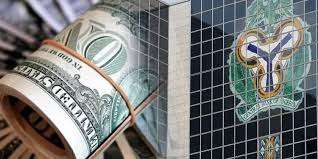
The Naira further appreciated in the official market on Friday, making analysts to wonder if this was a stable rebound or transient maneuvre as it traded at N1,474.78 to the Dollar. Data from the FMDQ Securities Exchange official forex trading platform revealed that the Naira gained N11.17. This represents a 0.7 per cent increase compared to the previous day’s trading figure on Thursday, when the local currency closed at N1,485.95 to the Dollar. Trading in the Investors and Exporters (I&E) Forex window on Friday saw a high of N1,495.01 and a low of N1,447.50. The Naira has remained stable against the US Dollar since December 2024, supported by sustained reforms from the Central Bank of Nigeria (CBN). READ ALSO: FG Inaugurates fashion hub in Borno, targets 48,000 jobs The reforms aimed at ensuring transparency in the foreign exchange (FX) market. CBN Governor Olayemi Cardoso, speaking in Abuja on Thursday at the 2025 Monetary Policy Forum, stated that recent reforms in the FX segment had continued to attract foreign investments. Cardoso reassured that the apex bank would sustain efforts to ensure continued inflows.
FG Releases List Of Those Responsible For Terrorism Financing In Nigeria

The Federal Government has released a list of 15 entities, including nine individuals and six Bureau De Change operators and firms, involved in terrorism financing. The details of the development were revealed by the Nigerian Financial Intelligence Unit (NFIU) and made available on Tuesday night. The document, entitled “Designation of Individuals and Entities for March 18, 2024,” disclosed that the Nigeria Sanctions Committee met on March 18, 2024, where specific individuals and entities were recommended for sanction following their involvement in terrorism financing. “The Honourable Attorney General of the Federation, with the approval of the President, has thereupon designated the following individuals and entities to be listed on the Nigeria Sanctions List,” the document read in part. Among the individuals named on the document is a Kaduna-based publisher, Tukur Mamu, who is currently being tried by the Federal Government for allegedly aiding the terrorists who attacked the Abuja-Kaduna train in March 2022. According to the document, Mamu “participated in the financing of terrorism by receiving and delivering ransome payments over the sum of $200,000 US in support of ISWAP terrorists for the release of hostages of the Abuja-Kaduna train attack.” The document also said one of the individuals is “the suspected attacker of the St. Francis Catholic Church Owo, Ondo State on June 5, 2022 and the Kuje Correctional Center, Abuja on July 5, 2022.” Another was described as “a member of the terrorist group Ansarul Muslimina Fi Biladissudam, the group is associated with Al-Qaeda in the Islamic Maghreb. “The subject was trained and served under Muktar Belmokhtar, aka One Eyed Out, led Al-Murabtoun Katibat of AQIM in Algeria and Mali.” The NFIU said the individual “specialises in designing terrorist clandestine communication code and he is also Improvised Explosive Device expert. “The subject was also a gate keeper to ANSARU leader, Mohammed Usman aka Khalid Al-Bamawi. Equally, he was a courier and travel guide to AQIM Katibat in the desert of Algeria and Mali. He is into carpentry. Subject fled Kuje correctional centre on July 5, 2022. He is currently at large.” Another was identified as “a senior commander of the Islamic State of West Africa Province Okene.” The agency said the individual “came into limelight in 2012 as North Central wing of Boko Haram. “The group is suspected of the attacks carried out around Federal Capital Territory and the South West Geographical Zone, including the June 5, 2022 attack on St. Francis Catholic Church, Owo, Ondo State.” Another was described as “a financial courier to ISWAP Okene. She is responsible for the disbursement of funds to the widows/wives of the terrorist fighters of the group.” According to the document, another of the individuals “in 2015, transferred N60m to terrorism convicts.” He was also said to have “received a sum of N189m between 2016 and 2018.” The same person is said to “own entities and business reported in the UAE court judgment as facilitating the transfer of terrorist funds from Dubai to Nigeria.” Another individual was said to have “received a total of N57m from between 2014 and 2017.” Another was said to have “had a total inflow of N61.4 bn and a total outflow of N51.7bn from his accounts.”
CBN Unveils Stricter Guidelines for Bureau De Change Operations

In response to the ongoing economic challenges, the Central Bank of Nigeria (CBN) has unveiled comprehensive reforms affecting Bureau de Change (BDC) operations across the country. The new guidelines, outlined in a statement by the Financial Policy and Regulation Department, aim to address the economic crisis and enhance regulatory measures. 1. Capital Requirements Restructured Under the revised guidelines, BDCs are now divided into two tiers, each with distinct capital requirements. Tier 1 BDCs must maintain a minimum capital of N2 billion, while Tier 2 BDCs face a capital threshold of N500 million. This represents a significant increase from the previous uniform capital requirement of N35 million. 2. Ownership Restrictions for Financial Institutions The CBN circular explicitly prohibits banks, NGOs, government agencies, and other financial institutions from holding ownership stakes in BDCs, either directly or indirectly. This includes commercial banks, merchant banks, non-interest banks, payment service banks, as well as holding companies and payment service providers. 3. Limited Activities for BDCs While BDCs are authorized for specific activities like buying and selling foreign currencies, issuing prepaid cards, and serving as cash points for money transfer operators, they are now restricted from accepting deposits, extending loans, trading in gold, or engaging in capital market activities. 4. Forex Sourcing and Sale Guidelines BDCs are permitted to source forex from authorized channels, including dealers, travelers, hotels, and embassies. The sale of foreign currencies is regulated, with specified limits per customer annually for purposes such as travel, medical bills, and school fees. Additionally, BDCs are barred from engaging in offshore business and financing political activities. 5. Emphasis on Electronic Transactions The CBN emphasizes a shift towards electronic transactions, mandating that at least 75 percent of sales be conducted through electronic transfers. For beneficiaries of Basic Travel Allowance (BTA) or Personal Travel Allowance (PTA), 25 percent of the foreign currency can be received in cash, with the remaining 75 percent electronically transferred to the customer’s Nigerian domiciliary account or prepaid card. 6. Disclosure Requirements for High-Value Transactions Customers selling $10,000 or more to BDCs must disclose the source of the foreign exchange, complying with Anti-Money Laundering and Counter Financing of Terrorism regulations. Payments for cash purchases of forex below $500 may be made in cash, while transactions exceeding this limit are subject to electronic transfers.
Forex Crisis Forces Bureau de Change Closure in Abuja

In response to the escalating foreign exchange crisis in Nigeria, Bureau de Change operators have taken a drastic step by announcing the indefinite closure of their offices in Abuja starting from February 1, 2024. Abdullahi Dauran, the Chairman of BDC operators in Abuja, cited the scarcity of dollars as the primary reason behind this decision. Dauran emphasized that the increasing demand for dollars, fueled by online business transactions and cryptocurrency activities, has intensified the scarcity, leaving Bureau de Change operators with no choice but to shut down. Aminu Gwadabe, the president of the Association of Bureaux de Change Operators of Nigeria (ABCON), acknowledged the development but provided no clear response, stating, “I saw it online, too.” Recent data from FMDQ on Thursday revealed a marginal appreciation of the Naira to N1,455.59 per US dollar from N1,482.57 on Wednesday. However, the Naira’s depreciation worsened earlier in the week, reaching N1,482.57 per US dollar at the official market, surpassing the N1,470 quoted at the parallel market. Despite efforts by the Central Bank of Nigeria, including injecting over $500 million to clear the forex backlog and other interventions, the Naira continues to struggle against the dollar. In an attempt to address the ongoing decline, the CBN released fresh guidelines on Wednesday, targeting commercial banks and urging them to refrain from foreign currency speculation and hoarding.
Allow us access banks’ autonomous window, BDCs appeal to CBN

President of the Association of Bureau De Change Operators of Nigeria (ABCON), Aminu Gwadebe has urged the Central Bank of Nigeria (CBN) to immediately leverage the BDCs by allowing them access banks’ autonomous window and agency of international money transfer operators. This, he said, will allow them to provide liquidity in the retail end of the foreign exchange market and help stop the free fall of the Naira occasioned by forex scarcity in the country. Gwadebe also urged the CBN to reinstate its 2015 policy guidelines which allow the BDCs to effectively provide liquidity in the retail end of the market through the forex windows. The 2015 policy guidelines allow the BDC operators to access foreign exchange from the autonomous window of the commercial banks as well as act as agents for diaspora remittances. Gwadebe in his statement said BDCs are effective tools of the transmission mechanism of the CBN. “I quickly want to advise the apex bank to leverage on the BDCs and allow them access banks’ autonomous window and agency of international money transfer operators. Gwadebe, who accused some of the International Money Transfer Organizations (IMTOs) of diverting diaspora remittances, said the commercial banks revealed that they don’t even see most of these remittances. “Imagine you are the IMTO and then you are the one that will pay the beneficiary the naira, invariably, then I as well just give you the naira without paying you the dollar.’’ “Even the banks have been saying that they are not seeing the diaspora remittances that the fintechs have taken over. We had a meeting with the banks where we even tried to bring up the issue of diaspora remittances so that we can harness it and bring liquidity, but they said they don’t see it. That’s the truth of the matter, a lot of unlicensed online firms are in the process.’’ The black market rate fell to as low as N950/$1 last week, opening up about N200 disparity with the I&E window as demand continued to outstrip supply. Meanwhile, the official rate averaged N765/$1.
IMF supports Nigeria’s exchange rate unification

The exchange rate unification policy of the President Bola Ahmed Tinubu has received the backing of global lender, the International Monetary Fund (IMF). Over the last several years, Nigeria has been operating a dual exchange rate regime which had led to round tripping with many Nigerian businesses preferring to trade dollars than engage in their legitimate businesses. According to the Apex Bank had in a statement abolished the dual exchange rate collapsing it into the Investors Exporters (I&E) window. The regulator stated that it is expected to be a willing seller and a willing buyers With the policy, all applications for medicals, school fees, business travel allowance/personal travel allowance, and SMEs would now go through the I&E window. in a short statement, on Friday, IMF’s Resident Representative in Nigeria, Ari Aisen said it would support the federal government as it implement the new reform. “The Fund greatly welcomes the authorities’ decision to introduce a unified market-reflective exchange rate regime in line with our long-standing recommendations. We stand ready to support the new administration in its implementation of FX reforms.” The Bretton Woods institute and experts consistently warned the federal government on the dangers of keeping a dual exchange rate saying it created room for arbitrage.