NLC expresses disappointment over Fed Govt’s silence on electricity hike reversal

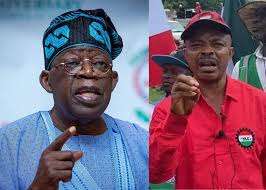
The Nigeria Labour Congress has described the federal government’s silence on the April 3 electricity tariff hike as disappointing. NLC disclosed this in its communique on Tuesday after its National Executive Council meeting where it suspended its indefinite strike for one week. The development comes after the federal government in a meeting with organized labour on Monday agreed to pay minimum wage higher than N60,000. However, the government has yet to say anything about the second part of labour’s demand, which is electricity tariff reversal. NLC expressed disappointment over the government’s silence and lack of concrete action regarding the reversal of the electricity tariff hike and the abolition of the apartheid classification of electricity consumers into Bands. “The NEC reaffirms that these issues are critical to alleviating the financial burden on Nigerian workers and the general populace. The electricity tariff hike and discriminatory Band classification remain unacceptable and must be addressed alongside the wage increase,” it stated. Recall that on April 3, the NERC approved tariff increment of over N200 per kwh for customers getting 20-24 hours power supply. The hike generated reactions among Nigerians. In reaction, the government earlier announced a minor reduction of N18, bringing it down to N208.80kwh for band A customers. However, unsatisfied with the reduction, the NLC, the Trade Union Congress and other organizations called for the complete reversal of the electricity tariff hike. It was part of the demand presented to the federal government, alongside the issue of minimum wage.
Noisy vessels and the Presidential Victory Lap

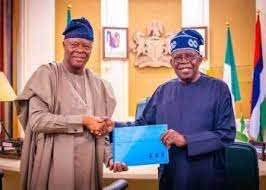
We hear President Tinubu has directed his Minister of Finance and coordinating Minister of the Economy, Yemi Edu, to furnish him with the template for a reviewed minimum wage within 24 hours. And I say, Before nkò? If I’m president Tinubu, I’ll also direct the minister to prepare to implement a pay raise of about N120 or N150k immediately. Why not? When you win a battle, what do you do but celebrate? President Tinubu won this battle. Labour sold themselves very cheaply. First, the choice of battle was wrong, if you ask me. Organised Labour should not have fought for increase in minimum wage or living wage, slavish as that one sounds. How could you be fighting for any of these two in a clime where the top officials of your government rank among the most remunerated in the world? Our public officials have cornered the nation’s wealth to themselves. They arrange hefty pay packages for themselves and still go ahead to help themselves to the till without any consequence. On top of all that, they have cornered the highest paying MDAs where only their children and close relatives get employed. So, it was a very dumb move for NLC and TUC to be fighting for minimum wage instead of duelling for proper wealth distribution through the democratisation of employment opportunities. The way to achieve this is for Labour to press for uniform pay for public offices as was the case. Labour should be calling for a uniform pay for either all federal parastatals on the one hand or equal pay for all federal government ministries departments or agencies, on the other hand. So, whether it is NNPCL, CBN, FIRS or Federal Fire Service, or National Library, you shall operate the same pay structure. But as things stand now, whether the minimum wage is reviewed or not, the income gap between the politicians, their children, who are employed in these high-paying parastatals and the rest of us shall remain wide. Meanwhile, na the same market we dey go. The same fuel we dey buy, etc. At the end of it all, the hurly burly has come and gone at a great relief to President Tinubu and his friends the topmost level of government that this Labour battle cry was full of sound and fury but signifying nothing to be dreaded.
BREAKING NEWS: The Strike is Over!

The Nigeria Labour Congress (NLC) and the Trade Union Congress (TUC) have called off the nationwide strike. Mr. Festus Osifo, President of Trade Union Congress, announced this on Tuesday in Abuja following a joint extraordinary national executive council meeting of the unions. He mentioned that a communiqué would be issued shortly. Recall that both unions (TUC and NLC) on Monday commenced an indefinite nationwide strike to express their grievances over the hike in electricity tariffs and the lack of consensus on a new minimum wage. This action halted activities in critical sectors of the economy, leading to the closure of schools, businesses, hospitals, and airports. The national grid was shut down, plunging the nation into darkness.
FG invites labour to meeting Tuesday

The Federal Government has through the National Salaries, Incomes and Wages Commission, invited the organised labour to a meeting on Tuesday over the ongoing nationwide strike. The Nigeria Labour Congress and the Trade Union Congress had on Sunday said the strike would go ahead on Monday as scheduled despite an appeal by the leadership of the National Assembly which held a mediation meeting between the unions and representatives of the Federal Government. The two unions and their organs commenced the strike on Monday which paralysed economic and government activities in different states of the federation. Ministries, departments, agencies and offices in critical sectors like the courts, government secretariats, airports, and schools were grounded. Many bank branches did not open although some in Lagos did not shut down. Labour went on strike because it could not accept the N60,000 minimum wage offered by the Federal Government.
BREAKING: ASUU Joins Nationwide Strike Over Minimum Wage Dispute

The Academic Staff Union of Universities (ASUU) has joined the ongoing strike led by the Nigeria Labour Congress (NLC) and the Trade Union Congress (TUC). This action comes in response to the Federal Government’s failure to meet the unions’ demands for a minimum wage increase. In a statement issued on Monday, ASUU President Emmanuel Osodeke directed branch chairpersons and zonal coordinators to ensure that university lecturers nationwide participate in the strike as members of the congress. The statement read, “The NLC has declared an indefinite strike action beginning from Monday, 3rd June, 2024, as a result of the failure of Government to conclude the renegotiation of minimum wage for Nigerian workers and reversal of hike in electricity tariff. “Our branches are hereby enjoined to join in the strike action as an affiliate member of Congress. “Consequently, branch chairpersons are to mobilise all members to participate in the strike action. Yours in the struggle.” Details later…
Nationwide Strike: kneejerk Reaction to a Serious Governance Challenge

As you read this Nigeria is now under total lockdown, whereby major economic activities in the organized public and private sectors have been completely crippled. Labour has made good its threat to commence an indefinite nationwide strike to protest government insensitivity to its plight and clamour for wage review. This moment has been long coming, taking into account recent federal government economic policies which impacts have been skewed againts the suffering mass of Nigerians. From the withdrawal of fuel subsidy, liberalization of the foreign exchange to the recent hike in electricity tariff and and aborted cybersecurity levy. Most of these reforms are mass focused and have had acute impact on the social and economic wellbeing of poor Nigerians. This has pitched labour unions against the government as organized labour agitate for wage increases and better welfare for their members. But I am one of a few who do not think that the labour is going about its agitations correctly. The protests and strikes so far have been kneejerk reactions that have been largely ineffectual. Put simply, I DO NOT AGREE WITH THIS CALL FOR NATIONWIDE INDEFINITE STRIKE. My reasons are simple. 1. As already stated, this strike and others before it are largely kneejerk reactions to a fundamental error of policy choice, planning and implementation by government. 2. The strikes are one too many and have a tendency of seeming like one repeating a process and expecting a different outcome. 3. Some are of the opinion that most of the recent strike actions have been about bread and butter issues and nothing about the very important subject of better governance of the society. Here are a few alternatives that labour may want to contemplate if they are desirous of thinking outside the box. 1. Formulate proper critical engagement with the government on sincere cost cutting measures that affect the highest echelons of the public service and governmental agencies. 2. Collaborate with the executive to instigate a downward review of the cost of governance. 3. Encourage the president to prune the size of the cabinet or you partner with the mass public to achieve the same purpose. 4. Let you labour strike not be always about your interests but the wellbeing of the Nigerian masses. These strategies shall assist to endear the labour movement to the Nigerian public and win their confidence and trust. Labour can leverage on such goodwill to escalate activities to achieve desired changes in the political arena.
Blackout As Electricity Workers Shut Down National Grid

In compliance with the joint directive of the Nigeria Labour Congress (NLC) and Trade Union Congress (TUC) to down tools on Monday over the new minimum wage, electricity workers have shut down the National Grid, resulting in nationwide blackout. This was disclosed by the Transmission Company of Nigeria (TCN) in a statement signed by its spokesperson, Ndidi Mbah, on Monday morning. TCN said workers were driven away from their duty posts while others were beaten and wounded at some power facilities. It added that all its efforts at grid recovery were being frustrated by the unionists. “The Transmission Company of Nigeria hereby informs the general public that the Labour Union has shut down the national grid, resulting in black out nationwide. The national grid shut down occured at about 2.19am this morning, 3rd June 2024. “At about 1:15am this morning, the Benin Transmission Operator under the Independent System Operations unit of TCN reported that all operators were driven away from the control room and that staff that resisted were beaten while some were wounded in the course of forcing them out of the control room and without any form of control or supervision, the Benin Area Control Center was brought to zero. “Other transmission substations that were shut down, by the Labour Union include the Ganmo, Benin, Ayede, Olorunsogo, Akangba and Osogbo Transmission Substations. Some transmission lines were equally opened due to the ongoing activities of the labour union. “On the power generating side, power generating units from different generating stations were forced to shut down some units of their generating plants, the Jebba Generating Station was forced to shut down one of its generating units while three others in the same substation subsequently shut down on very high frequency. The sudden forced load cuts led to high frequency and system instability, which eventually shut down the national grid at 2:19am. “At about 3.23am, however, TCN commenced grid recovery, using the Shiroro Substation to attempt to feed the transmission lines supplying bulk electricity to the Katampe Transmission Substation. The situation is such that the labour Union is still obstructing grid recovery nationwide. “We will continue to make effort to recover and stabilize the grid to enable the restoration of normal bulk transmission of electricity to distribution load centres nationwide,” TCN stated.
NLC Strike: FG insists on N60K Minimum Wage Offer

That the organized labour has given Monday, June 3rd as commencement date for an indefinite strike to protest the failure of government to approve a new national minimum wage agreeable to them is no longer news. What is trending is that the FG has adduced 14 reasons why it can not approve the figure proposed by labour. Here are 14 reasons the FG gave for a N60,000 minimum wage: N35,000 wage award for all treasury-paid federal workers. N100 billion for the procurement of CNG-fuelled buses and CNG conversion kits. N125 billion conditional grant and financial inclusion to MSMEs. N25,000 each to be shared to 15 million households for 3 months. N185 billion palliatives (loans to States) to cushion the effects of fuel subsidy removal. N200 billion to support the cultivation of hectares of land to boost food production. N75 billion to strengthen the manufacturing sector. N1 trillion for student loans for higher education. Release of 42,000 metric tons of grains from strategic reserves. Purchase and onward distribution of 60,000 metric tons of Rice from the rice millers association. Recent salary increase of 25-35 per cent on all consolidated salary structures for federal workers. 90% subsidy on health costs for Federal Civil Servants registered on NHIS. Light rail commissioned in Abuja to relieve transportation cost until the end of the year. Lagos State had already commenced the same initiative with their blue and red lines. In addition to the freedom of civil servants to engage in agriculture, the federal government has approved the inclusion of ICT services as an alternate source of income. The government added N3, 000 to its initial offer of N57, 000 proposed last week, taking the total figure to N60, 000 while labour lowered its demand by removing N3, 000 from the N497, 000 it proposed last week. The tripartite committee has been locked in talks over a new minimum wage since the committee was inaugurated in January this year. To fast track the negotiation process, the NLC and TUC on May Day gave the committee until the end of the month to wrap up talks on a new national minimum wage. That ultimatum expired on Friday night without an agreement. During the meeting, the government defended their offer of N60,000.00 per month.
NCC: Set to Digitally Enable the Renewed Hope Agenda

The Nigerian Communications Commission (NCC) has asserted its role as being instrumental in advancing the development of the Nigerian telecom sector as well as assisting the realisation of the objectives of President Bola Ahmed Tinubu’s Renewed Hope Agenda. In an official communication pushed out from its headquarters, Abuja, the NCC insists that it current agenda emphasizes supporting youth and women by leveraging the digital economy. It asserts that as the nation marks one year of the current administration, the NCC highlights its commitment to the Ministerial Blueprint, “Accelerating our Collective Prosperity through Technical Efficiency,” spearheaded by Dr. Bosun Tijani, the Honourable Minister of Communications, Innovation, and Digital Economy. This blueprint aims to support Nigeria’s economic growth through enhanced productivity and digital innovation. Key targets of the Strategic Agenda 2023-2027 include improving Quality of Service (QoS) by 50% by 2024, increasing broadband penetration to 70% by 2025, and achieving significant improvements in data download speeds and coverage. The agenda also aims to reduce the unconnected population in rural areas from 61% to less than 20% by 2027. Dr. Aminu Maida, the Executive Vice Chairman and Chief Executive Officer of the NCC, the statement indicates, has identified three Strategic Focus Areas: Consumers, Industry and Licensees, and Government. His approach prioritizes balancing the needs of these stakeholders while enhancing the Quality of Experience for consumers, addressing industry debt issues, advocating for telecom infrastructure as Critical National Infrastructure, and reviewing regulatory instruments to align with current realities. Through these efforts, the NCC is poised to deliver on the promise of Renewed Hope, driving Nigeria’s digital transformation and fostering economic growth.
National Assembly to Consider Bill Proposing Nigeria’s Return To Regional Government

In a landmark move, the National Assembly is speculated to be planning for a debate and, most likely, pass into into law before October 1, 2024, a bill proposing a return to regional government. Part of the draft bill circulating on social media, seen by SaharaReporters is titled: “A Bill for an Act to Substitute the Annexure to Decree 24 of 1999 with a New Governance Model for the Federal Republic of Nigeria.” Although the identities of the sponsors of the bill were yet to be ascertained, the Bill, when passed, would be cited as the Constitution of the Federal Republic of Nigeria New Governance Model for Nigeria Act 2024. The sponsors of the Bill explained that the current Constitution of the Federal Republic of Nigeria 1999 (as Amended) is not “autochthonous” as it does not evolve from the deliberations and consensus of the Nigerian people. According to the advocates, the constitution amendment would be subject to a “yes or no” vote in a referendum by the people of the Federal Republic of Nigeria. The sponsors of the Bill explained that the current Constitution of the Federal Republic of Nigeria 1999 (as Amended) is not “autochthonous” as it does not evolve from the deliberations and consensus of the Nigerian people. According to the advocates, the constitutional amendment would be subject to a “yes or no” vote in a referendum by the people of the Federal Republic of Nigeria. Part of the draft Bill seen by SaharaReporters on Friday partly read: “PART I – Preliminaries: WHEREAS Nigeria, its Peoples and Government have been governed under Decree 24 of 1999 that was handed down by the then Military Government without the express consent of the people despite the preamble of “We the people.” “WHEREAS the said Constitution of the Federal Republic of Nigeria 1999 (as Amended) is not autochthonous as it does not evolve from the deliberations and consensus of the Nigerian People. “WHEREAS the Peoples of Nigeria now desire and effectively demand for a change to a Constitution based on Federal/Regional System of Government. “WHEREAS the Federal and Regional governments are to operate within the provisions of this Constitution, it is within the discretion of the ethnic blocs within the States that constitutes a given region to aggregate or disaggregate as Provinces, Divisions and Districts, while being in control of their affairs without let or hindrance at whatever level of governance. “Whereas the 1999 Constitution as amended is a schedule of a military decree now deemed to be an Act of the National Assembly for which the National Assembly have the powers to amend and/or abrogate as expedient. Whereas the National Assembly where so necessary and expedient can invoke the doctrine of necessity to resolve any point of law for the good governance of the country Nigeria.” On PART 11 – Substitution Clause, the drafters proposed that the National Assembly shall invoke its inherent powers to expunge the schedule attached to decree 24 of 1999 often referred to as 1999 Constitution as amended from the decree, which “is now deemed to be an Act of the National Assembly to which the National Assembly have the powers to so do and replace same with a new governance model for Nigeria effective not later than October 1, 2024.” “This amendment is subject to a yes or no vote in a Referendum by the people of the Federal Republic of Nigeria,” it proposed. On governance structure under PART III – Stipulations for Federal Administration, the sponsors proposed that: “(1) Nigeria shall be a Federation comprising of Regional Territories and a Federal Capital Territory and shall be a Republic to be known by the name of the Federal Republic of Nigeria. “(2) The territorial jurisdiction of Nigeria shall comprise the territory of the Regional members of the Federation and its bound.