President Tinubu Appoints Kemi Nanna As Comptroller-general Of Nigeria Immigration Service

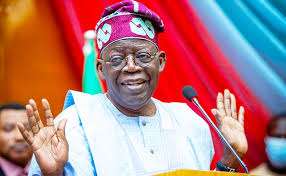
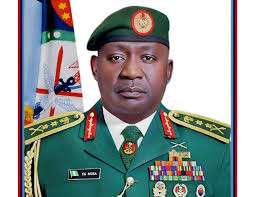
President Bola Tinubu has approved the appointment of DCG Kemi Nanna Nandap to serve as the Comptroller-General of the Nigeria Immigration Service (NIS), effective from March 1, 2024. DCG Nandap takes over from Mrs. Caroline Wura-Ola Adepoju, whose term in office expires on February 29, 2024. Before her appointment as Comptroller-General, Nandap was the Deputy Comptroller-General in charge of the Migration Directorate of the Service. The President anticipates that the new Comptroller-General will deepen the ongoing reforms in the service and create a robust mechanism for efficient and dedicated service delivery to Nigerians, as well as strengthen the nation’s security through proactive and effective border security and migration management.
DR Congo Prime Minister Resigns Amid Escalating Conflict

Prime Minister Jean-Michel Sama Lukonde of the Democratic Republic of Congo has tendered his resignation on Tuesday amid escalating clashes between rebels and government forces. Lukonde, who assumed office in February 2021, submitted his resignation to President Felix Tshisekedi just eight days after the validation of his mandate as a national deputy. The resignation was swiftly accepted by President Tshisekedi, who also announced the immediate dissolution of Lukonde’s government. However, the presidency revealed that the outgoing government would continue handling current affairs until a new one is formed. While the official statement did not specify the reasons behind Lukonde’s resignation, tensions have intensified in recent days around the strategic town of Sake, near Goma. The M23 rebel group, allegedly backed by neighboring Rwanda, has clashed with Congolese government forces, leading to heightened unrest in the region. In a separate incident, Goma airport in eastern DR Congo was struck by a bomb, as reported last Saturday by SaharaReporters. The source in the North Kivu province confirmed the attack, stating that “two bombs” had hit the facility but caused no significant damage. Security experts are on-site to investigate the origin of the bombing.
Tinubu Orders Payment Of Aso Rock Electricity Debts

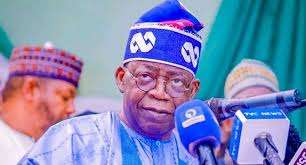
President Bola Tinubu has instructed the immediate settlement of the electricity bills owed by the State House, Aso Rock, to The Abuja Electricity Distribution Plc (AEDC). In a press statement by Bayo Onanuga, the Special Adviser to the President on Information & Strategy, Tinubu emphasized clearing the total debt of N342,352,217.46 after reconciling accounts between the State House Management and AEDC. Tinubu’s directive came after reconciling accounts between the State House Management and AEDC, resolving the discrepancy between the initially claimed N923 million debt and the actual outstanding bill of N342,352,217.46, as stated in a letter from AEDC management to the State House Permanent Secretary dated February 14, 2024. The Chief of Staff to the President, Rt Hon. Femi Gbajabiamila, ensured that the debt would be settled before the week’s end and urged other Ministries, Departments, and Agencies (MDAs) to follow suit by reconciling their accounts with AEDC and paying their electricity bills. Earlier, AEDC had issued a warning to disconnect electricity supply to the Presidential Villa and MDAs due to a combined debt of N47.1 billion, with the Presidential Villa alone owing N923,873,150. The company set a 10-day deadline for debt payment to avoid disconnection and blackout from February 28, 2024, citing the necessity to publish debt details for long-standing services rendered.
Tinubu Makes New Appointment

President Bola Tinubu has approved the appointment of Ms. Hafsat Abubakar Bakari to serve as the Director/Chief Executive Officer of the Nigerian Financial Intelligence Unit (NFIU). Her appointment is pending confirmation by the Senate. Ms. Bakari is a lawyer and financial intelligence expert with years of experience in anti-money laundering, counter-terrorism financing, and counter-proliferation financing (AML/CFT/CPF). Before her appointment as the Chief Executive Officer of the NFIU, she served as Deputy Director at the Nigerian Financial Intelligence Unit, and was at different times the Head of the General Services Unit; Head of the Strategy and Reorientation Unit, and Head of the Board Secretariat of the Economic and Financial Crimes Commission (EFCC). The President anticipates that Ms. Bakare will bring her wealth of experience and expertise to full discharge in this critical role, especially in view of his administration’s war against illicit financial flows and other sharp practices currently prevalent in segments of the nation’s foreign exchange markets.
Nigerian Senate Establishes 43-Member Committee for Constitution Review

The Nigerian Senate has taken a decisive step towards addressing the longstanding need for constitutional reform by inaugurating a 43-member committee tasked with reviewing the 1999 Constitution of the Federal Republic of Nigeria. Chaired by Deputy Senate President Jibril Barau, with Senate Leader Bamidele Opeyemi serving as Vice Chairman, the committee comprises 43 Senators representing each state of the federation, including the Federal Capital Territory (FCT), as well as an additional six members representing the country’s geopolitical zones and all female senators of the 10th Senate. In his announcement, Senate President Godswill Akpabio emphasized the urgency of revisiting the 1999 constitution, highlighting the necessity for a major review to better serve the interests of Nigerians. Akpabio further directed the Deputy Senate President to engage Speakers of State Houses of Assembly in preparatory discussions prior to commencing the review process. During the inaugural address, Committee Chairman Jibril Barau outlined the committee’s strategic approach, emphasizing collaboration with the House of Representatives and state Houses of Assembly to achieve comprehensive results. Barau underscored the importance of consulting with stakeholders from diverse sectors to ensure the success of the review process, clarifying that the committee’s objective is to amend select sections of the constitution for the benefit of the Nigerian populace. Echoing Barau’s sentiments, Senate Leader Bamidele Opeyemi affirmed the committee’s commitment to delivering tangible outcomes, acknowledging the critical juncture in the nation’s history and assuring Nigerians that the committee’s work would not adhere to conventional practices. Opeyemi emphasized the inclusion of stakeholders from academia, political groups, and other interest groups in the committee’s deliberations. Additionally, lawmakers emphasized the importance of adhering to timelines and collaborating with the executive branch to ensure a holistic approach to constitutional reform. Representatives assigned to the committee from each geopolitical zone include Senator Adamu Aliero (NW), Senator Orji Kalu (SE), Senator Fadahunsi Francis (SW), Senator Bomai Muhammed (NE), Senator Barinad Mpigi (SS), and Senator Umar Sadiq Suleiman. The Senate review committee aims to identify pertinent sections of the constitution requiring amendment to address contemporary national challenges, with inputs solicited from various stakeholders to inform the revision process.
The Empty Sanctimony of the Nigerian Diasporans

Anyone who has spent time on Nigerians in diaspora dominated social platform would be sick and tire of the their negativism, sanctimony and boasting about the system they currently live in and their constant whining and complaining about their God forsaken homeland. They share videos of automated garri factory in Bolivia and elsewhere, berating Nigeria and Nigerians in the homeland for not doing the same thing. Instead of coming together as a body, raise the fund, go to Bolivia which is not too far away from us, form a partnership with them and transfer the same technology to our country and make money in the process, they would rather list the reasons why it can’t be done in Nigeria. Rather they venerate other African countries like Zambia which are woefully behind us in development, forgetting that negativists and pessimists build nothing of value. When we keep saying what’s wrong with Nigeria, ain’t we citizens or at least once citizens of that country? Some of us have no solution to Nigeria’s problem other than hauling insults at the president and anyone who expresses a contrary position. Was that how this “great” country which we now call home was built? If truth be told some of those “great” nations are not so great. They have their ugliness underbelly. Some of them are just great packing and re-branding of themselves to the world, why we Nigerians specialize in degrading and denigrating our own homeland. Negative branding has real life consequences. Who would want to invest in a country whose citizens are constantly bringing it down by projecting negativity? No one. Didn’t African-Americans march, fight, and paid with their lives to pass landmark legislations like the civil rights act, the voters right act and other such legislations that have brought the societal change which we African immigrants are now enjoying and have benefitted from. Yet, the struggle continues. Racial disparity and racism still exist. That is the nature of human systems. Changes are usually gradual and won not by whining but by fighting to being them about. Every great nation we idolize today has gone through worse than what we are experiencing now. This is our make or break moment and we will not make it with our “bring him, mob at the cockpit door, negativism, constant whinning and complaining with no actionable solution proffered” attitude. Great nations are built by the sweat, tears and blood of patriots not by lazy armchair critics, stone-throwers and whiners. Let everyone do something to improve their local neighborhood and block by block, town by town and local government by local government, state by state, we will transform our nation. If we think we can do better than those in power, let’s organize a coalition of concerned diasporans and get into the political arena to change the system. It’s a lot easier to be a lazy and sanctimonious armchair critic separated by thousands of miles of vast ocean. It changes nothing otherwise with the mountains of whining from Nigerians in diaspora, our country should be a great nation today. We in the diaspora who have been exposed to systems that work have a special obligation to contribute our quota to transforming our motherland. Sadly, many of the same leaders at the helms of affairs today including our President, were once diasporans like us making a lie of our holier than thou sanctimony. Many of us will do worse if given political appointments. We will steal and enrich ourselves like almost everyone else does. That has been the track record of the Nigerian diasporans. It is criticize from afar off and join them in looting given the opportunity.
FG Issues Warning To Civil Servants Leaking Official Documents

The Federal Government, through the Office of the Head of Civil Service of the Federation, has taken a firm stance against the increasing leakage of sensitive official documents. Dr Folashade Yemi-Esan emphasized the need for permanent secretaries to expedite the transition to a digital workflow system to mitigate the embarrassment caused by these leaks. A stern warning was issued, stating that any civil servant caught leaking documents would face severe consequences in accordance with relevant regulations. The memo tagged HCSF/3065/VI/189 reads, “It has been observed with dismay, the increase in the cases of leakage of sensitive official documents in Ministries, Departments and Agencies. This is very embarrassing to the government and therefore unacceptable. “As part of the efforts to curb this undesirable development, all permanent secretaries are to fast-track the migration to the digitalised workflow system, and ensure effective deployment of the Enterprise Content Management Solution, “This will reduce physical contact with official documents thereby checking the increasing incidence of leakage and circulation of same. “Furthermore, permanent secretaries are advised to strongly warn all staff against leaking and circulating official information and documents. “Any officer caught engaging in such unbecoming act will be severely dealt with in line with the relevant provisions of the Public Service Rules and other extant circulars.” This move comes in response to recent public outrage over leaked memos disclosing financial allocations and plans by government committees, prompting calls for investigations by Civil Society Organisations and organized labour.
ECOWAS President condemns non enforcement of its court judgments

The ECOWAS Commission President, Omar Touray, has condemned the non enforcement of its judgements among the member statess. Touray insisted that the enforcement ofjudgmentss of the Community Court has remained a major issue in the effective delivery of the mandate and responsibility of the judicial institution to the community citizens. Speaking at the ECOWAS Judicial Council meeting, in Abuja Tuesday, Touray noted that the supplementary protocol relating to the ECOWAS Community Court provides a role for the national judicial institutions in the enforcement of these judgements. “I believe that it is time for deliberate action to be taken to address this challenge. “In this era, where instability and insecurity are overwhelming our community, the role of the justice sector is crucial in conflict prevention, through the promotion and defence of the rule of law and human rights. He stressed the need to institutionalise a more regular meeting of the Judicial Council to ensure that the activities of the Court benefit from theregulary review and guidance of the Council. The ECOWAS Commission President noted that the Community Court has become an exemplary institution, which is being emulated by other regional courts in the continent, adding that the Court has witnessed the transition of judges over the years: the recruitment of Judges of high quality and standards to preside over the affairs of the Court. The 2-day ECOWAS judicial council conference on enforcemenot of ECOWAS court judgments was declared open by the Chief Justice of Nigeria, Justice Olukayode Ariwoola. The meetin, which started on Tuesday, and had in attendance, the Chief Justices of member countries of ECOWA, is presided over by Justice Ariwoola, the Chairman of the ECOWAS Judicial Council. In an opening address, Justice Ariwoola recalled that in June 2006, the Authority of Heads of State and Government of ECOWAS decided to establish a Judicial Council of the Community with the responsibility for recruiting judges for the Community Court and handling disciplinary matters of the judges, including the functioning of the Court. Justice Ariwoola said the ECOWAS Judicial Council, though not as widely known as some other bodies, plays a crucial role in maintaining the rule of law and justice within ourregionn. “The Judicial Council serves as the guardian of the rule of law and the protector of human rights within the region, he said. In addition, the ECOWAS Judicial Council plays a crucial role in the resolution of disputes among member states, ensuring that conflicts are resolved peacefully and in accordance with the rule of law. The objective of this starutory meeting of ECOWas Judicial Council is to review the legal framework of the Community Judicial Council, look deeply on our responsibilitie, and suggest areas for improvement. The ECOWAS Judicial Council plays a crucial role in the resolution of disputes among memberstatess, ensuring that conflicts are resolved in peacefully and in accordance with the rule of law. “It acts as a mediator and facilitator in resolving disputes, promoting dialogue and reconciliation among member states. “By doing so, the Council contributes to the maintenance of peace and stability in the regio,n” Justice Ariwoola stated. The ECOWAS Judicial Council Chairman hinted that the objective of the Statutory meeting of ECOWAS Judicial Council is to review the legal framework of the Community Judicial Council, look deeply on our responsibilities and suggest areas for improvement. “No doubt, the ECOWAS Judicial Council is an indispensable institution in the West African region. “Through its numerous functions, the Council strives to ensure the independence and integrity of the judiciary, protect human rights, interpret regional laws, and resolve disputes among member states. “As we move forward, it is crucial to support and strengthen the ECOWAS Judicial Council, as it continues to play vital role in our collective journey towards a more just, peaceful, and integrated West Africa” Justice Ariwoola stated.
Nigerian Red Cross Raises Alarm Over Escalating Hunger Crisis

The Nigerian Red Cross Society (NRCS) has issued a dire warning regarding the deepening hunger crisis in Nigeria, urging immediate action to address the escalating situation. Dr. Abubakar Ahmed Kende, Secretary General of the NRCS, delivered the stark message during a press briefing held in Abuja yesterday. Dr. Kende expressed grave concern over the worsening food insecurity gripping the nation, attributing it to factors such as hyperinflation fueled by surging fuel prices. He revealed that an estimated 26.5 million Nigerians, including vulnerable groups such as women and children, are currently grappling with acute hunger and require urgent assistance to avert further suffering and loss of life. The announcement comes amidst mounting protests against food shortages and soaring living costs, with demonstrations spreading to cities like Ibadan, where protesters defied police warnings to demand action from the government. At the launch of a partnership between the Red Cross and Ecobank aimed at mobilizing local resources for the hunger crisis appeal, Dr. Kende underscored the precarious situation faced by vulnerable populations, including children, pregnant women, and lactating mothers. He disclosed alarming statistics, revealing that nearly 4.41 million children and 585,000 mothers are confronting acute malnutrition, with approximately 1,000 Nigerian children succumbing to malnutrition-related causes daily. Dr. Kende emphasized the multifaceted nature of the crisis, citing factors such as changing weather patterns, heightened internal conflicts, and the enduring impacts of the COVID-19 pandemic. Urging swift action, he stated, “The time to act is now.” The partnership with Ecobank aims to mobilize funds locally to support the hunger crisis appeal and deliver essential relief to affected communities. Dr. Kende outlined various initiatives, including the provision of multipurpose cash grants for emergency relief and recovery, nutritional support for pregnant and lactating mothers, and Water, Sanitation, and Hygiene (WASH) interventions to mitigate disease prevalence. In conclusion, Dr. Kende called upon individuals, businesses, and organizations to unite in supporting government efforts to address the crisis. He underscored the pivotal role that corporate entities like Ecobank Nigeria can play in contributing to the nation’s welfare. The Nigerian Red Cross, in collaboration with partners and volunteers across all 36 states and the Federal Capital Territory, stands poised to respond to the urgent humanitarian needs of communities hardest hit by acute hunger.
FG commences payment of ASUU’s withheld salaries

The Federal Government has commenced the payment of the withheld salaries of academics under the aegis of the Academic Staff Union of Universities. Multiple sources in the academic sector confirmed the development to our correspondent in Abuja on Monday. The chairperson, ASUU at the Federal University of Technology, Minna, Prof. Gbolahan Bolarin, who confirmed the development on the record, said, “Yes, it is true. Payment has started rolling in.” President Bola Tinubu Tinubu had in October 2023 approved the release of four of the eight months’ ASUU withheld salaries of the workers. The salaries were withheld when the administration of former President Muhammadu Buhari invoked a ‘No Work, No Pay policy’ against some university-based unions that embarked on a strike that lasted eight months in 2022. The Minister of Education, Tahir Mamman, recently said the government has increased the university workers’ salaries by 35 per cent. The minister also said the government has granted autonomy to the universities by removing them from the Integrated Payment and Payroll Information System . He added that the universities no longer need a waiver to recruit and fill their vacancies. These resolutions were reached through informal consultations with the unions based in the tertiary institutions, Mamman said.