Forgeries, taxations and the reign of Rehoboam

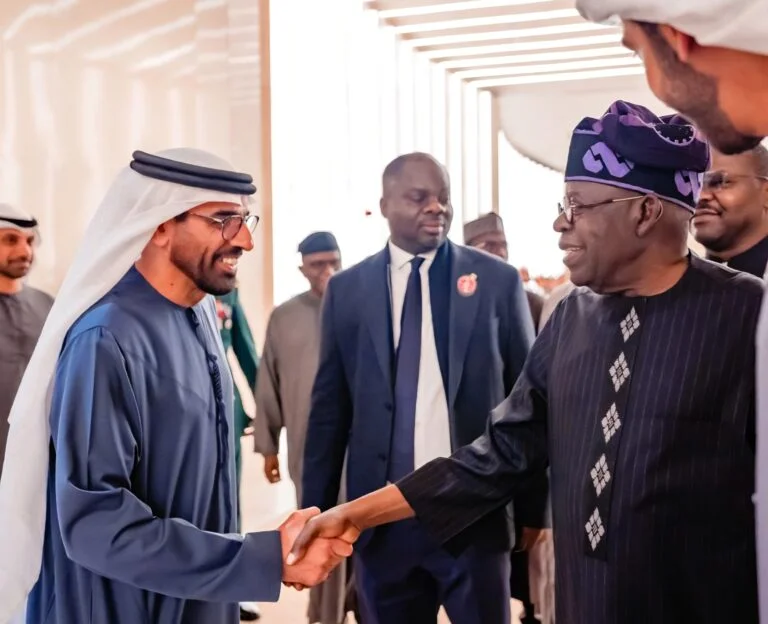
By UGO ONUOHA “A profligate regime should not expect Nigerians to willingly submit to a new tax regime that looks like an exercise in extortion. The administration gets its priorities wrong. At a time that virtually all federal highways have collapsed and become deathtraps, this government prioritises the construction of a N15 trillion coastal highway from Lagos to Calabar.” A little over three months into the presidency of Alhaji Bola Ahmed Tinubu, on September 5, 2023, I wrote an opinion piece titled “100 days of Rehoboam” in this space and elsewhere. Rehoboam was a king of the divided kingdom of ancient Israel. He was the son of King Solomon and the grandson of King David, both of whom were also past rulers of a united Israel. Rehoboam caused Israel to be divided through policies that inflicted pains on his people. He was reckless. He was proud. He was unfeeling. He took counsel from his scatter head fellow young men. He told the Israelites that the privations they suffered under his father should be regarded as a child’s play. And that while his predecessors chastised them with a whip, he would chastise them with a scorpion. And he verily proceeded to do so. Rehoboam and Tinubu share similarities and dissimilarities. Rehoboam was a monarch. Tinubu is not a king in spite of his pretending to be one. Rehoboam was born into royalty. Tinubu was not. Indeed Tinubu’s birth and early years are still subjects of conjectures and controversies. Rehoboam was a young man when he ascended the throne of his fathers, and so could be excused on account of youthful exuberance. Tinubu was an old man when he was installed as president of Nigeria though his true age is only known to himself and himself alone. There’s no verifiable evidence of when he was born and where. Unlike Rehoboam, Tinubu takes no counsel from anyone. He said this much himself when, without consultations and without a Cabinet, he unilaterally removed the so-called petrol subsidy. Tinubu at 100 days in office] has been like that proverbial bird that perched on a tree branch—the branch has remained unsettled and the bird can’t stop dancing to unheard sounds. Since his inauguration on May 29, 2023, exacerbated hopelessness has been the lot of Nigerians. Tinubu himself can only pretend to have peace of mind…” On September 5, 2023, I wrote this about Tinubu and Rehoboam. “[Tinubu at 100 days in office] has been like that proverbial bird that perched on a tree branch – the tree branch has remained unsettled and the bird can’t stop dancing to unheard sounds. Since his inauguration [as president] on May 29 [2023], exacerbated hopelessness has been the lot of Nigerians and Tinubu himself can only pretend to have had peace of mind. If he has had the presence and prescience of mind, he would not have been enmeshed in serial fumbling from one policy somersault to another from the removal of the so-called petrol subsidy, [devaluation of the Naira], student loan and [the] proposed payment of N8,000 per month for six months to a specified number of poor Nigerian families, and planning to lead the Economic Community of West African States [ECOWAS] to war on Niger Republic [when the military in that country seized political power]”… In Igbo Tinubu is a classical case of ‘akwu rere ere n’ikwo puru epu’ which transliteration in English language will roughly read: rotten palm fruits being pounded inside a decayed mortar. The finished product is better left to the imagination…” When Rehoboam became the king, the older advisers in the palace pleaded with him “to heed the cry of the people and lighten the heavy load of labour and taxes that Solomon had laid on them, but the younger elements who had grown up with the new king counselled otherwise. He took the counsel of his mates. The consequences of the actions of the new and rash King Rehoboam are well documented in the chronicles of the kings of Israel in the Holy Bible book of 1Kings. In Tinubu’s rash and irrational decisions [on] the first day and [subsequent] weeks of his reign, he appears to have borrowed a leaf from the wicked and unthinking King Rehoboam”. One of the undoings of Rehoboam was that he insensitively raised taxes on his people and so lost more than half of his kingdom. The northern part of Israel split away, taking its own path separate from the southern kingdom of Judah. But Nigeria is not a monarchy and bears no resemblance to the old kingdom of Israel. Does that mean that Nigeria splitting is unthinkable? With the new tax laws set to come into effect in a matter of days, Tinubu who rules like a monarch may yet be treading the path of King Rehoboam. Rehoboam raised taxes on his people at a time they were already complaining of privations and pains, Tinubu is poised to also raise taxes on Nigerians at a time the people are groaning under the weight of a multiplicity of harsh economic policies of the regime. And he appears not to be bothered. He is irritated by wise counsel that he steps on the brakes and allows Nigerians to breathe. Instead, he empowers the relevant agency of government to execute a secret contract with a so-called tax consultant in France which may lead to handing over Nigeria’s tax data to a foreign company. Tax data is a national security issue that should not be traded as a favour to a friend. Tinubu and the president of France, Emmanuel Macron, are known to be buddies. The frequent ‘working visits’ of our president since he assumed office a little over two years ago had been to Paris, France, unlike his predecessor, Muhammadu Buhari, who made London his tourism and medical destination, and the former archbishop of Canterbury his bosom friend. And a go-to man. A profligate regime should not expect Nigerians to willingly submit to a new tax regime that looks
How to Make Nigeria Work, If Still Possible

By Ugo Onuoha It will be difficult, probably impossible, to make Nigeria work the way it is presently structured and governed. In theory, we are running a federal system. In practice, it is a unitary structure where operatives in Abuja determine who gets what, how, when, and where. The Osun Example and a Flawed Federal System Until recently, Osun State, governed by the opposition Peoples Democratic Party (PDP), became the latest victim of this distorted arrangement. The Supreme Court had ruled in July 2024 that local government funds must be paid directly to councils, not through state governments. It also declared that only democratically elected councils are entitled to federal allocations. Yet, that judgment has largely been ignored. Some states have passed laws effectively nullifying it, and in many others, it remains business as usual. Ironically, the same federal government that sought the ruling, under President Bola Tinubu, has itself been accused of flouting it. For months, Abuja withheld Osun’s local government allocations, claiming that PDP-controlled councils were illegitimate. The state was forced to rely on Governor Ademola Adeleke and his nephew, musician Davido, who reportedly contributed funds to pay council workers’ salaries. When Osun challenged the federal government at the Supreme Court, the court struck out the case for lack of standing but condemned Abuja’s action as “illegal and egregious.” Both sides claimed victory, but Nigerians were left with the same lesson: partisan politics trumps governance. Politicians vs. Statesmen The Osun case typifies a larger truth, partisan politicians cannot build nations. They are fixated on winning the next election, not on laying enduring foundations. Any country dominated by politicians rather than statesmen will struggle on the lower rungs of global development. That, sadly, has been Nigeria’s reality since the military sacked the First Republic in 1966. Nation-Building: A Process, Not an Event Nigeria will not work until we are intentional about making a nation out of the country. Building a sustainable nation requires a shared vision that fosters unity, common values, and inclusive governance. It also demands: Without these, our quest for progress will remain an illusion. The Foundation Is Broken The biblical question in Psalm 11:3 asks: “If the foundations be destroyed, what can the righteous do?” Nigeria’s foundation, fractured by the 1966 coup and deepened by years of military rule, remains defective. The 1999 Constitution, hurriedly drafted by the Abdulsalami Abubakar junta, was designed to serve narrow interests—not the people. For nearly three decades, we’ve been trying to erect a nation on a bogus foundation. To move forward, Nigeria must start afresh, with a people-driven constitution that reflects true federalism and equity. A Case for Restructuring Many credible voices, including The Patriots led by Chief Emeka Anyaoku, have long called for a new national arrangement. Their proposals include: These ideas, if sincerely implemented, can provide a roadmap to rebuild Nigeria. Structural Inequities and Centralized Power The existing federal structure, largely created by military fiat, is riddled with inequities. For instance, the old Kano State was split into Kano and Jigawa, now boasting over 70 local councils combined—while Lagos, with a similar population, has only 20. This imbalance affects representation and resource distribution. Power is dangerously centralized in the presidency, making elections a do-or-die affair and fueling corruption. The figures involved in federal scandals have ballooned from billions to trillions of naira, yet Nigerians no longer express shock. The presidency has become a “golden calf”, an object of worship. Unchecked power breeds inefficiency, arrogance, and impunity. The signs are visible everywhere. The Way Forward To make Nigeria work, we must: Until these steps are taken, Nigeria will continue to move in circles—rich in potential, poor in leadership, and crippled by structure. In conclusion, Nigeria’s tragedy is not that it lacks talent or resources, but that it is burdened by a defective system and a political class unwilling to change it. The challenge before us is to summon the courage to rebuild from the ground up. Otherwise we will keep trying to place something on nothing and expecting it to stand. Ugo Onuoha is a journalist, public affairs commentator, and former Managing Director/Editor-in-Chief, Champion Newspapers Limited. He writes from Lagos.
Rivers Assembly Endorses Tinubu for Second Term Amid Criticism of “Sycophancy”

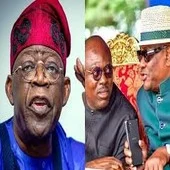
In a move many described as politically motivated, the Rivers State House of Assembly has endorsed President Bola Ahmed Tinubu for a second term in office. The endorsement, announced on Wednesday, was presented as a vote of confidence in appreciation of what the lawmakers called the “numerous Federal Government projects and interventions” in the state under Tinubu’s leadership. The motion, signed by 26 members and read by the House Leader, Mr. Major Jack (Akuku-Toru), claimed that Tinubu’s administration had demonstrated commitment to peace, stability, and development. In a controversial justification, the legislators cited Tinubu’s declaration of a state of emergency and the temporary suspension of the state legislature, moves widely criticized by Nigerians and international observers, as evidence of his “fatherly role” in restoring order. Speaker of the House, Mr. Martin Amaewhule (Obio/Akpor I), praised the president as a “compassionate father” working to reposition the nation for growth. He also lauded the appointment of Rivers indigenes into key federal positions, saying it reflected Tinubu’s inclusiveness and strengthened the state’s relationship with the Federal Government. The lawmakers further pledged loyalty to the Minister of the Federal Capital Territory (FCT), Nyesom Wike, and promised to mobilize grassroots support for Tinubu’s “Renewed Hope Agenda.”
Obaseki Says Shaibu Remains Impeached

Governor Godwin Obaseki of Edo State has reiterated that his deputy, Philip Shaibu, remains impeached, despite a recent court ruling. On Friday, Obaseki responded to a statement attributed to Shaibu, where he warned Permanent Secretaries and Heads of Ministries, Departments, and Agencies (MDAs) against the possible looting of government properties by political appointees. Obaseki, through his media adviser Crusoe Osagie, urged Edo State workers to dismiss Shaibu’s directives, emphasizing that Shaibu has no authority to issue instructions as he remains impeached. The governor reaffirmed that Shaibu’s removal from office is still in effect, pending the court’s final decision, and that the deputy governor holds no power to interfere with the functioning of state employees. This comes after the Federal High Court in Abuja, in a July ruling, ordered Shaibu’s reinstatement, stating that due process was not followed during his impeachment by the Edo State House of Assembly. The state government and the House of Assembly’s attempt to challenge the court’s decision was dismissed, with costs awarded against them. Obaseki’s administration, however, continues to uphold Shaibu’s impeachment while awaiting the court’s definitive ruling on the matter.
Peter Obi Doubles Down on Condemnation of ethnic and religiously profiling

Mr. Peter Obi has doubled down on his condemnation of what he called the “distasteful comments” of a Nigerian woman living in Canada.
Afenifere rejects Supreme Court Ruling On LG Autonomy

The Pan Yoruba Socio-Political Group, Afenifere, has faulted the Supreme Court verdict that granted fiscal autonomy to local government areas. It lamented that the Apex Court verdict has “done incalculable injury to the Nigerian state. This was contained in a statement signed by the leader of the group, Pa Ayo Adebanjo and it’s National Publicity Secretary Prince Justice Faloye, made available to newsmen in Akure, the state capital. It’s entitled ” Tinubu and the Grand Conspiracy Against Democracy and True Federalism in Nigeria. The statement declared that ” Afenifere views the judgment of the Supreme Court in the case filed by the Federal Government on the so-called Local Government autonomy as sheer judicial conspiracy in cahoots with the Tinubu administration against the Nigerian state and its foundational principles of federalism. Rather than interpret the constitution to uphold its elementary but overriding federal principle which recognises only a two-tier federal structure of the central government and federating states, the Supreme Court played to the gallery and wittingly allowed itself a most retrogessive declaration that the power of the government is portioned into three arms of government, the federal, the state and the local government. For the avoidance of any doubt, Afenifere makes bold to say that in line with its negotiated basis of existence, Nigeria is a “Federation consisting of States and a Federal Capital Territory”. as affirmed by Section 2 (2) of the 1999 constitution. While Afenifere frowns at corruption and misuse of public funds at levels of government, it condemns in most unmistaken terms the subjugation of the states and its constitutional roles including the Local Government system to the whims and caprices of the federal government by any means including obvious manipulation of the federation account as in the present case. The 1999 constitution, which in spite of its flaws, gives life and power to the Supreme Court provides in Section 162 and particularly subsection (6) that “each state shall maintain a special account to be called “State Joint Local Government Account” into which shall be paid all allocations to the local government councils of the state from the Federation Account and from the Government of the state”. “Against this unambiguous provision the Supreme Court held that “demands of justice requires a progressive interpretation of the law. ”It is the position of this court that the federation can pay Local Government allocations to the Local Government directly or pay them through the states. ”In this case, since paying them through states has not worked, justice of this case demands that Local Government allocations from the federation account should henceforth be paid directly to the Local Governments . ”Contrary to this invented alternative routes, Section 162 of the Constitution is not ambivalent about the process and route through which “all allocations to the local government councils of the state from the Federation Account and from the Government of the state” shall become payable to the Councils. ‘In other words, the interpretation does not require a voyage into jurisprudential sophistry leading to the absurdity of deliberate judicial amendment of the grundnorm. “By wittingly or inadvertently equating the Nigerian Federation with the Federal Government in the erroneous belief that both expressions are used interchangeably, such that the President may withold funds to the credit of the Local Governments from the Federation Account, under the guise of having no democratically elected officials, which is obviously subject to the interpretation by the Federal Government. ”The apex court has not only done incalculable injury to the Nigerian state, it has lent itself to setting aside its precedent in the hallowed judgment against the President Obasanjo administration withholding funds to the credit of Local Governments in Lagos State even when the Supreme Court said so.
BREAKING! Tinubu Names National Theatre After Wole Soyinka

President Bola Tinubu has named the National Arts Theatre in Iganmu, Lagos, after Nobel Laureate Professor Wole Soyinka, in celebration of his 90th birthday. This announcement was made in a letter to the literary icon, acknowledging his immense contributions to literature, human rights, and justice. Tinubu praised Soyinka’s remarkable achievements, including his Nobel Literature Prize in 1986, and his unwavering dedication to human dignity and justice. He said, “I am pleased to join admirers around the world in celebrating the 90th birthday of Nigeria’s iconic son and the world-renowned Professor Akinwande Oluwole Babatunde, famously known as Wole Soyinka. “Tomorrow the 13th July will be the climax of the series of local and international activities held in his honour. To underscore the global relevance of the literary giant, a symposium, along with poetry reading was held in Rabat Morocco on 9 July. The event was organized by the Academy of the Kingdom of Morocco and the Pan African Writers Association (PAWA). “Professor Soyinka, the first African to win the Nobel Literature Prize in 1986, deserves all the accolades as he marks the milestone of 90 years on earth. Having beaten prostate cancer, this milestone is a fitting testament to his ruggedness as a person and the significance of his work. “It is also fitting we celebrate this national treasure while he is still with us. I am, accordingly, delighted to announce the decision of the Federal Government to rename the National Theatre in Iganmu, Surulere, as the Wole Soyinka Centre for Culture and the Creative Arts.”
EndSARS Protest: ECOWAS Court finds FG guilty of human rights violations

The Court of Justice of the Economic Community of West African States(ECOWAS) has found the Federal Government guilty of violating the fundamental human rights of youths that participated in the October 2020, EndSARS protest. A three-man panel of Justices, had in a unanimous decision, held that there was merit in a suit brought before it by three participants in the protest – Obianuju Catherine Udeh, Perpetual Kamsi and Dabiraoluwa Adeyinka. Specifically, the court held that the Federal Republic of Nigeria, through its security agencies, violated Articles 1, 4, 6, 9, 10, and 11 of the African Charter on Human and Peoples’ Rights, ACPHR, pertaining to the right to life, security of person, freedom of expression, assembly and association, prohibition of torture, duty of the state to investigate, and the right to effective remedy. The Applicants had, in their suit, alleged that these violations occurred during peaceful protests they held at the Lekki Toll Gate in Lagos State on October 20 and 21, 2020. In the judgement delivered by the lead Judge Rapporteur, Justice Koroma Mohamed Sengu, the regional court dismissed the Applicants’ allegation that their right to life as guaranteed under Article 4 of the ACPHR, was violated. However, it ordered FG to pay each of the Applicants the sum of N2million as compensation for violations of their security of person, prohibition of torture and cruel, inhuman, and degrading treatment, rights to freedom of expression, assembly, and association, duty to investigate human rights violations, and right to effective remedy. Additionally, it held that FG must adhere to its obligations under the ACPHR by investigating and prosecuting its agents responsible for the violations. The court ordered FG to, within the next six months, report to it, measures it has taken to implement the judgment. The Applicants had alleged that during the peaceful protests against the SARS Unit of the Nigerian Police Force at Lekki Toll Gate, Lagos State, on October 20 and 21, 2020, the Respondent, committed several human rights violations. Triggered by the alleged killing of one Daniel Chibuike, the protests were aimed to address police harassment and brutality. In the suit, the 1st Applicant, among other things, told the court that soldiers shot life ammunitions at protesters, resulting in deaths and injuries, which she live-streamed. She told the court that subsequently, she started receiving threatening phone calls that forced her not only to go into hiding but also to seek asylum. Likewise, the 2nd Applicant, who said she was responsible for the welfare of the protesters, described how soldiers began shooting after a power cut, leading to her hospitalisation due to excessive tear gas she inhaled. On her part, the 3rd Applicant narrated how she narrowly escaped being shot and how soldiers refused to allow an ambulance to enter the protest ground to help the injured participants. She further told the court that she later witnessed how the victims were neglected without the provision of adequate healthcare for them at the hospital. She further submitted that with the help of her colleagues, she eventually took over and started taking care of the victims. She alleged that she faced numerous threats and was placed on surveillance by security agents. Consequently, all the Applicants prayed the court to issue declaratory reliefs against FG and award compensation to them for the gross violations of their fundamental human rights. Meanwhile, in processes it filed before the court, FG, through its team of lawyers, denied all the allegations and claims that were made up by the Applicants. It told the court that the protesters unlawfully assembled at Lekki Toll Gate on October 20, 2020, under the guise of protesting against SARS. FG also maintained that its agents followed strict rules of engagement and did not shoot or kill protesters. It argued that the 1st Applicant incited the crowd by playing music and using her Instagram page to stir disaffection against law enforcement agents who were targeting escapee members of Boko Haram and bandits. FG further contended that the 2nd Applicant’s provision of logistics and welfare packages indicated her support for the violent protest. It claimed that soldiers were present to restore peace until the police arrived, denying any harm inflicted on protesters and the alleged refusal to access the ambulance. More so, FG denied that the 3rd Applicant’s presence was peaceful, asserting it was meant to escalate violence. It argued that the treatment and care of the injured were managed by the Lagos State government, insisting that the Applicants failed to provide credible evidence to support their claims and the reliefs they sought from the court. In its judgment on Wednesday, the court held that it could not establish that there was a violation of the right to life as the Applicants failed to adduce any evidence to that effect. Nevertheless, it held that several articles of the ACHPR were breached by the Respondent (FG), which occasioned fundamental breaches of human rights. Furthermore, the Court said it was satisfied that the Applicants were denied the right to an effective remedy. It ordered FG to make reparations to the Applicants for the violation of their fundamental human rights. Other members of the panel that concurred with the lead judgement were Justice Dupe Atoki, who presided, and Justice Ricardo Claúdio Monteiro Gonçalves
Agric Minister reveals When Food prices will crash in Nigeria

As Nigerians hit the streets to protest cost of living crisis, especially high cost of food and hunger, the Minister of Agriculture and Food Security, Sen Abubakar Kyari, Wednesday, disclosed that in 180 days food prices will crash. Kyari stated this on his X (formerly Twitter) handle, where he unveiled measures that will be implemented over the next 180 days. He said: “Our administration has unveiled a series of strategic measures aimed at addressing the high food prices currently affecting our nation. These measures will be implemented over the next 180 days; “150-Day Duty-Free Import Window for Food Commodities •Suspension of duties, tariffs, and taxes for the importation of certain food commodities through land and sea borders. These commodities include maize, husked brown rice, wheat, and cowpeas. “Imported food commodities will be subjected to a Recommended Retail Price (RRP). We understand concerns about the quality of these imports, especially regarding their genetic composition. The government assures that all standards will be maintained to ensure the safety and quality of food items for consumption. “The Federal Government will import 250,000 metric tons of wheat and 250,000 metric tons of maize. These semi-processed commodities will be supplied to small-scale processors and millers across the country. “Engagement with relevant stakeholders to set a GMP and purchase surplus food commodities to restock the National Strategic Food Reserve. “Ramp-Up of Production for the 2024/2025 Farming Cycle Continued support to smallholder farmers during the ongoing wet season farming through existing government initiatives; Strengthening and accelerating dry season farming nationwide; “Embarking on aggressive agricultural mechanization to reduce drudgery, lower production costs, and boost productivity. ; Collaborating with sub-national entities to identify irrigable lands and increase land under cultivation; Working closely with the Federal Ministry of Water Resources and Sanitation to rehabilitate and maintain irrigation facilities under river basin authorities across the federation. “Developing strategic engagement for youth and women for immediate greenhouse cultivation of horticultural crops such as tomatoes and pepper to increase production volume, stabilize prices, and address food shortages; Fast-tracking ongoing engagements with the Nigerian Military to rapidly cultivate arable lands under the Defence Farms Scheme and encouraging other para-military establishments to utilize available arable lands for cultivation. “Renewed Hope National Livestock Transformation Implementation Committee; This committee has been inaugurated on Tuesday, July 9, 2024, to develop and implement policies prioritizing livestock development in alignment with the National Livestock Transformation Plan, and a ministry of Livestock Development has been created. “Enhancement of Nutrition Security •Promoting the production of fortified food commodities. •Supporting the scale-up of the Home Garden Initiative by the Office of the First Lady of the Federal Republic of Nigeria. Meanwhile, he also explained that, “Over the next 14 days, in close collaboration with the Presidential Food Systems Coordinating Unit (PFSCU) and the Economic Management Team (EMT), we will convene with respective agencies to finalize the implementation frameworks. We will ensure that information is publicly available to facilitate the participation of all relevant stakeholders across the country.” However he said, “The success of these measures hinges on the cooperation and collaboration of all relevant MDAs and stakeholders. “As our nation confronts this critical food security challenge, I reiterate President Tinubu’s unwavering commitment to achieving food security and ensuring that no Nigerian goes to bed hungry. “My team and I will work swiftly and diligently to actualize these crucial policies, ensuring food security for everyone in the immediate term while continuing our strategies for long-term intervention.
Minimum Wage: Tinubu To Meet With Organised Labour

President Bola Tinubu will meet with the Organised Labour in Abuja on Thursday to further discussions on a new minimum wage for workers in Nigeria. A top labour source told Channels Television that the President invited the leadership of the Nigeria Labour Congress (NLC) and Trade Union Congress (TUC) to the meeting expected to be held at the Aso Villa in the nation’s capital city. The President is expected to make a decision on the ₦62,000 proposal of the government and private sector side; as well as the ₦250,000 demand of the Organised Labour. The Thursday meeting is coming about a month after the President said in his Democracy Day speech on June 12, 2024, that an executive bill on the new national minimum wage for workers would soon be sent to the National Assembly for passage. On June 25, the Federal Executive Council (FEC) chaired by the President stepped down from consideration and deliberation on the memo on the new minimum wage to allow for more engagement with stakeholders. Two days after, Tinubu and Vice President Kassim Shettima, at the 141st meeting of the National Economic Council (NEC), met with governors of the 36 states of the Federation and ministers to deliberate on a new minimum wage for workers. Long Walk To New Wage Talks for a new minimum wage for Nigerian workers have been on for a while. The Minimum Wage Act of 2019, which made ₦30,000 the minimum wage, expired in April 2024. The Act should be reviewed every five years to meet with contemporary economic demands of workers. President Bola Tinubu in January set up a Tripartite Committee to negotiate a new minimum wage for workers. The committee comprises the Organised Labour, representatives of federal and state governments as well as the Organised Private Sector. However, the committee members failed to reach an agreement on a new realistic minimum wage for workers, forcing labour to declare an indefinite industrial action on Monday, June 3, 2024. Businesses were paralysed as labour shut down airports, hospitals, the national grid, banks, National Assembly, and state assemblies’ complexes. The labour unions said the current minimum wage of ₦30,000 can no longer cater to the well-being of an average Nigerian worker, saying the government should offer workers something economically realistic in tandem with current inflationary pressures, attendant effects of the twin policies of petrol subsidy removal and unification of the forex windows of the current administration. Labour “relaxed” its strike on June 4, 2024 following assurances from the President that he was committed to a wage above ₦60,000. Both the Trade Union Congress (TUC) and Nigeria Labour Congress (NLC) leadership subsequently resumed talks with the representatives of the Federal Government, states, and the Organised Private Sector. On Friday, June 7, 2024, the two sides (labour and the government) still failed to reach an agreement. While labour dropped again its demand from ₦494,000 to ₦250,000, the government added ₦2,000 to its initial ₦60,000 and offered workers ₦62,000. Both sides submitted their reports to the President who is expected to make a decision and send an executive bill to the National Assembly to pass a new minimum wage bill to be signed into law by the President.