Atiku Dares Tinubu To Disclose Cost Of  Lagos-Calabar Highway Project 

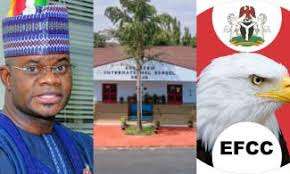
Atiku Abubakar, former presidential candidate of the Peoples Democratic Party, calls out President Bola Tinubu to reveal the full expenses of the Lagos-Calabar highway project.  Atiku, questioning the lack of transparency, demanded clarity on the project’s total cost and its funding source, raising concerns over the awarded contract and expenditure distribution.  Tinubu’s administration has been facing mounting pressure to address these inquiries amidst allegations of non-competitive bidding and financial discrepancies.  Atiku emphasized the need for accountability and urges Tinubu’s administration to respond to the public’s inquiries with transparency, invoking the spirit of the Freedom of Information Act. He said: “The Tinubu administration cannot continue to respond to the public inquiry with insults. They must come clean on this project because Nigerians deserve to know the truth. I, therefore, present six posers to the administration. “1. How much is the total cost of the Lagos-Calabar coastal highway? 2. Why is the project being funded by the Nigerian government despite being a PPP? 3. Why is the project taking off from Chagoury’s Eko Atlantic? 4. Why is N1.06tn being spent on the pilot phase, which is just 47km? “5. Why did the N1.06tn not get the approval of the National Assembly? 6. Why wasn’t there a competitive bidding for the project? 7. Finally, how did the Tinubu administration get the design as well as the right of way in just 7 months, since it claims the past administration of Goodluck Jonathan and Muhammadu Buhari never touched the project?”

Why Air Peace, Others Can’t Compete With Big International Airlines – Keyamo

The Minister of Aviation and Aerospace Development, Festus Keyamo, has said domestic airlines cannot compete with big international airlines because they don’t have access to aircraft on the same terms as them. Keyamo disclosed that the federal government is working with the Aviation Working Group on a practice direction to enable domestic airline operators to dry lease aircraft. In an interview on Arise Television on Monday, Keyamo revealed that some local operators had in the past breached the Cape Town Convention, which regulates aircraft leasing across the world. The minister said the Aviation Working Group, co-chaired by Airbus and Boeing, has said Nigeria would be blacklisted until it implements a law that would guide such from happening. He said: “Why we cannot compete with big international airlines is because we don’t have access to aircraft on the same terms as they have. People don’t know that the best airlines in the world run their fleet 100 per cent based on the actual purchase of aircraft. Recent studies show that 70 per cent of the fleet across the world is on dry leases. “For airlines that have bank facilities, they have access to loans in single digits, but our banks do 26 per cent. It was as a result of this that I called industry people to inform them that in order to survive, they must have access to these aircraft as those around the world. “So, I went around to enquire about what guides aircraft leasing around the world, and I discovered it was the Cape Town Convention, which regulates aircraft leasing across the world. And Nigeria is a signatory to that convention. We have signed and ratified that convention. “And there is a group responsible for the observance and compliance of that convention. The group is co-chaired by Airbus and Boeing. The group is called the Aviation Working Group, headed by Jeffrey Wool. “I called all of them and held a meeting to ask why our local operators are not getting these aircraft. According to them, they have blacklisted Nigeria because it didn’t comply with the convention. “The Aviation Working Group told me that until our laws are amended, until our practice directions are amended from granting injunctions on aircraft on dry lease, they will not bring aircraft in dey lease into Nigeria. “So, I told them I would do that. I spoke with the Attorney General of the Federation, the Chief Judge of the Federal High Court, the Chief Justice of Nigeria, the president and vice president, who is the head of the Ease of Doing Business; all of them have agreed that it is a critical issue. “We are in the process of drafting a practice direction to satisfy the Aviation Working Group that once we give a practice direction that says: ‘please, our judges, don’t grant injunctions to detain aircraft that are on dry lease in Nigeria because it gives us a bad image and it is against the Cape Town Convention of the Aviation Working Group’”.

Eid-el-Fitr: Tinubu Departs Abuja For Lagos

President Bola Tinubu will be leaving Abuja on Sunday for Lagos where he will celebrate this year’s Eid-el-Fitr celebration.  This was contained on Saturday in a statement by his Special Adviser on Media and Publicity, Ajuri Ngelale.  “President Bola Tinubu will depart Abuja, the Nation’s Capital, for Lagos on Sunday ahead of Eid-el-Fitr. “In deference to the solemn occasion, which marks the end of Ramadan, the President will observe the moment in prayers for Nigeria and with family. “The President will continue official duties during and after the Eid-el-Fitr holidays,” the statement reads.

Nigeria To Begin Local Production Of Passport

The Nigerian Government has rolled out plans to begin the local production of international passports in the country. The Minister of Interior, Olubunmi Tunji-Ojo, made this known in a post via his official X handle on Wednesday night. Tunni-Ojo revealed that he met with a local technology company that presented a proposal for localizing international passport production. “Today, I had a meeting with an indigenous technology company presenting a proposal on localizing our international passport production,” he wrote. The production of international passports by Nigeria in other countries appears to be constituting a delay in the process of acquiring the document. The Nigeria Immigration Service (NIS) unveiled the fully automated passport application system on March 8, 2024. With this, applicants, including Nigerians in the diaspora, are expected to enjoy a seamless experience registering for new passports and renewing expired ones. In another development, Tunji-Ojo recently convened a brainstorming session with the Ministry of Interior’s technical partners, top immigration officers, and ministry officials. The minister said the mission is to revolutionize the visa application process, particularly for short-stay visitors, so that Nigeria can streamline procedures, reduce stress, and enhance accessibility through automation. “It is my belief that by fostering a more welcoming environment for tourists eager to explore our vibrant culture and rich artistic heritage, we are on another step towards achieving the Renewed Hope agenda of President Bola Ahmed Tinubu,” he said.

Despite Unreliable Power Supply, FG Approves Electricity Tariff Hike

In a controversial move, the Nigerian Electricity Regulatory Commission (NERC) has given the green light to increase electricity rates for customers classified under Band A, despite widespread complaints about epileptic power supply. Band A customers, who currently benefit from 20 hours of electricity supply daily, will now face a substantial hike in their tariffs. Mr. Musliu Oseni, the vice chairman of NERC, announced that these customers will be charged N225 per kilowatt-hour, a significant jump from the previous rate of N66. Addressing reporters during a press briefing in Abuja, Oseni revealed that Band A customers constitute 15 percent of the 12 million electricity users nationwide. He further explained that some customers previously classified under Band A have been downgraded to Band B due to their failure to receive the required hours of electricity from distribution companies. Oseni stated, “We currently have 800 feeders categorized as Band A, but this number will now be reduced to under 500. This means that 17 percent now qualify as Band A feeders, serving only 15 percent of total electricity customers connected to the feeders.” The commission also issued an order, titled April Supplementary Order, allowing for a tariff increase to 235 kilowatt-hours per hour. Despite the uproar over the tariff hike, Oseni assured that customers in other bands would not be affected by the review. The decision comes amid ongoing concerns about the reliability and consistency of electricity supply across Nigeria.

Tinubu Signs Students Loan Bill Into Law

President Bola Tinubu, on Wednesday, signed the Student Loans (Access to Higher Education) Act (Repeal and Re-Enactment) Bill, 2024, into law. This development follows individual reviews by both the Senate and the House of Representatives of the report from the Committee on Tertiary Institutions and TETFund. The Bill sponsored by Senator representing Ekiti Central Senatorial District of Ekiti State, Bamidele Opeyemi aims to improve the execution of the Higher Education Student Loan Scheme in Nigeria by tackling issues related to the management structure of the Nigerian Education Loan Fund, applicant eligibility criteria, loan purposes, funding sources, and procedures for disbursement and repayment. Under this Bill, the Nigerian Education Loan Fund (NELFUND) would be established as a legal entity with the authority to litigate and be litigated in its own name, and it would possess the power to acquire, hold, and dispose of both movable and immovable property to fulfill its functions. In essence, the Bill enables the Fund to offer loans to eligible Nigerians for their tuition, fees, charges, and living expenses while studying in approved tertiary institutions and vocational training centers in Nigeria. In contrast to the previous 2023 Act, which placed the Fund’s administration under a Special Committee chaired by the Governor of the Central Bank of Nigeria, this Bill proposes changes in the management structure. Furthermore, the Bill eliminates the income-based eligibility criterion set by the existing law, which required an annual income of less than N500,000 for applicants or their families. The Bill also broadens the scope of eligibility, allowing students from federally or state-established tertiary institutions and government-approved vocational institutions to apply, with specific criteria to be determined by the Fund. Additionally, unlike the 2023 Act, which limited loan applications solely to tuition fees, the new Bill permits applicants to request loans to cover various institutional charges and maintenance allowances.

Deputy Speaker Kalu Advocates Political Means for Nnamdi Kanu’s Release

Deputy Speaker of the House of Representatives, Hon. Benjamin Kalu, revealed ongoing efforts to secure the release of Mazi Nnamdi Kanu, leader of IPOB, through a combination of legal processes and political negotiations. Speaking on “The Ben Kalu’s Mandate” radio show, Kalu emphasized the importance of behind-the-scenes political maneuvers in achieving Kanu’s release and fostering peace in the South East region. Kalu highlighted the role of the Peace In South East Project (PISE-P) in advocating for reconciliation and acknowledged Kanu’s significance in the peace agenda.  He stressed the need for political solutions and urged the involvement of Igbo elders in discussions with the federal government. Kalu said: “The Peace in South East Project (PISE-P) has reconciliation in the mix of what we are trying to achieve. We recognise the importance of our brother, Nnamdi Kanu in the peace agenda we are pushing. That’s the truth. And I have been very vocal about it. I am not hiding it. “I have always told people that I will never deny Nnamdi Kanu. He’s my brother. We come from the same place and I will never be happy having him incarcerated when we can have him out and increase our pursuit towards peace. But we may not advance all the things we are doing behind our backs but I can assure you that all the powers-that-be in this country know that people like us are not sitting on the fence.” Addressing the South East Development Commission (SEDC) Bill, Kalu noted its progress in the conference committee stage, emphasizing the importance of resolving related matters to advance the region’s development. Kalu called for peace and loyalty to the government while pursuing concessions, underscoring the imperative of maintaining stability in the region.

What God Told Me About Tinubu’s Administration – Umahi

Nigeria’s Minister of Works, David Umahi, has boldly asserted that he received a divine message from God predicting an eight-year tenure for President Bola Ahmed Tinubu.  Umahi, former governor of Ebonyi State, expressed unwavering confidence in Tinubu’s leadership, attributing his presidency to divine intervention. Speaking on Channels Television’s Sunday Politics, Umahi emphasized the miraculous nature of Tinubu’s administration and its mission to rectify societal wrongs.  Umahi said: “You must know that the coming onboard of Mr President is divine. When God starts a thing, He completes it. “So, I strongly believe and I am persuaded to let you know that God told me that this administration will last eight years because this administration is born of God. “You can see the miracle that Mr President is doing through the inspiration of God Almighty who brought him to right all the wrongs,” the minister noted on the show. “So, we are taking back this country and giving back this country to Nigerians and that’s what Mr President has come to do and we are just there to give him support.”

Cost of governance: Tinubu initiates the sale of presidential jets

In a bid to cut the cost of governance, President Tinubu’s has announced plans to divest three aircraft from the Presidential Air Fleet (PAF), a senior official revealed over the weekend. This strategic move forms part of the administration’s wider efforts to streamline government expenditure. Presently, the fleet comprises a total of 10 aircraft, including six jets and four helicopters, with intentions to reduce the fleet to seven through the proposed sale. This decision mirrors a previous attempt made during the tenure of President Muhammadu Buhari to sell off two aircraft in the fleet, namely a Dassault Falcon 7x executive jet and a Beechcraft Hawker 4000 business jet, back in October 2016. However, the sale faltered after preferred bidders revised their offer from $24 million to $11 million, a sum rejected by the government at the time. To alleviate the burden of maintenance costs, the administration had explored alternative avenues, including the possibility of chartering some of the aircraft to interested governors to generate revenue. The fleet comprises various aircraft models, including Boeing Business Jets (BBJ) 737, Gulfstream G550, Gulfstream G500, Falcon 7X, HS 4000, Agusta 139, and Agusta 101. Notably, the BBJ 737 serves as the Nigerian Air Force One, exclusively utilized by the President for official travel. While specific details regarding the replacement of the BBJ 737 remain undisclosed, it is noteworthy that the aircraft was acquired for approximately $43 million during the tenure of President Olusegun Obasanjo. Escalating concerns over maintenance costs, which have soared to over $5 million in recent months, have prompted President Tinubu to take decisive action. The decision to divest three aircraft deemed the most financially burdensome is aimed at curtailing excessive spending on maintenance. Over the years, the presidency has allocated significant sums for PAF maintenance, with budgetary provisions ranging from N3.65 billion in 2016 to N25.7 billion in 2023. However, precise expenditure figures remain unconfirmed. Furthermore, in a separate move geared towards fiscal prudence, President Tinubu has enforced a three-month travel ban on publicly-funded foreign trips by Federal Government officials, with immediate effect. The utilization of the fleet falls under the purview of the Office of the National Security Adviser (ONSA), ensuring efficient management and utilization.

Nigeria to commence local manufacturing of vehicles

The government of Nigeria has revealed plans for the local production of vehicles.  According to the governor, the country plans to commence local manufacturing of vehicles in the next ten years. This was disclosed by the Minister of Industry, Trade and Investment Doris Uzoka-Anite, on Friday at the launch of the Nigeria Automotive Industry Development Plan. According to the minister, the country can produce vehicles, including motorcycles, tricycles, sedans and heavy trucks. She noted that the goal was to cut down on the cost of purchasing vehicles in the country. “Nigeria can produce its vehicles. We have the raw materials, we have the skills, we have a market, and now we have a plan that can help us produce our vehicles. “These vehicles include motorcycles, tricycles, sedans, and heavy-duty trucks. “With this plan, we should see Nigeria fully producing its own vehicles within ten years. Our goal is to reduce the cost of purchasing a vehicle for the average Nigerian,” he said. In his remarks, the Director General of the National Automotive Design and Development Council, Joseph Osanipin, stated that the policy proposed to help actualise the plan was a five-year tax holiday for assemblers of vehicles in Nigeria. He said, “Through such fiscal initiatives, there is a deliberate focus on backward integration and component production.” The development comes as vehicle imports climbed by 226.46 per cent to N1,063 trillion in 2023 from N325. 05 billion in 2022, according to data from the National Bureau of Statistics.