Unity Bank Records N38.2bn Gross Earnings In Q3

Unity Bank Records N38.2bn In Q3 Gross Earnings

Retail lender, Unity Bank Plc has recorded gross earnings of N38 billion for the nine-month period ended September 30, 2023, with customer deposits appreciating by 5% to N344.4 billion within the period, indicating business growth and customer confidence in the Bank. A review of the lender’s unaudited nine-month results released to the Nigerian Exchange Group Limited showed that the Bank continued to maintain its expansionary and customer-centric model with total loans and advances rising to N222.8 billion, even as interest and similar income stood at N33 billion, which underscores the Bank’s strategic focus to reinvigorate and sustain asset creation that will deliver returns to shareholders. Other key highlights of the 9-month financials include the total assets which stood at N423.4 billion; net fee and income commission, N4.4 billion within the period. However, the recent FX regulation impacted the Bank’s bottom line, which can be reversed as the Naira appreciates. Commenting on the result, the Managing Director/CEO of Unity Bank Plc, Mrs. Tomi Somefun said that the Bank is focusing on its efforts to recapitalize the institution, aggressively drive asset creation, innovate with products to compete favourably in new markets and relentlessly drive the pursuit of digital Banking innovation in order to shake off and completely reverse negative positions. She stated that despite the tough operating environment, the deposit position continues to witness steady appreciation, which supports the business as the Bank drives initiatives to ramp up transactions as part of its strategy for the short and medium term. “This also means that the Bank enjoys market confidence, which will enable the institution to thrive better in the months ahead with increased business conversion, profitability and growth needed to achieve sustainable returns,” she said. Added to the above, Somefun also stated that “the Bank is seeing encouraging uptake in its digital Banking services and with expansion envisaged in the pursuit of enhanced retail franchise, fintech partnership, consumer banking and other innovative retail loans as well as diversification of portfolio investment, the outlook remains one of optimism’’. Analysts expressed confidence that re-engaging the market in the short and medium term by deepening the retail end as part of the business strategy will drive more income streams to boost both market share and financial position in the days ahead.

As CBN Gets A New Boss

As CBN Gets A New Boss

It is a new dawn at the Central Bank of Nigeria as the Senate, the upper chamber of the National Assembly, screened and approved the nominees of President Bola Tinubu to pilot the affairs of the monetary institution. The President appointed the new Governor, Dr. Olayemi Cardoso, and four Deputy Governors to assist him to run the affairs of the Bank. They are Mr. Philip Ikeazor, Mr. Mohammad Sani Datti, Mrs. Nnana Usoro, and Dr. Bala M. Bello. Their appointment came on the heels of the suspension and subsequent resignation of the former Governor, Mr. Godwin Emefiele. The former Acting Governor, Mr. Folashodun Shonubi, Mr. Edward Adamu, Mrs. Aishah Ahmad and Dr. Kingsley Obiora also resigned their appointments after the announcement of the new managers to pave way for their screening, and eventual assumption of office. The CBN in recent times has been in the eye of the storm following the former governor’s tenure in office. His foray into politics was contentious. If it could be recalled, the former governor was alleged to have procured a nomination form during the last political exercise of 2023 to contest for the presidency of the country. The move attracted the wrath of politicians and critical financial stakeholders who considered the move an aberration by a sitting governor of the Bank. Public outcry subsequently made him jettison the ambition. Ever since the Bank knew no peace. All its subsequent pronouncements and actions were tagged political. Mr. Emefiele’s Naira redesign policy, a good initiative though poorly implemented, repulsed Nigerians who felt humiliated, frustrated, lost businesses, and considered their monies confiscated.  They were miffed; the anguish was visible and unbearable. That singular action turned people against the CBN. At the same time, the political class who felt the policy was targeted at them saw it as a vendetta for their opposition to his ill-fated political ambition. They never forgave him, and Nigerians equally called for his head. As the Bank gets a new driver, it is hoped that the Naira, which is currently badly battered, will start to regain its breath. It is also expected of the political class to allow the currency a fresh breath of air. The politicians have strangulated the Naira, and it needs strength. They are classically its problem and can still rescue it. They have lost faith in the Naira, our national identity, preferring to hold the dollar and other currencies as stores of value.  It is no gainsaying that the task ahead has been cut out for the new CBN governor, and Nigerians will be leveraging his pedigree as a financial technocrat to prove his mettle and rescue the domestic currency from its current travails. However, the job is not for Mr. Cardoso and his team alone, the fiscal authority must help the Naira to live. The government must come forward with policies to energize the economy.  The problem of the Naira is Nigeria’s overdependence on proceeds from oil. The opaquely riddled sector has been a curse rather than a blessing to the nation.  Crude oil theft has remained unabated, oil subsidy a scam, and poor, yet unprivileged Nigerians, bore the brunt.  Nigeria was also not producing to feed or export, but heavily reliant on importation of what it can produce and eat. The desire to diversify the economy has not been matched with action. The intractable insecurity challenge has consumed the food producing belt of the country due to the repressive activities of bandits, and other ancillary issues that have eroded the potency and viability of the economy. The new CBN Governor no doubt has a daunting task ahead of him. It is not a good time to be appointed for such an onerous job. The economy is challenged, and Nigerians are on the edge, frustrated, and forlorn, thus, the touted synergy and alignment of purpose by the fiscal and monetary authorities is more desirable now than before. Working at cross purposes to outdo each other will further hurt the economy. Urgently desirable also is the solution to banditry. It has wreaked havoc on the economy and must be addressed now. It has taken too long. Foreign investors have taken flight, even local counterparts have either shut down or relocated, forcing the economy to its knee. Equally desirable is adequate, and not epileptic power supply. Most manufacturing firms have been operating under excruciating conditions, and cost of alternative energy to remain in production is adding more pains, not to mention the scarcity of forex to procure materials and machinery. The situation is overwhelming; thus, it is not a time to play politics, but for every hand to be on the deck to rescue Nigeria. No foreign investor will bring his/her hard-earned money to an unsafe economy. It is also imperative, and expedient, for the government to have respect for the independence of the CBN. The overbearing attitude of past administrations on the Bank was visibly nauseating that made stakeholders ask where the independence of the Central Bank is. As the government financial advisor, and banker, mandated to ensure and maintain price and financial stability, it should be left to perform its duties as it is best practiced globally. Political interference would not give us a desirable central bank. Nigerians have lost confidence in the Bank considering happenings in and around the Bank lately, and it will assuage their feelings if this conundrum is rested by these fresh appointments.  *Ademola Oyetunji writes from Ibadan

Fidelity Bank Consolidates Acquisition of Union Bank UK

Fidelity Bank Consolidates Acquisition of Union Bank UK

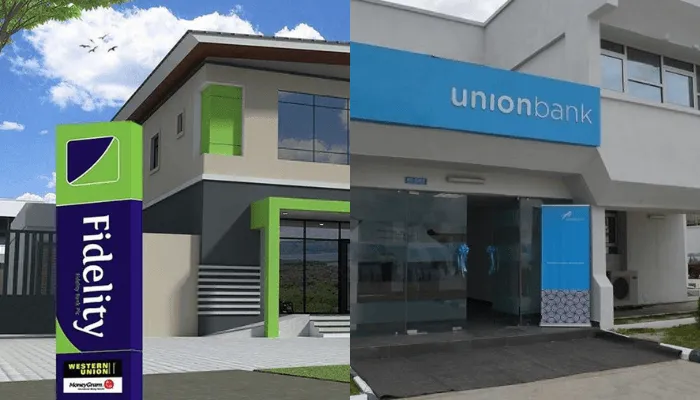
Fidelity Bank Plc, one of Nigeria’s Tier 1 banks and one of NGX’s high-performing banking stocks this year, has disclosed that it had completed the acquisition of Union Bank Plc UK (UBUK), a subsidiary of Union Bank Plc. The bank noted that the UK acquisition, which has received the approval of the Bank of England’s Prudential Regulatory Authority (PRA), is one of six countries the bank targets in the next three years to move its footprint outside Nigeria and compete favourably with international peers. In August 2022, the bank entered into a binding agreement to acquire a 100% equity stake in Union Bank UK Plc, subject to the approval of the PRA of the United Kingdom. Fidelity Bank has been in the news in recent times. First, the bank grew from a Tier II bank in 2020 to a Tier I bank in 2021, according to the Proshare Bank Strength Index released in 2022, which saw a notable improvement in the lender’s total asset size, cost-to-income ratio (CIR), capital adequacy ratio (CAR), cost of risk ratio (CoR), and a few proxies’ for management quality. Also, in August, the bank announced a hybrid capital raise of about N6.6bn in new equity to increase the bank’s share capital to N22.6bn. The bank also declared an interim dividend of N0.25 per share, following an impressive performance in H1 2023. The bank reported a +51% Y-o-Y growth in gross earnings from N126.35bn to N190.42bn in H1 2023 and +166% growth in profit for the year from N23.31bn in H1 2022 to N62bn in H1 2023. The lender’s fundamentals, expansion drive, and corporate actions have attracted analysts’ and investors’ interests. Number crunchers observe that the bank has the potential to remain a Tier 1 bank, while investors have largely gone long (bought) the bank’s share, which has a year-to-date (YTD) return of +92% and an annual return of +143%