Nigerian Army Foils Bandits in Kogi: 3 Neutralised, Supplier Arrested

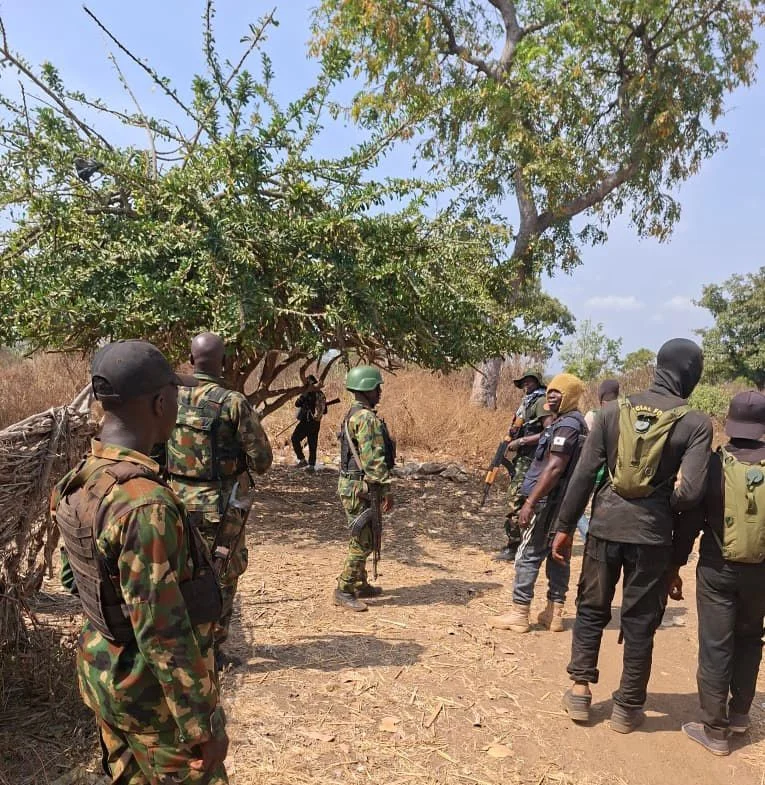
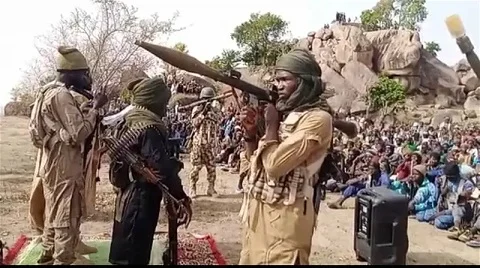
Troops of the Nigerian Army’s 12 Brigade in Lokoja have foiled bandits’ movement in Kogi State, neutralising three suspects, arresting a logistics supplier, and recovering weapons during coordinated operations in Kabba Bunu and Yagba West.
Senate Raises Alarm Over Insecurity, Probes Kebbi Troop Pullout

By Caroline Ameh | Abuja The Nigerian Senate on Tuesday expressed deep concern over the worsening insecurity in parts of Kwara, Kebbi, and Niger States, resolving to probe the alleged withdrawal of military personnel from a Kebbi school hours before a major abduction. The resolution followed the adoption of a motion of urgent national importance sponsored by Deputy Majority Leader, Senator Lola Ashiru, who described the escalating attacks on schools, worship centres, and rural communities as a national emergency requiring immediate federal action. Senators Decry Widening Attacks Lawmakers lamented the November 18 attack on Christ Apostolic Church (CAC), Eruku, in Ekiti Local Government Area of Kwara State, where gunmen killed two worshippers and abducted 38 others, all later rescued in coordinated security operations. They noted that the attack led to the temporary closure of schools in five local government areas across Kwara, as well as parts of Niger and Kebbi States, affecting 47 Federal Unity Colleges nationwide. The Senate also condemned the growing pattern of school kidnappings, including recent abductions in Niger and Kebbi States, warning that educational and religious institutions had become increasingly vulnerable to banditry and terrorism. Controversy Over Troop Withdrawal Lawmakers were particularly alarmed by credible reports that military personnel were withdrawn from Government Girls’ Secondary School, Maga, Kebbi State, just hours before the abduction of 24 female students.They demanded a transparent investigation into the decision and those responsible. Contributing to the debate, Senator Enyinnaya Abaribe (Abia South) urged his colleagues to confront insecurity “head-on and without reference to the past.” He insisted that the Senate must uncover who authorised the withdrawal of troops from the school before the attack. Abaribe’s position was strongly supported by Senate President Godswill Akpabio, Senator Seriake Dickson, and other lawmakers, who called for urgent and coordinated security action. Intelligence Points to Internal Sabotage The motion also cited intelligence reports indicating that internal collaborators continue to aid criminal networks with logistics, information, and escape routes. Senators warned that terrorists were exploiting forest corridors such as the Kwara–Kogi axis, Kebbi–Zamfara stretch, and Niger’s Shiroro–Rafi–Munya belt to carry out attacks and evade arrest. They further raised concern over the deplorable state of the Idofian–Omu-Aran–Eruku–Egbe–Kabba highway, which they said provides bandits with ambush points, easy escape routes, and concealment within thick forests. Tinubu Commended for Swift Response Earlier, Senate Majority Leader Opeyemi Bamidele cautioned against rising public speculation over the release of kidnap victims, urging a review of the performance of Senate security committees.He reaffirmed that the Tinubu administration does not and will not support ransom payments to abductors. The Senate commended President Bola Ahmed Tinubu for what it described as his “swift and personal intervention,” including cancelling planned foreign trips to coordinate national security efforts. It also lauded security agencies for the rescue of 38 abductees in Kwara and 51 students in Niger State. Key Resolutions The Senate resolved to:
The Misuse of “Genocide” in Nigeria’s Public Discourse

Contextualizing The Horrific Killings in Nigeria Within The International Convention Against Genocide By Wale Alonge Since President Donald Trump’s 2020 threat to “invade Nigeria” to stop what he called “the targeted genocide of Nigerian Christians by Muslims,” the term genocide has gained sudden, viral currency across Nigerian social media. It is now used casually, cavalierly, and often without any understanding of its historical roots or the international legal framework that defines it. When such a morally charged word is used loosely, it dilutes its moral and legal force — and makes enforcement far more difficult in genuine cases of genocide. That is why it is critical to define and apply it precisely, something sorely lacking in Nigeria’s public conversations. It is deeply ironic that the same President Trump who refuses to describe the state-sponsored mass killing, starvation, and displacement of Palestinians in Gaza as genocide was so quick to use the word for Nigeria’s communal violence. I am a Christian, so this is not a case of a non-Christian downplaying the killings of Christians. There is no doubt that many Nigerian Christians have been victims of murderous attacks by Islamist jihadist groups — often targeted specifically in their houses of worship. Only yesterday, reports emerged from Kwara State of Christians being slaughtered and kidnapped in church. But so have Muslims — indeed, in larger numbers according to widely available data — including many attacked in mosques. These killings are largely random, carried out by non-state insurgents and criminal militias using hit-and-run, opportunistic tactics, often also targeting government forces. There is no demonstrated element of state-sponsored intent to destroy a protected group, which is central to any credible genocide claim. What “Genocide” Actually Means The word itself derives from the Greek genos (“tribe” or “race”) and the Latin caedere (“to kill”). Polish lawyer Raphael Lemkin coined it during World War II, and in 1946 the United Nations General Assembly first recognized genocide as an international crime. It was later codified in the 1948 Convention on the Prevention and Punishment of the Crime of Genocide. Article II of the Convention defines genocide as any of the following acts committed with intent to destroy, in whole or in part, a national, ethnic, racial, or religious group: The most difficult and crucial element is intent. Genocide requires a proven intention to physically destroy a protected group — not merely to displace it, weaken it, or target individuals for other reasons. This “special intent” (dolus specialis) distinguishes genocide from other international crimes. Nigeria’s Reality Every innocent life unjustly taken is one life too many. Nothing in this analysis minimizes the suffering of Nigerian Christians killed or displaced by jihadists or murderous Fulani militias that have devastated farming communities — particularly in the Middle Belt — through cycles of violence stretching back decades. But as horrific as these crimes are, to call them genocide is to misapply the term. The Genocide Convention arose from the ashes of the Holocaust — the targeted, systematic, state-orchestrated extermination of millions of Jews by Nazi Germany. That context matters. Nigeria’s insecurity is a grave humanitarian crisis, but not one that fits the legal or moral definition of genocide. The danger in misusing the word lies not just in linguistic carelessness, but in the erosion of its power to mobilize international justice where it is most needed — in places where governments, not bandits, plot the destruction of entire peoples. If we are to confront Nigeria’s violence meaningfully, we must name it for what it is: terrorism, mass atrocity, and state failure — not genocide. To do otherwise cheapens both the suffering of the victims and the gravity of one of humanity’s most serious crimes. Adewale Alonge, PhD, Founder & President, Africa Diaspora Partnership for Empowerment and Development. www.adped.org, writes in from Dadeland, Miami, Florida, USA.
Nigeria Air Force Strike in Katsina Community Causes Collateral Damage

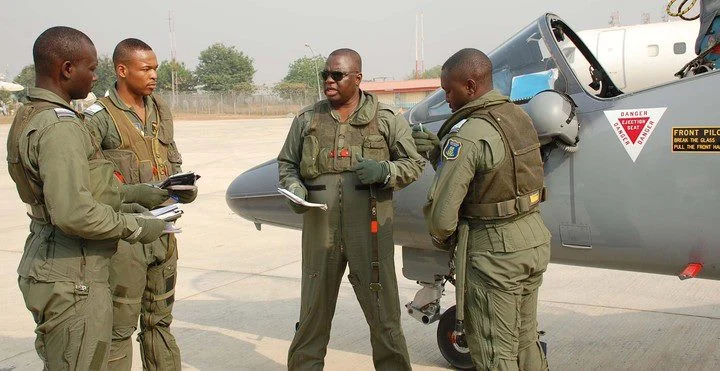
A bombing exercise in Shawu village in Ruwan Godiya district of Faskari LGA, Katsina State, has led to multiple casualties. The incident, which occurred on Thursday morning, was initially believed to be an accidental strike by the Nigerian Air Force. The operation was intended to target terrorists in the area but tragically struck the community. Local authorities have weighed in on the situation. The state’s commissioner for internal security, Nasiru Mu’azu, has refuted claims of an accidental attack, stating the airstrike was deliberate and aimed at terrorists in the region. He emphasized that the military conducts thorough surveillance before launching any operation to ensure the target is correct. The Faskari Local Government chairman, Musa Ado Faskari, called the event unfortunate, confirming the deaths of four individuals. He further explained that Shawu has been known as a stronghold for bandits and other criminals, which made it a focal point for the airstrike. Efforts to assess the extent of the injuries continue as local officials coordinate assistance for the wounded.
DHQ Takes Action Against Lukarawa’s Recruitment Plans

The Defence Headquarters (DHQ) has raised alarms about the growing activities of the Lukarawa terror group, which has started recruiting to strengthen its forces. The DHQ confirmed that the military is actively collaborating with state authorities and other security agencies to prevent the group’s expansion, especially in Sokoto and Kebbi states, where it has been operating. Lukarawa, which has had a presence in northern Nigeria for several years, recently intensified its recruitment drive, particularly targeting local youth through sermons and welfare incentives. The group is also exploiting social media platforms to spread their message. Despite these efforts, the DHQ remains vigilant, working alongside other agencies to halt the group’s influence. A former DSS director, Mike Ejiofor, clarified that while the group has been active since 2018, its size is not currently a major national security threat. However, he urged for continued surveillance and community cooperation to prevent further escalation. Security expert Timothy Avele echoed this sentiment, revealing that the group’s operations, such as collecting levies and influencing local governance in Kebbi, highlight gaps in intelligence operations.
Carrying arms will solve the nation’s security problem – Ned Nwoko

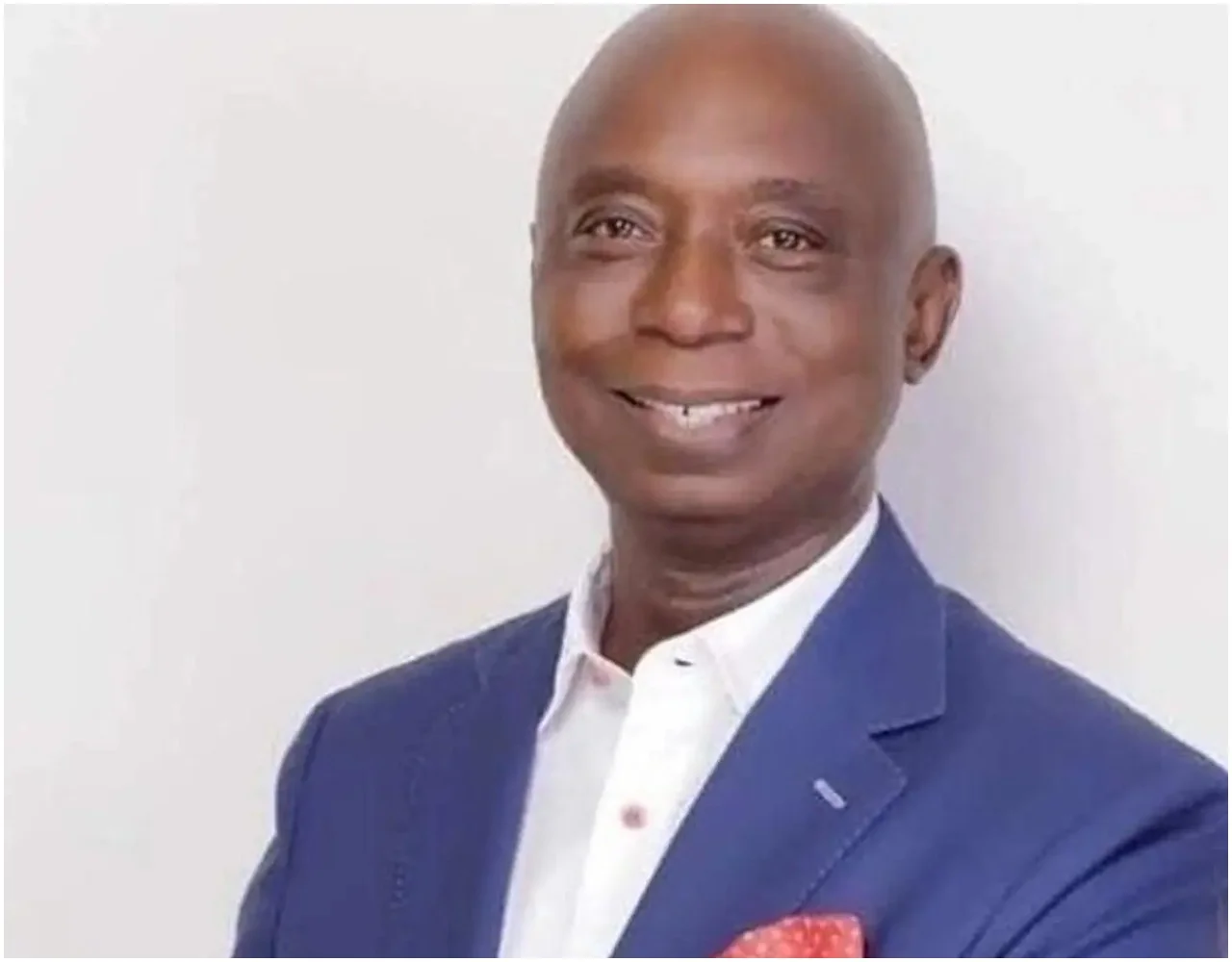
The lawmaker representing Delta North Senatorial District, Senator Ned Nwoko, has defended his proposed bill allowing Nigerians to bear arms for self-defence stating that it could serve as a deterrent against criminal activities, particularly kidnappings. When asked if Nigerians carrying arms will solve the nation’s security problem, Nwoko, in an interview with Channels TV on Wednesday, said, “Oh, it will. It will.” Nwoko then shared a personal story of loss, recounting how his Senior Legislative Aide (SLA) was killed in a kidnapping incident last November. “The estate was attacked by kidnappers going from house to house. When they got to their door, my SLA told his wife to hide with the children. He opened the door to talk to them, and he was taken away. We never saw him alive again,” he said. Reflecting on the tragedy, Nwoko argued that armed citizens could discourage criminals from operating so freely. “If he had a gun, or if others in the community had guns, would the kidnappers have had the audacity to go door to door? That wouldn’t happen,” he said. However, Nwoko clarified that his proposal includes strict regulations. “For you to have the license to have a gun, you must go through a training school, a shooting school, which is a training school. You must get confirmation from two doctors that you have a sound mind. “You must get reports from the DSS and from the police. You must also be confirmed by your local traditional ruler that you are who you are,” he said, adding that only qualified individuals would be allowed to carry arms under his plan.
Delta recruits 120 officers to manage herders/farmers’ clashes

The Delta State Government has announced the recruitment of 120 State Livestock Management Officers to address herder/farmer clashes and ensure seamless farming activities across the state. The Commissioner for Agriculture and Natural Resources, Mr Val Arenyeka, made this known on Thursday in Asaba while urging journalists to engage in farming to bridge the hunger gap and enhance food security in the country. Arenyeka explained that issues of criminality and the herder/farmer crisis fall within the remit of the Federal Government, adding, “As a state, we initially recruited 50 SLMOs and are now engaging an additional 70 officers to monitor farming activities across the 25 Local Government Areas.” He continued, “I believe those involved in the herder/farmer crisis are criminal elements pretending to be herders, and it is up to the Federal Government to tackle these challenges.” The Commissioner emphasised that addressing the current food shortage and ensuring food security requires everyone, including journalists, to participate in farming. He noted that agriculture has evolved from manual to technology-driven methods, stressing that it is the responsibility of Nigerians to feed themselves rather than rely on other countries. Earlier, the Chairman of the Asaba Correspondents Chapel, Comrade Ifeanyi Olannye, encouraged the Commissioner to explore and deploy all available resources towards achieving food security and job creation, in line with Governor Sheriff Oborevwori’s M.O.R.E. Agenda. He added that the state’s empowerment programme, through the Ministry of Agriculture, would extend to those involved in farming.
Tinubu commends military feat in North-West

President Tinubu on Saturday received with relief, news of the strings of successful operations against security threats in the northwest
Insecurity: Ondo Government denies Hiring Private Security To Protect Farmers

A Senior Special Assistant to Governor Lucky Aiyedatiwa Mr Gbenga Atiba, say the governor had not hired any private security firm to protect farmers in the state.
Alleged terrorism: DIA gets court order to detain policeman, 19 others

Justice Peter Lifu of the Federal High Court in Abuja has approved the request of the Defence Intelligence Agency, DIA, to detain an Assistant Superintendent of Police, ASP, and 19 others for 30 days. The police ASP, named A. A Babangida, was ordered to be detained along with other suspects for 30 days order is following their alleged involvement in banditry, kidnapping and terrorism activities. The order is to enable DIA operatives carry out thorough investigation into their alleged involvement in the heinous crimes. ASP Babangida who was arrested in June and had since been in DIA custody, was alleged to have been helping Boko Haram, bandits and ISWAP members in carrying out terrorism activities in some parts of the country. In the ex-parte application, marked FHC/ABJ/CS/1146/2024, Counsel to the security agency, S.A Aminu requested for permission of the court to detain the suspects for 90 days. According to her, the involvement of the suspects in terrorism activities was so complex because the bomb experts for the gang have just been apprehended based on information being volunteered by the detainees. She explained that DIA intends to carry on critical investigation into the unlawful activities of Babangida and others before handing them over to the Attorney General of the Federation, AGF, for prosecution. The ex-parte application of the DIA was supported with a 21 paragraph affidavit which chronicled how the agency obtained hints that led to the arrest of the suspects in various locations and at different times. After scrutinizing the documentary exhibits placed before the court, Justice Lifu ordered the agency to detain the suspects till the conclusion of investigation. The judge declined to grant the 90 days requested by DIA on the ground that the suspects have been in custody for three months and the fact that the Constitution presumes them innocent until the otherwise is established against them. Justice Lifu also ordered that the DIA should do everything within its powers and within the ambit of the law to complete its investigation into the allegations against the suspects so as not to run foul of the law. Others ordered to be detained along with the Police ASP Babangida are Usman Idris, Abu Safiyanu, Alhassan Idris, Sahada Ishaka, Abubakar Ibrahim Sani Bello, Yahaya Abdullahi, Haruna Salisu and Mohammed Muazu. Other Respondents in the matter are Nura Idris, Alhaji Manu Mohammed, Umar Mohammed Lamu, Abubakar Mandara, Suleiman Musa Mohammed, Alhaji Madayi, Alhaji Amodu Bukar Prince Oghewe and Uzoma Aghaoyibo.