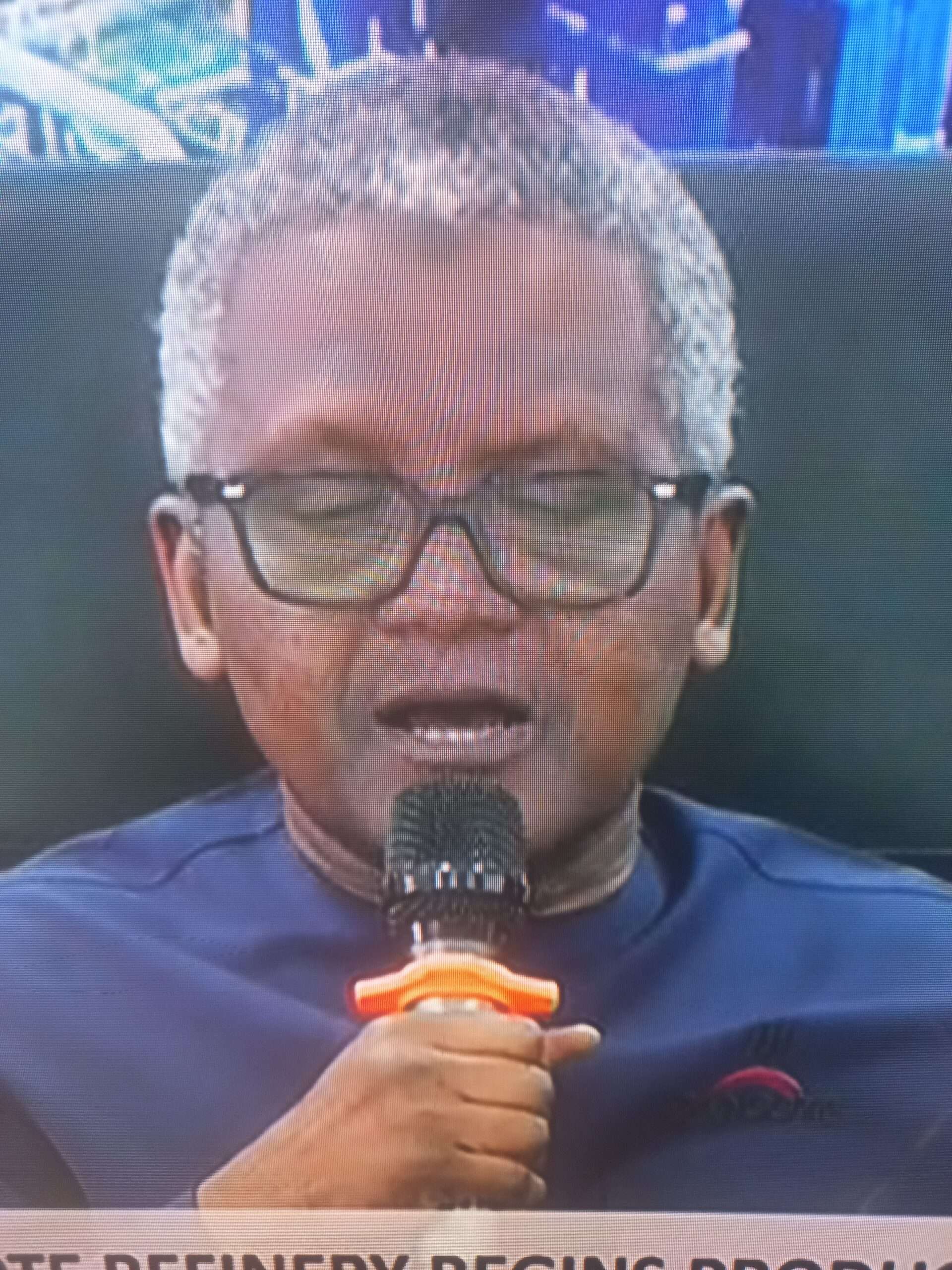
NPA, Dangote to deepen maritime sector, expand export operations

Nigerian Ports Authority (NPA) and Dangote Industries Ltd. (DIL) have collaborated on developing the Marine and Blue Economy sector, with a focus on expanding the nation’s export operations. General Manager, Communication and Strategy, NPA, Okechukwu Onyemekara, disclose this after a courtesy visit by DIL President, Alhaji Aliko Dangote, to NPA Headquarters, in Lagos on Monday. Mr. Onyemakara said in a statement that Dangote elaborated on efforts to expand export products outside Nigeria. He said that the company would soon expand its export operations, adding that its cement factory at Itori had already started cement exportation. Dangote said that the Itori cement factory had six million tons of cement designated for export. “In the next couple of weeks, we will start exporting coal out of Nigeria. Our fertilizer export will almost be like eight cargos. “The refinery operations will not export less than 25 million tons of various products. “We will also be exporting almost about 600,000 to 700,000 metric tons of polypropylene. So when you are talking about export, we are going to be very big. “In the next two years, we will be exporting about 16,000 tons of fertilizer. 16,000 tons of fertilizer, it’s actually about $6.5 million to $7 million revenue that will be coming into the country on a daily basis,” Dangote said. He said that as part of its export program, DIL will be the major supplier of foreign exchange earnings in Nigeria, and that the operations of Nigerian ports would double in the next two years. Dangote promised to frequently highlight the port situation to enable the Federal Government to consider NPA for necessary support. He commended NPA for encouraging export at the various ports across the country. “The interaction between NPA and DIL is very important for the growth of the industry and to deepen the Marine and Blue Economy, and we have agreed to collaborate for the benefit of Nigeria. “The size of our own operation at Lekki alone is going to be almost 240 ships of crude, with each ship carrying one million crude each. And then we’ll have products that will amount to over 600 ships in a year. “Then we also have our fertilizer operation, which will be loading almost eight ships. This is an operation that has never, ever been seen in the country,” Dangote said. He explained operational challenges with export, adding that he hoped they would be resolved and that they would be able to deliver with the present leadership of NPA. Dangote said that their operation could falter if the company was not given the necessary requirements needed for their operations. He acknowledged the need for the Federal Government to support NPA with more equipment such as tugboats, among others. In his remark, the Managing Director of NPA, Dr Abubakar Dantsoho, thanked Dangote for commending the authority for the benefits of the Naira for Crude sale policy of the Federal Government. Dantsoho also praised Dangote for appreciating the establishment of the One Stop Shop policy on the Naira for Crude deal, being coordinated by the Nigerian Port Authority. “Dangote appreciated the fact that the government initiative has contributed immensely to achieving more efficiency in the area of transactions and operations among Nigerian government agencies. “This is something that started on the 1st of October 2024, and so far, we have treated or operated over 57 vessels every month. The projected volume that Dangote is looking at per annum is 600 vessels. “If you do 56, 57 vessels into 12 months, you will see that we are already doing bigger than the projection. We will continue to do our best with support from government,” Dantsoho said. “The last time government built a new port in Nigeria was 1977, which was Tin-Can Island Port. There is already an approval for the port modernisation of both Tin-Can and Apapa ports. “We are looking at maybe the third quarter of this year to commence construction, which is on the brownfield development. “On the greenfield part, we have deep seaport development projects that have already been approved by the Federal Executive Council. We have Ibom Port, Bakasi Port, Olokola, Ondo Port, and Badagry in Lagos. “These are new ports that the government is concerned about. Very soon, we’ll begin to see that these ports will become reality,” Dantsoho said. NPA boss said that 95 per cent of cargoes approved through the National Single Window established by the government were ready for the Port Community System. He urged other government agencies to collaborate to enhance port efficiency, adding that other sectors of the economy would witness progress as well. 

Job creation: W/Bank inaugurates investment lab, woo Dangote, others

The World Bank Group on Wednesday announced the inauguration of the next phase of its Private Sector Investment Lab(PSIL), focused on implementing proven solutions at scale. This is contained in a statement issued by the World Bank Online Media Briefing Centre made available to the media on Wednesday. The statement said the new chapter also expands the Lab’s membership to include private sector leaders in sectors critical to job creation in developing economies. It said these sectors included infrastructure and energy, agribusiness, healthcare, tourism, and manufacturing. “These industries have a proven ability to translate investment into broad-based employment and economic opportunity. “This  aligns  directly with the Bank’s sharpened focus on job creation as a core driver of development.” Ajay Banga, World Group President was quoted as saying, “with the expanded membership, we are mainstreaming this work across our operations and tying it directly to the jobs agenda that is driving our strategy. “This isn’t about altruism, it is  about helping the private sector see a path to investments that will deliver returns, and lift people and economies alike. It is central to our mandate.” The Lab brought together leaders from global financial institutions over the past 18-years to identify the most pressing barriers to private sector investment in developing countries and to test actionable solutions. The statement said that the work had now been consolidated into five priority focus areas that were being integrated across the Bank Group operations and they include, Regulatory and Policy Certainty. Others are Political Risk Insurance, Foreign Exchange Risk, Junior Equity Capital and Securitization.It listed the new members of the Lab to  include Bill Anderson, CEO, Bayer AG and Sunil Bharti Mittal, Chair, Bharti Enterprises. Others  are Aliko Dangote, President and CEO, Dangote Group, and Mark Hoplamazian, President and  CEO, Hyatt Hotels Corporation. The statement said the Lab’s founding members included senior executives from AXA, BlackRock, HSBC, Macquarie, Mitsubishi UFJ Financial Group, and Ninety One. Others are Ping An Group, Royal Philips, Standard Bank, Standard Chartered, Sustainable Energy for All, Tata Sons, Temasek, and Three Cairns Group. It said the Lab is chaired by Shriti Vadera, Chair of Prudential Plc. The statement quoted  Shriti Vadera, Chair, Prudential Plc. and Chair, Private Sector Investment Lab as saying, “We are grateful to the Lab leaders who helped deliver such important results in the first phase. “We welcome our new members’ support in continuing our focus on five key areas.” The statement also quoted Sunil Bharti Mittal, Chair, Bharti Enterprises, as saying, “The World Bank Group is leading the way with initiatives to grow economies and create opportunities in emerging markets around the globe. “I have seen firsthand the power of connectivity to transform lives by creating opportunities for businesses to grow and communities to thrive. “I hope that the successes of the telecommunications sector will be valuable as PSIL embarks on the next stage of its important work,” he said. 

Nigerian Youths and revelations at IBB book launch

By Uzo Owunne Recent revelations from Aliko Dangote at Gen. Ibrahim Babangida’s book launch, along with Prince Arthur Eze’s own testimony, have once again exposed the deep-seated inequalities that have long defined Nigeria’s economic and political landscape. Dangote openly admitted: “He (IBB) called us into a room and gave us banking licenses… He asked us to pay 1 million each for oil blocs.” Meanwhile, Prince Arthur Eze declared that he, Dangote, Mike Adenuga, and a few others were “brought up” by IBB, stating that without Babangida’s direct intervention, he (Arthur Eze) “would have long been dead.” These statements confirm what young Nigerians have always suspected—the wealthiest figures in Nigeria were not simply products of exceptional hard work and perseverance, but beneficiaries of a system that handed them privileged access to opportunities, resources, and state-backed economic advantages. Yet, most of these same individuals now stand on their podiums, telling young Nigerians to “work hard and persevere.” Even more insulting, former President Muhammadu Buhari dismissed young Nigerians as “lazy,” despite the countless obstacles they face in a system that remains rigged against them. READ ALSO: Nnamdi Kanu and the trial of Justice Binta Nyako and others The hypocrisy is glaring. A handful of men were gifted access to oil blocs, banking licenses, and economic monopolies with little to no competition. Yet, today’s young Nigerians are expected to fight for survival in an economy where: There is a demand for a Fairer Nigeria.Nigerian youths are not lazy, and they are not asking for handouts. They are demanding a level playing field—a system where success is based on merit, not political connections or favoritism. They want: (1) Transparent Access to Opportunities – No more backroom deals that hand national wealth to a privileged few.(2) Equal Economic Participation – Young entrepreneurs should have access to funding and support without needing elite connections.(3) A Merit-Based System – Policies must promote fair competition, not protect monopolies.(4)Government Accountability – Leaders must stop gaslighting the youth and start addressing the systemic issues that hinder progress. READ ALSO: AREWA AND THE BURDEN OF THRUTH The interesting questions for Nigeria’s leaders become; if the current economic giants were truly self-made, why didn’t they compete on an open, level playing field? Why were they given resources and opportunities behind closed doors while today’s youth – the ones that are not standing on the shoulders of the old privileges – are left to fend for themselves? Nigerian youth are ready to build, innovate, and contribute to national prosperity—but they have lost patience for a system designed to exclude them,while the privileged few lecture them about hard work. It is time for real change, not empty rhetoric.Statements at the Babangida book launch are revealing. Uzo Owunne is a development expert

Subsidy Has To Go – Dangote To Nigerian Government

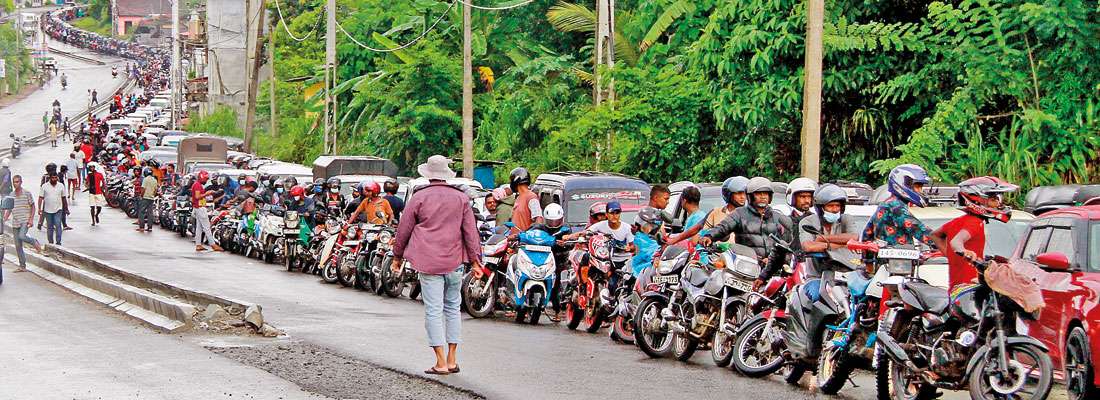
As Nigerians grapple with prohibitive pump price of petrol and consequent spiraling inflation, Alhaji Aliko Dangote, the President and Chief Executive of Dangote Refinery, repeats the call for removal of fuel subsidy. The businessman asserted that the removal would determine the actual petrol consumption in the country. Speaking in a 26-minute interview with Bloomberg Television in New York on Monday, he confirmed ownership of two oil blocks in the upstream sector with an expected production date of next month. Dangote also stated that fuel production from his $20bn mega refinery in Lagos will help ease pressures on the naira. Speaking further, he noted that ending petrol imports will have a huge upside in easing currency pressures. According to him, “Subsidy is a very sensitive issue. Once you are subsidising something then people will bloat the price and then the government will end up paying what they are not supposed to be paying. It is the right time to get rid of subsidies. “But this refinery will resolve a lot of issues out there, you know, it will show the real consumption of Nigeria, because, you know, nobody can tell you. Some people say 60 million litres of gasoline per day. “Some say, it’s less. But right now, if you look at it by us producing, everything can be counted. So everything can be accounted for, particularly for most of the trucks or ships that will come to load from us. We are going to put a tracker on them to be sure they are going to take the oil within Nigeria, and that, I think, can help the government save quite a lot of money. I think it is the right time, you know, to remove the subsidy.” On whether the subsidy will make the refinery viable, Dangote said, “Well, you see, we have a choice of either one. We produce, we export, and when we produce, we sell locally. But we are a big private company. And yes, it’s true, we have to make a profit. We build something worth $20bn so definitely we have to make money. “The removal of subsidies is totally dependent on the government, not on us. We cannot change the price, but I think the government will have to give up something for something. So I think at the end of the day, this subsidy will have to go.”

Wale Edun flags off Commencement Fuel Lifting from Dangote Refinery

History was made this afternoon, Sunday, September 15, 2024 as the the Nigerian National Petroleum Company Ltd (NNPCL) commences lifting of fuel from the Dangote Refinery. Flagging off the epoch making exercise, Finance Minister and Coordinating Minister of the Economy, Wale Edun thanked Alhaji Aliko Dangote for the initiative that positions Nigeria for the attainment of energy efficiency. Nigeria, a prominent member of the OPEC is currently going through crippling fuel supply emergency running into weeks.