FG Inaugurates Rafin Yashi Dam For Songhai Farming

FG Inaugurates Rafin Yashi Dam For Songhai Farming

The Minister of Water Resources and Sanitation, Prof. Joseph Utsev, has inaugurated the Rafin Yashin multipurpose Dam in Minna, Niger State. The Dam project, which was initiated by the Upper Niger River Basin Development Authority, is aimed at providing water for Songhai Integrated Farming and Rafin Yashi Irrigation Project. Utsev, in a statement on Wednesday, said it was a deliberate effort by the ministry to boost food production in line with the Renewed Hope Agenda of President Bola Ahmed Tinubu to ensure food security across the country. He called for more collaboration between states and the private sector in the areas of irrigation and water supply. According to him, it is the desire of President Bola Tinubu’s administration to ensure food security in the country, saying no effort will be spared to achieve the target. The Minister had earlier paid a courtesy call on the Niger Governor, Mohammed Bago who was represented by his Deputy, Yakubu Garba. At the meeting, he informed the governor that the Upper Niger River Basin Development Authority with its Headquarters in Minna, had dams in many locations across the state that can be used for irrigation farming. This, he added, could be a good source for water supply for the benefit of the state and the country in general. In his response, the Deputy Governor, Comrade Yakubu Garba, expressed the state’s readiness to collaborate with the Federal Government. He further said that in spite of the state possessing dams, it faced huge challenges to fully utilise them due to limited resources. He appealed to the minister to support the state in addressing water challenges, adding that assistance was needed in constructing additional water works for irrigation farming and personal consumption. This, the deputy governor said would help to tackle water scarcity in certain communities to enhance the state and country’s economy. Utsev also officially opened the Rafin Yashi Dam Road, inspected the Agro-Tourism Facility, Concrete Reservoir, and Songhai Integrated Farm. He also presented certificates to graduates of the Upper Niger River Basin Development Authority Empowerment Centre.

AfDB, IDB, IFA Inject $1bn To Fund Nigeria’s SAPZs

AfDB, IDB, IFA Inject $1bn To Fund Nigeria’s SAPZs

The Africa Development Bank (AfDB), Islamic Development Bank (IDB) and the International Fund for Agricultural Development have voted $1billion to deliver special agro-industrial processing zones in 24 States of Nigeria. This is in addition to an initial $520 million voted by the development partners for the development of eight special agro-industrial processing zones in the country. Mr Stanley Nkwocha, Senior Special Assistant to the President on Media and Communications, Office of the Vice-President, in a statement said the President of AfDB, Dr Akinwumi Adesina, disclosed this in the United States. Adesina spoke at the Norman Borlaug International Dialogue, World Food Prize 2023, in Des Moines, Iowa. Vice-President Kashim Shettima, who is attending the event in pursuance of the food security and diversification policy of the Tinubu administration, had on Wednesday delivered his keynote address at the ongoing Dialogue. In a speech titled, “From Dakar to Des Moines”, Adesina said that the decision to pump such huge funds into Nigeria’s agribusiness was part of the resolve to develop Special Agro-Industrial Processing Zones (SAPZs) in 13 countries. He said, “We are investing heavily in the development of SAPZs to support the development of agricultural value chains. “Food processing and value addition, enabling infrastructure and logistics to promote local, regional, and international trade in food. “The African Development Bank Group is investing $853 million in the development of the Special Agro-Industrial Processing Zones. “The bank has mobilized additional co-financing of 661 million dollars, for a total commitment of $1.5 billion.” Adesina said that the bank was deploying effective partnerships at scale, adding that currently it is implementing 25 Special Agro-industrial Processing Zones in 13 countries. “The AfDB and the International Fund for Agricultural Development provided $520 million for the development of eight special agro-industrial processing zones in Nigeria. “The second phase of the program aims to mobilize an additional $1 billion to deliver special agro-industrial processing zones in 24 States of Nigeria.” Adesina regretted that while much progress had been made in African agriculture, 283 million people still go to bed hungry, about a third of the 828 million people that suffer hunger globally. He described the Norman Borlaug International Dialogue World Food Prize 2023, as a journey and narrative combining the power of science, technology, policies and politics to ensure that Africa fully unlocks its agricultural potential, and feeds itself with pride. Adesina thanked Vice-President Kashim Shettima, and the President of Ethiopia, Sahle-Work Zewde, for participating in the global event. He said that their presence was an indication that Africa had the political will and was fully ready to tackle food insecurity as well as make hunger history on the continent. Earlier, Shettima, who spoke on the Tinubu administration’s initiatives for food security, said the quality of present leadership in Nigeria and the rest of Africa would drive transformation in agriculture and other sectors. He said, “A nation falls or rises fundamentally due to the quality of its leadership. “Right now, Africa is blessed with quite a handful of quality leaders that have the drive, passion and skills set to redefine the meaning and concept of modern leadership. “President Tinubu, my boss, is a good example, Macky Sall of Senegal and of course, Abdel Fattah El-Sisi of Egypt are doing wonderfully well. “Just to mention a few of the African leaders that are distinguishing themselves in leadership.” Shettima assured the gathering of investors and stakeholders in the agricultural sector that Tinubu was a quintessential 21st century modern African leader who is determined to redefine the meaning and concept of modern leadership. He added, “Be rest assured that there will be a change in the fortunes of the Nigerian nation and by extension, the African continent in the next couple of years because Nigeria is an anchor nation.” On wheat production, Shettima said the target of Nigeria towards wheat production was to achieve 50 per cent self sufficiency in the next three cycles. He said, “It is inconceivable that we are the second largest wheat importer in the world. Luckily, we have already procured the heat tolerant variety of wheat seeds. “And we are going to drive that process by supporting the farmers with the heat tolerant variety, agricultural extension services, fertilizer and also hope to increase the irrigation areas to 1 million hectares in the next cropping cycle. “We need to produce about 2.4 million tonnes of wheat grains in Nigeria. We are going to reach out to our farmers through small irrigation schemes and through digitalisation. “All the actors in the value chain will be sufficiently taken care of through innovative finance, partial credit guarantees and crop insurance.” On rice production, Shettima said the major challenge for Nigeria was the insufficiency of paddy rice. He said that Nigeria had adequate milling capacity, adding, “but, we need to produce three to four million tonnes of paddy rice to meet our requirement of about 2.5 million tonnes per annum. “We have 75 million hectares of arable land and most of it suited for rice cultivation. “We will provide our farmers with certified seeds, fertilizer, extension services, the digitlisation of services, inputs, finance and market information. ”Our target is to achieve self sufficiency in rice latest by 2027.” The vice-president, who spoke on SAPZs, reiterated the Tinubu administration’s commitment to providing an enabling environment for investors in the zones. He said government would create an SAPZ development authority that would operate like a one-stop shop where regulatory and associated issues would be addressed.

FG Plans 50% Subsidy For Wheat Farmers – Minister

FG Plans 50% Subsidy For Wheat Farmers – Minister

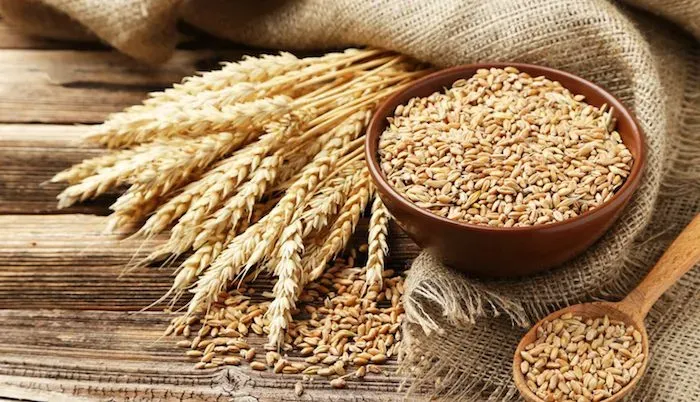
The Minister of Agriculture Abubakar Kyari, has disclosed that the Federal Government is giving out 50 per cent subsidy to wheat farmers in the upcoming dry season farming to ensure massive production of the grain in the country. Kyari spoke to newsmen shortly after inspecting assorted seed wheat productions in Kano on Friday. “We are fully committed towards massive wheat production in the upcoming dry seasons farming for local and foreign export actions,” he said. He explained that President Tinubu’s renewed agenda was aimed at making sure that Nigeria secured food production, starting from next Month, with wheat farming taking toll in the dry season farming. The minister, who was in Kano and Jigawa to supervise the seeds production, expressed satisfaction that the local production was the vital component of the farming. “Jigawa State has shown a lot of interest in wheat farming by providing 40,000 hectares of land for wheat farming, closing on the 70,000 hectares set aside by the Federal Government to achieve this year,” he said. The minister explained that the Federal Government was making efforts to have enough seeds that would cover the 70,000 hectares provided for wheat farming. “The breeder and foundation seeds were checked before it became satisfied to phase out wheat importation before next year’s irrigation farming. “This is because importation of the wheat is taking a lot of Nigeria’s foreign reserve. Kyari noted that the Federal Government planned to secure the nation’s food production and be self-sufficient, adding that local production was one way that importation of seeds would completely be stopped. “In the next 4-5 years with the Programmes set out, Nigeria would completely stop importations of wheat seeds and be self-sufficient with the local production that would enhance food production and security.” The minister was at the National Wheat Council Ware Houses at Sharada, AA Albasu Grains Company and Alyumna Seeds Production Company.

FG, IFAD Distribute Agricultural Inputs To Rice, Cassava Farmers

FG, IFAD Distribute Agricultural Inputs To Rice, Cassava Farmers

The Federal Government and International Fund for Agricultural Development – Value Chain Development Programme (FG/IFAD- VCDP), on Tuesday, began distribution of agricultural inputs to rice and cassava farmers in Nasarawa. Dr Eunice Adgidzi, state coordination of VCDP in Nasarawa, at the flag off on Tuesday in Lafia, said the distribution of the agricultural inputs was in furtherance of the VCDP commitment to strengthening rice and cassava value chains in the state. Adgidzi added that the exercise would also help to improve the livelihood of smallholder rice and cassava farmers on a sustainable basis in Nasarawa. She listed the items to be distributed to include 92 irrigation pumps, 40 solar-powered knapsack sprayers, four power tillers and eight tricycles. Others are eight cassava processing equipment, including grinding machines, communal fryers, hydraulic pressers, cassava chipping machine as well as stainless steel rice steam per boilers. The coordinator noted that the programme had sustained its intervention through the distribution of inputs in the state since July 2020. She commended Gov. Abdullahi Sule for his support to agriculture, adding that the commitment was gradually making Nasarawa a hub for agricultural excellence. Adgidzi urged the farmers to make judicious use of the items to boost agricultural production. “While VCDP has done its part, farmers must also do their part to enable us to achieve the desired success. “We are all counting on you to effectively utilise these equipment in order to boost production and processing of rice and cassava in the state,” she said. In his remarks, the state Commissioner for Agriculture and Rural Development, Umar Dan-Akano, lauded the VCDP’s intervention in the state. Dan-Akano, represented by the Director, Agriculture Engineering Services, Solomon Umbundaga, said the programme had greatly improved the livelihood of smallholder farmers in the state. He encouraged the benefiting farmers to continue to leverage the opportunity to boost food production in the state. Also speaking at the event, Mr Emmanuel Alanana, Programme Manager, Nasarawa Agricultural Development Programme (NADP), said that Nasarawa government had always prioritised the agricultural sector. He urged farmers to always take advantage of the various programmes to enhance production. Alanana maintained that Nasarawa State used to be a leading producer in cassava and rice, and called for its sustenance. He charged the beneficiaries of the item to make good use of them. “We have the land and the population and there is no need for us to go hungry in Nasarawa State. ” We shouldn’t rely only on rain-fed farming given our potentials for dry season crop production. “So, I appeal to all farmers in the state to take advantage of available opportunities, especially with the passion of the present administration in agriculture,” he said. Some of the beneficiaries, Haladu Abubakar and Margaret Ogah, thanked the VCDP for the intervention, saying it would go a long way to boasting their farm produce.

FG Obtains $163m AfDB Loan To Boost Wheat Production

FG Obtains $163m AfDB Loan To Boost Wheat Production

The Vice President, Kashim Shettima has disclosed that the Federal Government had obtained 163 million dollars loan from the African Development Bank to support wheat production in the country. Shettima stated this at the palace of the Emir of Argungu, Alhaji Sumaila Mera, when he paid a condolence visit to the Emirate and family of late Sheikh Abubakar Giro. He re-affirmed the determination of the Tinubu administration to fulfill all its promises to Nigerians, particularly in the agricultural sector. The Vice President also assured that food security would receive serious attention from the government. “We have obtained 163 million dollars loan from the African Development Bank to support wheat production. The scheme would be launched soon. “We need 10,000 hectares of land in Kebbi State. But the scheme would be well executed in Jigawa State with a cultivation of 50,000 hectares of land to boost wheat production.” In his remarks, the Emir of Argungu, Mera, who prayed for the unity and progress of Nigeria, thanked President Tinubu and Vice President Shettima for their support.

FG launches 5-year national strategy on potato

FG launches 5-year national strategy on potato

The Federal Ministry of Agriculture and Food Security has launched a five-year National Strategy on Potato. Speaking at the event on Thursday in Jos, the Permanent Secretary of the ministry, Dr. Ernest Umakhihe, said that the strategy would run from 2023 to 2028. Represented by Mr Abdullahi Abubakar, the Director, Department of Agriculture of the ministry, Umakhihe said that the move was timely, following President Tinubu’s recent directive on the intensification of crop production. The permanent secretary said that the move would usher in an era of productive competitiveness in the Nigerian potato industry. He explained that the essence of the strategy was aimed at ensuring sustainable food and nutrition security in the country Umakhihe added that the move also aimed at catalysing the rapid transformation of the Nigerian potato sector into a commercially viable sub-sector of the agricultural value chains into a major export product. “Our goal is to stimulate economic growth through various agricultural value chain activities, thereby creating employment opportunities and improved livelihoods for our teeming youths and women. “Let me assure you that food and nutrition security is a priority for the ministry and we are committed to achieving it. “The ministry is embarking on massive production, processing, value addition and product development to be the bedrock for driving our industries. “I have no doubt that the Nigerian Potato industry has the potential to become globally competitive given the country’s strong comparative advantage in production,” he said The permanent secretary maintained that potato could be commercially grown in twelve states, adding that it holds well for the activities of many stakeholders. He said government is aware of the challenges farmers are currently facing, adding that modalities have been adopted towards addressing them. “The ministry is aware of the challenges in the agricultural sector, nevertheless I assure that necessary measures are taken to address them accordingly. “Proactive initiatives, such as this National Potato Strategy creates avenue for inclusive collaborations to chart the way forward. “I am optimistic this potato strategy document would be a springboard for the realisation of Nigeria’s aspiration to achieve food and nutrition security,” he added. The permanent secretary thanked GIZ, a German organisation for supporting the initiative. He explained that it is supporting the national strategy through its global programmes, Green Innovation Centres for the Agriculture and Food Sector-Nigeria (GIAE), and the International Potato Centre (CIP) Nairobi, Kenya.

IFAD, FG distribute agro equipment to 840 rural farmers

IFAD, FG distribute agro equipment to 840 rural farmers

The International Fund for Agricultural Development (IFAD), together with the Federal Government, has distributed N109 million worth of agro equipment to 840 rural farmers in Enugu State. The exercise, which took place at the Michael Okpara Square, at the weekend, was part of IFAD/FGN’s-assisted Value Chain Development Programme (VCDP). The items distributed included 500 bags of fertilizers, 10 tricycles, 55 water pumps, 115 knapsack sprayers, five fufu pounder, 50 seed planters and five rice milling machines. Others were five haulers and polishing machines, 10 grater cassava polishing machines, 20 rice harvesters and 25 starter packs for confectioneries. Also, 40 of the 840 farmers supported were empowered with POS. In a speech at the event, Gov. Peter Mbah expressed his administration’s readiness to support the IFAD/FGN programme in the state. Mbah, represented by the Secretary to the State Government, Prof. Chidiebere Onyia, thanked IFAD/FGN for the partnership with the state. He commended the organisation for its commitment in assisting farmers through its programmes aimed at increasing food production in the state. He further lauded IFAD for focusing largely on women empowerment, saying that the approach would help to reduce poverty in rural communities. He directed that all the equipment, which must be given to the farmers, should be closely monitored. He urged the beneficiaries to put the items to proper use in order to realise the set goals of the empowerment programme. In a speech, the National Coordinator of IFAD-VCDP, Dr Fatima Aliyu, thanked Mbah for paying off the outstanding four years arrears of the counterpart funds. Aliyu described the governor’s gesture as a testament of the State Government’s commitment toward the development of agriculture and poverty reduction in the state. Aliyu advocated the judicious use of the equipment by the beneficiaries, urging them not to disappoint the State Government that had immensely supported the programme. “Please don’t disappoint your governor, he cares for you. “That is why he paid all the outstanding counterpart funding. “Please, use them well,” Aliyu said. She said that the VCDP had made progress from support to market values. She further said that the programme had supported over 4,000 farmers, constructed rice and cassava processing centres. Other amenities, according to her, included water, solar-powered boreholes, market stalls, mini bridges, culverts for easy transportation for farmers and offtakers and creches. Aliyu disclosed that the organisation had also used a programme, tagged, “Gender Action Learning System” to change the mindset of women in the state. “We have made impact and we are achieving our programme development goals in Enugu State and elsewhere,” she said. Earlier in a welcome address, the State Programme Coordinator, Dr Edward Isiwu, said that the VCDP programme was tailored along market development and productivity enhancement, rice and cassava value chains. According to him, the programme is aimed at reducing rural poverty, increasing food security, and accelerating economic growth on a sustainable basis. Isiwu said that they had built five cassava mills and over six rice mills and created employment for people. He disclosed that the pilot programme was being implemented in five Local Government Areas (LGAs) of Aninri, Udenu, Enugu East, Nkanu East and Isi-Uzo.

FAO trains Nigerian farmers, others on drip irrigation

FAO trains Nigerian farmers, others on drip irrigation

As part of efforts to boost food production, towards addressing the increasing demand to feed the ever-growing population in Nigeria, Food and Agriculture Organization of the United Nations (FAO) has trained farmers, extension workers, researchers, and irrigation technicians in drip irrigation. A statement by FAO Communication Specialist, David Tsokar, recently, the training was held in Kano under the aegis of the FAO initiative to promote drip irrigation scheme in selected sites in the country, with the theme “Innovations in Irrigation Development and Practices for increased Water and Land Productivity for Beneficiary Farmer Leaders, Agriculture Extension Officers, Irrigation Technicians and Irrigation Engineers.” Declaring the training open, the Director of the Irrigation and Drainage department at the Federal Ministry of Water Resources, Engineer Esther Oluniyi said the initiative is part of government’s efforts to promote food security and sustainable water management for irrigated agriculture with the expectation to produce more crops per drop of water on the land. He noted that the briefing and coaching sessions would broaden the understanding of participants on efficient “farm management practices to produce even more crops on the same land using less amount of water, implementation and management procedures of drip irrigation kits for sustainability.”. FAO Representative, Fred Kafeero noted that though designed as a lesson learnt from operation, maintenance, and the rehabilitation of challenged irrigation schemes in Nigeria by the department, the initiative was developed as a pilot initiative in collaboration with the Water Resources Ministry. He stated that it is viewed to compare “low energy drip based irrigated system side by side gravity canal, flood based irrigated system, with the view to come up with a study on some irrigation parameters such as volume of water use, the number of crops produced, cost of power, labour cost among others”. The training was attended by representatives of the Federal Ministry of Water Resources, leaders of farmer groups, Hadejia-Jamare River Basin Development Authority, the Agriculture Development Programme from Kano state, and academia from the Bayero University Kano (BUK) among many others. The objective of the training is to enhance understanding of the technical processes of the different stages of drip irrigation practices with a view to cascade the training to the individual/ farmer groups in the irrigation scheme. This is against the background that drip irrigation reduces the impact of drought and climate change on food production; contamination of groundwater and rivers caused by fertilizer leaching is averted; it is advantageous to rural communities in poverty reduction due to increase in outputs and reduces rural urban drift.

Subsidy: Rice millers commend Tinubu’s plans for farmers

NALDA To Crash Maize, Rice Prices Across Nigeria

The Abakaliki Rice Millers Association in Ebonyi has hailed the Federal Government’s plans to boost farm produce in an effort to cushion the effect of the removal of fuel subsidy. President Bola Tinubu, on Monday in a nationwide broadcast, assured Nigerians of adequate food sufficiency and security. According to Tinubu, the government will ensure staple foods are available and affordable. “To this end, I have ordered the release of 200,000 metric tonnes of grains from strategic reserves to households across the 36 states and FCT to moderate prices. “We are also providing 225,000 metric tonnes of fertiliser, seedlings and other inputs to farmers who are committed to our food security agenda,” Tinubu added. Reacting to the development on Tuesday, Mr Linus Nkwuda, Chairman of the millers association said that President Tinubu’s plans to boost agriculture was a welcome development. Nkwuda, however, decried the way inputs and seedlings meant for farmers had been diverted in the past. He appealed to the federal government to distribute such items directly to the farmers. “The items; fertilizer and seedlings as listed by the President during the broadcast, are very important to all farmers. We are happy. “We need those items to succeed. Loans are also important. We commend the President and urge him not to involve political farmers during implementation,” he said. Mr Kenneth Chigozie, Secretary of Rice Farmers Association of Nigeria (RIFAN), Abakaliki branch, also urged the president to work directly with the farmers at the hinterland in the efforts to ensure food security. Chigozie noted that working directly  with farmers would ensure transparency in the distribution of farm inputs meant for its members. Chigozie, however, expressed worry about how the farmers had suffered since the removal of fuel subsidy, adding that members were faced with challenges associated with the high cost of production. He described the cost of inputs, such as seedlings, herbicides, pesticides and fertiliser as well as hiring of labourers, as worrisome. “We are happy, President Tinubu is remembering us, the farmers. His promises to us during the nationwide broadcast are a welcome development. “Our prayer is that, let those items and monies attached come to us directly,” Chigozie added. 

AMAC kicks off distribution of fertilizers, inputs to farmers

AMAC kicks off distribution of fertilizers, inputs to farmers

The Abuja Municipal Area Council (AMAC) Chairman, Mr. Christopher Maikalangu, has distributed fertilizers and other agricultural inputs to 500 farmers across the twelve wards in the Area Council. He made the donation at the kick-off of the 2023 farming season in Abuja Municipal Area Council (AMAC) on Saturday in Abuja. The donated items include; 600 bags of fertilizers, agrochemicals, 20 wheelbarrows, nap sack sprayers, smoking kilns, hoes, cutlasses, rain boots, and hand gloves. Two motorcycles were given to two agriculture extension workers in the area council. Maikalangu said the items were meant to encourage farmers to boost their production and promote sales of farm produce in the council. He said that the area council had put in a deliberate policy direction that aims at improving the capacity of farmers and investing in the agriculture sector. Maikalangu also said that the donation was part of his campaign promises of improving the livelihoods of AMAC residents. “Agriculture is a panacea to social vices, therefore we should encourage our youth to engage themselves in agricultural activities because idleness is very dangerous. “Due to the urban renewal policy program of the FCT, most of our farmlands have been taken over by developers. Our farmers can no longer access farmlands for their subsistence farming and for other agricultural purposes. “This has greatly affected the growth of agriculture in the council which is one of the viable economic empowerment of our people. “I want to make a passionate appeal to FCTA on our need for integrated demonstration farmland in the council, this will help boost agricultural production in AMAC,” he said. He urged the beneficiaries to resist the temptation of selling the items given to them. Mr Musa John, a beneficiary, appreciated the chairman for the items adding that it would go a long way in boosting his agriculture output this year. “I want to appreciate the chairman for what he donated to us. I will ensure that I make use of these items judiciously,” he said.