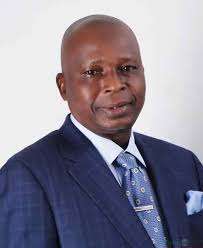
AGF Explains Why Nnamdi Kanu’s Case Still In Court – AGF …says FG convicted 250 terrorism, criminal cases

Attorney General of the Federation(AGF) and Minister of Justice, Prince Lateef Fagbemi SAN, Friday, maintained the leader of the Indigenous People of Biafra (IPOB) Mazi Nnamdi Kanu’s case is very difficult, requested it is left to court. Also, the Federal Government, revealed that it prosecuted and convicted 250 terrorism and criminal offenses in various courts across the country. The AGF made this revelation, Friday, at the Sectoral Ministerial briefing to mark President Bola Tinubu’s one year in office. Fielding questions from the press, the minister explained that there is a remarkable difference between Kanu’s case and that of the convener of #RevolutionNow protest, Omoyele Sowore. He said, “Sowore and Kanu are not the same. When it comes to the first one, I didn’t have difficulty to say go, but I have difficulty with the second one. “The matter is still in court, let’s wait for the court”. Sowore was arrested in 2019 and prosecuted for allegedly calling for the forceful take over of the administration of former President Muhammadu Buhari. However, the federal government through the office of the AGF in February this year filed a notice of discontinuation of the case. Breaking down the achievements of justice ministry in the year under review, Fagbemi said the FG has secured 160 convictions for criminal offences, 87 convictions for terrorism cases, 3 novel convictions in the last one year for extremist terrorism actors involved in the radicalization of children and violence against women. He hinted on enhanced interagency synergy for prosecution of Maritime Cases, Electricity offences, collaboration with public and private sector stakeholders on cybersecurity protection and cybercrime prosecution. Following the Ministry’s intervention for the upgrade of facilities designated for trial of terrorism cases, Fagbemi said the Ministry has resumed trials of terrorism cases in conjunction with the Legal Aid Council, National Human Rights Commission and other stakeholders. “The percentages of terrorism cases initiated and corruption cases concluded within the reporting period has been significant,” the Justice Minister said. Speaking on the development of the proceeds of Crime Recovery and Management Regulation, 2024, by the Ministry, the AGF said the objective of the regulation which is being developed with relevant agencies is to ensure transparency, accountability and standardization in the management of recovered assets, in line with global best practices. “This document is being finalized for validation, the AGF said. On terrorism financing and other transnational crimes, the AGF stated that the Tinubu administration has facilitated international cooperation and secured conviction of 13 terrorism financing cases, and have also concluded 150 mutual legal assistance requests and 12 extradition requests from law enforcement agencies and foreign countries. “The Ministry places priority on enhancing the prosecutorial and litigation capacity of its staff, to this end it organized capacity building programmes to improve knowledge on various aspects of the law including Darknet and Cryptocurrencies applied to terrorism financing, investigation and prosecution of financial and wildlife crimes in Nigeria. “The coordination of the effective implementation of the National Anti-Money Laundering/Combating Proliferation Financing (AML/CPF) Strategy 2023 – 2027 is also a top priority for the Ministry, the AGF said. On the fight against corruption, the Minister submitted that the present administration has achieved successes under its international asset recovery and management efforts. The asset sharing agreement between the Federal Republic of Nigeria and the Bailiwick of Jersey was signed in February 2024, for the return of £2,125,944 (Two Million, One Hundred and Twenty-Five Thousand, Nine Hundred and Forty-Four GBP) proceeds of corruption, the AGF revealed. “This has been approved by the President to be utilized, for continuation of works on the Abuja-Kano Road project” Fagbemi said. On the Glencore settlement, the Justice Minister said the Ministry on behalf of Nigeria on April 25, 2024, concluded negotiation of a settlement agreement with Glencore International A.G. wherein the firm is expected to pay the sum of $50 million USD as penalty and compensation for certain activities in Nigeria.
FG, states will review sentencing for suicide attempt – AGF

The Attorney General of the Federation and Minister of Justice, Prince Lateef Fagbemi (SAN), has promised a review of the law imposing sentencing for suicide attempts. He gave the promise when he received a delegation from the Asido Foundation, a non-governmental organisation promoting mental health advocacy and reforms with a view to improving awareness, reducing stigma and discrimination and empowering persons with mental disorders and their families. In a statement signed by Kamarudeen Ogundele, S A to the President on Communications & Publicity, Office of the AGF, Sunday, the Minister said health is one of the priority areas of the administration of President Bola Ahmed Tinubu. “The law is something we have to take a second look at, especially where it is established that the offenders are not in the right state of mind. What the offenders need is pity, treatment and love so as to rid society of this kind of situation. “But whatever we do is not binding on the states. So, I will take the case to the Body of Attorneys General,” Fagbemi said. He promised to take up the issues around the Mental Health Act with his colleagues in the Federal Ministry of Health. Earlier, the founder of Asido, Dr Jibril Abdulmalik, sought the help of the AGF in reviewing the law sentencing people for attempted suicide and the implementation of the Mental Health Act signed into law by former President Muhammadu Buhari in January 2023. Abdulmalik said medical evidence had shown that all over the world, 80-90 percent of those who attempted suicide had background mental illness, especially depression. “It is because of sense of hopelessness that makes them get to the edge where they think they are better off dying. “In that situation what they need is help and treatment, not punishment and incarceration. We know the workload is heavy for our judicial officers…We don’t want them overburdened with cases that should ordinarily go to the hospitals,” he added.
AGF, NBA, NJC set to tackle factors hindering the effectiveness of laws

The Attorney General of the Federation and Minister of Justice, Mr. Lateef Fagbemi has said that a new move to make Nigerians access justice and fair play unhindered is underway for the citizenry. To make the new measure achievable, most of the laws, including electoral laws, are to be updated under a new justice sector reform. At a media briefing in Abuja on Thursday, the AGF revealed that the Federal Ministry of Justice and the Nigerian Bar Association (NBA) are putting together a National Summit on Justice sector where all factors hindering the effectiveness of Nigerian laws would be tackled. The President, Bola Ahmed Tinubu, according to the AGF, would, on April 24, 2024, declare the Summit open to address critical challenges in the nation’s justice sector in Abuja. According to Fagbemi, the anticipated National Summit on Justice holding from April 24 to 25, 2024 will be hosted by the Federal Ministry of Justice, alongside the Nigerian Bar Association (NBA) and the National Judicial Council (NJC). The National Summit, with the theme, “Repositioning the Justice System: Constitutional, Statutory, and Operational Reforms for Access and Efficiency”, the Minister said, will hold at the Auditorium of National Judicial Institute (NJI) in Abuja. The event, Fagbemi said, will address the significant challenges plaguing Nigeria’s justice sector and pave the way for much-needed reforms that will make justice more accessible to all Nigerians. He said the Summit will bring together experts, legal professionals, and key stakeholders from across the country to engage in constructive discussions and develop practical solutions that prioritize the justice needs of the average Nigerian. In his words, “The National Summit on Justice presents a unique opportunity to collectively tackle the pressing issues hindering the efficient, fair, and people-centered delivery of justice in our nation. “The Joint Planning Committee established by the Federal Ministry of Justice and the NBA, headed by the Chairman of the NBA Judiciary Committee, Dr. Babatunde Ajibade, SAN has assembled a remarkable group of speakers and panelists to share their invaluable knowledge and expertise and proffer constructive solutions for making the justice system more efficient and accessible to all Nigerians”, the AGF and Minister of Justice stated. He added that the summit will feature a keynote address by Dr. Willy Mutunga, EGH, a renowned legal scholar, jurist and former Chief Justice of Kenya, celebrated for his commitment to democratic principles and human rights, and for the transformative judicial reform that took place in Kenya under his watch. One of the Summit’s goals, the Minister said, is to review, validate, and adopt the revised National Policy on Justice 2024 – 2028 to drive prison reforms, access to justice for the average Nigerian, as well as the review of electoral laws and procedures in handling election related cases, among several other reforms. He said, “This comprehensive policy document outlines a broad framework and initiatives in 17 thematic areas aimed at reforming the justice sector to enhance its effectiveness and accessibility to all Nigerians, ensuring that justice is not just a privilege for the few, but a right for all. “The policy aims to address various challenges within the legal framework, seeking to promote social cohesion, bolster economic development, and foster good governance.” He added further that, the Summit will deliberate on draft legislations proposed to address specific identified challenges within the justice sector, relating to the judicial appointments process, administration, funding and budgeting for the judiciary, the elimination of delays and inefficiencies in justice delivery and to evolve ways to reduce the amount of time for adjudication of cases, eliminate some of the associated technicalities, and reduce the number of cases getting to the Supreme Court. “In this regard, we intend to look at a situation where many cases will terminate at the court of appeal to reduce the burden on our noble justices of the Supreme Court. “These proposed laws are expected to serve as a catalyst for collective action and provide a guiding framework for relevant governmental institutions at both the national and sub national levels to establish an effective, efficient, and people-centered justice system”. The country , he said, cannot afford to remain complacent in the face of the obstacles impeding the efficient delivery of justice for all Nigerians, adding that, “the Summit will present an opportunity for us to unite our efforts, leverage our collective expertise, and chart a course toward a more just and equitable society”. Fagbemi expressed the hope that , the National Summit on Justice will usher in a new era of positive change and progress in the country’s justice sector, ensure a fair, accessible, and efficient legal system that upholds the rule of law while safeguarding fundamental human rights.
Fagbemi will bring desired reforms to Justice sector

The Emir of Ilorin, Dr Ibrahim Sulu Gambari has expressed confidence in the ability of the current Attorney General of the Federation and Minister of Justice, Prince Lateef Fagbemi (SAN) to bring desired reforms to the justice sector. In a statement by Kamarudeen Ogundele, Special Assistant to the AGF on Communication and Publicity, the former Presiding Justice of the Court of Appeal expressed the optimism while Prince Fagbemi paid a courtesy visit in his palace on Tuesday in Ilorin, Kwara State. Dr Gambari, who described the AGF as the pride of Kwara, hailed President Bola Ahmed Tinubu for appointing him as the Chief Law Officer of the Federation, insisted that he is capable of rejuvenating the justice sector. The monarch said he had known Fagbemi for over 30 years since his days on the bench and was confident that he would uphold the tenets of justice and the fight against corruption. He also described Fagbemi as a philanthropist and legal icon who had contributed greatly to legal jurisprudence. The Emir called on stakeholders in the justice sector to work as a team with the AGF to bring the desired development to the justice sector in the overall interest of the nation.
AGF Tasks FG, Stakeholders On Review Of Criminal Justice Administration Laws

Attorney General of the Federation (AGF) and Minister of Justice, Prince Lateef Fagbemi SAN, on Tuesday, tasked stakeholders, Attorneys General of States, Civil Society Organizations and International development partners to commit to the effective implementation of all policies, programmes and laws that will lead to a dynamic and efficient criminal justice administration system in the country. Fagbemi said the FG is committed to ensuring that the criminal justice system of the country is more responsive to the demands of Nigerians for a simple, fast, efficient, effective, fair and trustworthy system for dispensation of justice. The AGF stated this in his keynote address at a 3-day National Stakeholders’ forum organized by the Federal Ministry of Justice in collaboration with the Centre for Social-Legal Studies. At the program with the theme, “Review of the Implementation of Administration of Criminal Justice Act, 2015 and Administration of Criminal Justice Laws of States, AGF noted that the passage of the ACJA by all the 36 States of the Federation have provided a common ground to address the critical issues and challenges confronting Nigeria’s criminal justice system. “It has provided us a shared platform that would enable us scale up our efforts and seek new practical solutions to identified challenges. In conducting the review of the ACJA/ACJLs, Fagbemi advised participants to ask questions regarding the nature and workability of the strategic amendments that needed to be done in order to make ACJA/ACJLs respond to critical challenges and needs of the society. “We need to know what we could have done better, and how much further we need to go to enable us achieve the desired outcome. “In addition, we will collaborate and work with colleagues in the private and public sectors, including fellow Attorneys-General to develop and agree on a National Minimum Standards that would guide our collective efforts at achieving a more balanced, effective and inclusive system of justice. “It is expected that criminal justice institutions, anti-corruption agencies and other justice sector operatives will commit to, and observe the prescribed National Minimum Standards. “My expectation is that at the conclusion of these deliberations, there would be a consensus around developing a strategic plan to guide both the Federal and State Governments in the review and consequent amendment of ACJA and the respective ACJLs of various States. The Justice Minister hinted that ACJA is one of the few key legislations that both the Federal and States Governments share so much common grounds, as with common worries and concerns. In a goodwill message, the Minister of Interior, Dr Olubunmi Tunji-Ojo, charged participants at the forum to critically look at the grey areas impeding the implementation of Administration of Criminal Justice Act in the country. “If we don’t get it right here at this forum, then the issue of reforms in the Nigerian Correctional Services will remain a mirage. The Interior Minister insisted that getting lasting solutions to the problems facing the country’s judiciary, requires a multi-facet approach and must be through cocktail of ideas. Review will hold every Nigerian have a right and not a right as a privilege. In her welcome address, the Solicitor General of the Federation and Permanent Secretary, Federal Ministry of Justice, Mrs Jeddy Agba, said the ACJA represents a significant milestone in the country’s judicial landscape, noting that the forum will provide stakeholders with the opportunity to brainstorm, share expertise, make recommendations, and build consensus on way forward in reviewing the ACJA. Prof Yemi Akinseye George SAN, President, Centre for Social-Legal Studies, in his remarks, thanked the AGF for creating the forum for stakeholders and Attorneys General of States to cross fertilize ideas on the ways to review and amend the ACJA and ACJL to enhance criminal justice delivery.