Africa Day: AU calls for justice, unity

Mr Mahmoud Youssouf, Chairperson of the African Union Commission (AUC), has emphasised the need for Africans to strive for freedom from conflict, underdevelopment, and war. Youssouf made this known in a statement on Sunday marking Africa Day 2025, reiterating a call for justice, unity, and shared progress among AU member states. According to Mr Nuur Sheekh, Spokesperson for the Chairperson, Youssouf reflected on Africa’s historic journey during the event and called for bold steps toward a just and prosperous future. He said, “This year’s theme, ‘Justice for Africans and People of African Descent through Reparations,’ honours the memory of those who suffered under slavery and colonialism. “It also promotes the rights of Africa and its diaspora to truth, justice, and restoration.  “Justice and reparations remain long overdue. Africa will not be held hostage by the pain of its past. “Africa continues to sacrifice and strive toward freedom from conflict, underdevelopment, and war. “The continent is steadily building a future of peace, prosperity, and integration.” Youssouf highlighted Africa’s strategic assets, including its youthful and growing population, vast arable land, rich mineral wealth, and abundant renewable energy potential. With its population expected to exceed 2.5 billion by 2050, he said, Africa was not only the continent of the future but also a key driver of global transformation. He commended the resilience of African economies, noting that many countries achieved macroeconomic gains and even double-digit growth prior to the COVID-19 pandemic. He also lauded the dynamism of African youth and women, who were leading community transformation and innovation across the continent. Youssouf stressed Africa’s evolving role in global governance, pointing to the continent’s membership in the G20 as both a well-deserved participation and global recognition of Africa’s importance. “It is our duty as Africans to safeguard our resources and prioritise value addition through transformative initiatives like the African Continental Free Trade Area (AfCFTA). “Africa must no longer be an afterthought in global geopolitics. Let us reaffirm our shared values and take rightful ownership of our future on the global stage. “Pan-Africanism was forged through the dreams and determination of our people, but also through strategic foresight. Let us honour that legacy with bold, united action,” he added. He urged Africans to stand tall in their identity, pursue justice with courage, and shape the continent’s future with confidence and pride as Africa Day is marked across the continent and in the diaspora.

Africa At Crossroads: power,progress, And The AI Revolution

By Uzo Owunne Politics, especially in emerging democracies with weak institutions, often becomes the art of disguising personal interest as national interest. In many African countries—including Nigeria, Uganda, Zimbabwe, Cameroon, and Equatorial Guinea, amongst others, individuals frequently wield more power than the very institutions meant to govern them. This allows politicians to manipulate state structures for personal gain while presenting their actions as being in the interest of the people. At the same time, the Artificial Intelligence (AI) revolution is transforming industries, economies, and global power structures. Unfortunately, Africa is nowhere near the starting line, and if urgent steps are not taken, the continent risks being permanently left behind. While countries like China, South Korea, and the United States are investing billions into AI research, automation, and future technologies to secure economic dominance, Africa still grapples with outdated notions of development, prioritizing short-term political control over long-term economic and technological strategy. READ ALSO: Nigerian youths and revelations at IBB book launch To compete in the future, Africa must abandon its reliance on reactionary governance and adopt a proactive, united approach that brings together government, the private sector, and civil society. The time for excuses is over—Africa must wake up, take initiative, and actively shape its future in this new era of technological advancement. Without a mindset shift, the continent will remain a passive participant in the global economy rather than a driver of innovation. Crisis of Governance: When Leaders Become Bigger Than Institutions In Uganda, President Yoweri Museveni has perfected the art of consolidating power at the expense of democratic institutions. Since taking office in 1986, he has systematically weakened opposition, extended his rule through constitutional amendments, and militarized governance. The violent suppression of opposition figures like Bobi Wine demonstrates how state institutions—originally designed to protect democracy—have been repurposed to serve personal rule rather than national development. His justification is always framed around stability and security, yet in reality, it entrenches autocracy and economic stagnation. PLEASE SEE: 25-year-old man hangs self in Ogun forest In Nigeria, the recent political clash between Senate President Godswill Akpabio and Senator Natasha Akpoti-Uduaghan highlights the deep-rooted institutional decay. Akpabio, leveraging his influence, has been accused of manipulating Senate proceedings and using political machinery to undermine a vocal advocate for transparency and accountability. This case is emblematic of a broader trend where state institutions are weaponized to silence dissent, control narratives, and protect political elites rather than serving the people. Beyond individual cases, Nigeria’s broader governance failures further expose its institutional weaknesses: This scenario is not unique to Uganda and Nigeria. Other African nations like Zimbabwe under Emmerson Mnangagwa, Cameroon under Paul Biya, and Equatorial Guinea under Teodoro Obiang Nguema Mbasogo suffer similar governance challenges. Leaders have outgrown institutions, creating a system where national progress is contingent on individual rulers rather than institutional strength. The Way Forward is to break the cycle Africa’s crisis is not just political—it is also economic and technological. Without institutional reforms, judicial independence, and genuine electoral integrity, African nations will remain trapped in a political loop where governance is dictated not by principles, but by personalities. At the same time, Africa must actively invest in AI, digital infrastructure, and future technologies to remain competitive in the global economy. The debate must move beyond politics—African governments and private sector leaders must align their interests to create a framework for sustainable growth. The world is moving forward. Without these changes, Africa risks remaining in a political and economic loop, where governance is dictated not by principles, but by personalities. The choice is clear: either Africa wakes up and takes control of its future, or it continues being left behind in the global race for progress. https://guardian.ng/news/world/african-union-expresses-deep-concern-over-crisis-in-ethiopias-tigray/

African Union To Establish Credit Rating Agency

African Union To Establish Credit Rating Agency

The African Union (AU) is making arrangements to launch a credit rating agency for the continent as part of its efforts to address concerns about the fairness of existing ratings assigned to African economies by foreign rating agencies. AU’s lead expert for country support Misheck Mutize, said the proposed agency will provide a fresh perspective on the risk associated with lending to African countries. Mutize clarified that the goal of the proposed rating agency would not been to replace the big three global rating agencies but that to widen the diversity of opinions on Africa’s ratings. He explained that this agency, when established in 2024, would supply contextual information to investors when they are making decisions about purchasing African bonds or extending private loans to African nations. The AU lead expert said: “Our goal has not been to replace the big three…we need them to support access to international capital. Our view has been to widen diversity of opinions. “We know the big three follow the opinion of other smaller ratings agencies. They’ve acknowledged that other smaller ratings agencies have got an edge in understanding domestic dynamics”, Mutize added. In recent times, AU countries have been accusing the leading rating agencies – Moody’s, Fitch, and S&P Global Ratings – of bias in their evaluations of lending risks in African countries. The African Union, in collaboration with member-nations such as Ghana, Senegal, and Zambia, alleges that the major three credit rating agencies tend to downgrade African nations more swiftly, especially during crises like the COVID-19 pandemic. As expected, the rating agencies have denied the allegations and maintained that their rating methodologies were consistent across geopolitical zones globally. By design, credit ratings serve as a tool to assess the likelihood of a borrower defaulting and help determine the terms under which financial institutions and others will provide loans It would be recalled that in July this year, during the 5th Ordinary Session of the Specialized Technical Committee, which has ‘Improving Africa’s Access to Capital: Debt Management and the Rising Influence of Credit Rating Agencies’ as its theme, the AU finance ministers approved a resolution supporting the establishment of a new agency. The initiative was led by the African Peer Review Mechanism (APRM), a unit of the AU, which was created in 2022, to enhance governance across the continent.

G-20 Summit: Indian Community in Nigeria Applauds Modi’s Invitation to Tinubu

G-20 Summit: Indian Community in Nigeria Applauds Modi's Invitation to Tinubu

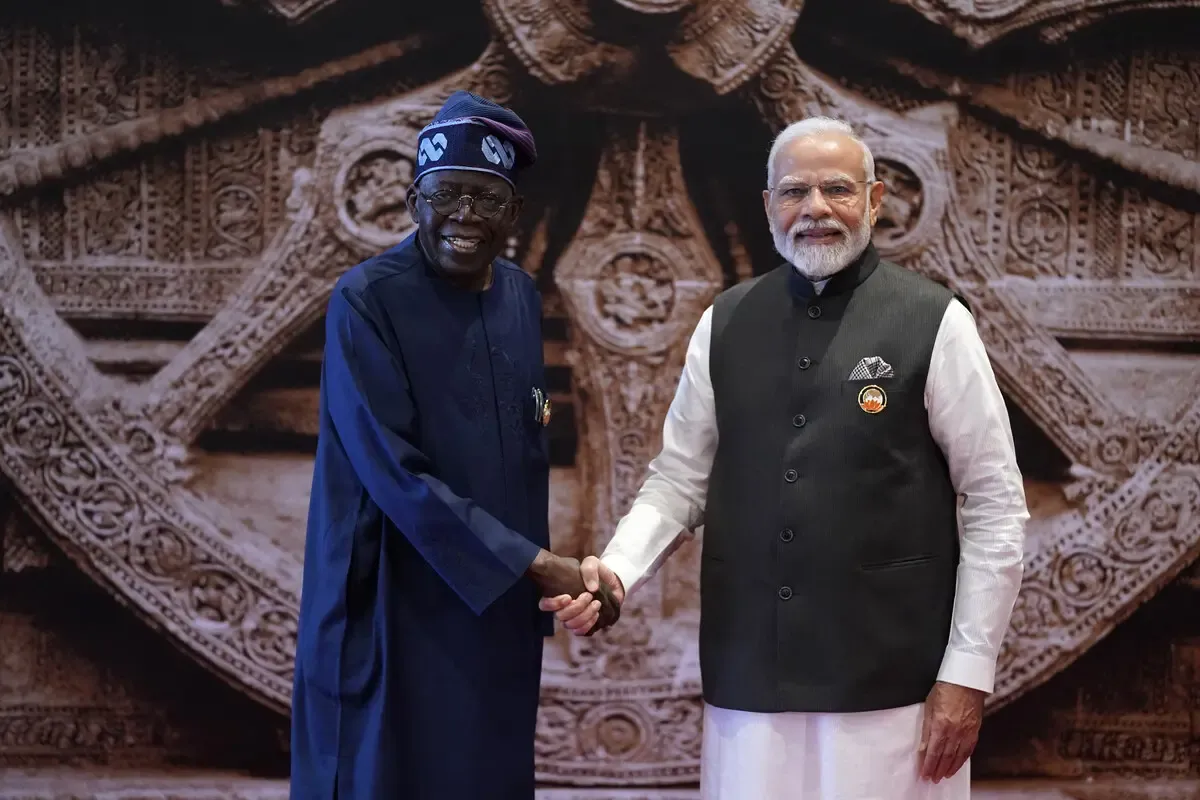
The Indian community in Nigeria has expressed its appreciation to Prime Minister Narendra Modi for extending an invitation to President Bola Tinubu to participate in the ongoing G-20 Summit in New Delhi, India. Mr. Sanjay Srivastava, President of the Afro Asian Community Development (AACD), conveyed this sentiment in a statement. He also commended the efforts of Mr. Pravin Kumar, General Secretary of AACD, for attending the crucial meeting. Srivastava, who also holds the position of President of the People of Indian Origin Chamber of Commerce and Industry in Nigeria, praised Modi for including the African Union as a permanent member of the G-20. He considered this a significant step in the right direction, as it would empower Africans to offer lasting solutions to global economic challenges. In his view, this move would promote inclusivity and establish a fair and impartial global order, a concept highlighted by President Tinubu. Srivastava stated, “Considering that South Africa is currently the only African member of the group of the world’s 20 most industrialized nations, Nigeria’s inclusion will be highly beneficial. For us, Indians living in Nigeria, this is a welcome development as it will allow Nigerians and all other G-20 nations to share a promising future. This will enable Nigerians to play a vital role in contributing to shaping a more equitable world.” The invitation to President Tinubu for the G-20 Summit is seen as a positive step towards fostering international cooperation and inclusive global governance.

African Union supports ECOWAS’ military response to Niger coup

African Union supports ECOWAS' military response to Niger coup

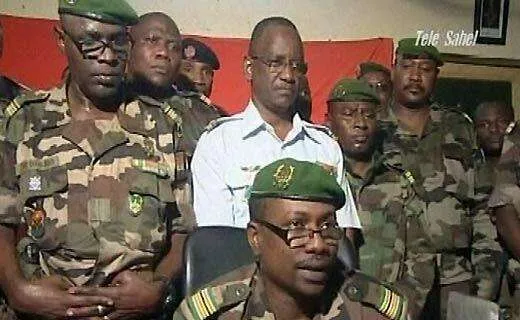
The African Union (AU) has expressed its endorsement of the proposed military intervention led by the Economic Community of West African States (ECOWAS) against the coup perpetrators in Niger. Moussa Faki Mahamat, the Chairperson of the AU, conveyed his solidarity with ECOWAS’ stance against the Niger Republic coup. Following a pivotal summit held in Abuja, Nigeria’s capital on Thursday, ECOWAS directed its military leaders to establish a rapid-response force for potential deployment to Niger. The organization emphasized the importance of prioritizing peaceful means to address the crisis. Mahamat reiterated his call for the immediate release of ousted Nigerien President Mohamed Bazoum and all individuals from his administration and family. He condemned the treatment of a democratically elected leader and expressed concern about Bazoum’s reportedly deteriorating detention conditions. The upheaval occurred on July 26 when Niger’s presidential guard removed Bazoum from power. Subsequently, the commander of the elite unit, Abdourahamane Tchiani, seized control and dissolved the constitution. Bazoum and his family have remained confined to their residence for over two weeks. Niger had been a noteworthy exception within the Sahel region’s “coup belt,” maintaining a democratic government and serving as a vital ally to the West in the fight against regional Islamist extremists. The international community has unequivocally criticized the coup and urged the coup leaders to restore order and transfer authority back to the democratically elected administration.

Niger Coup: ECOWAS calls for immediate release, reinstatement of President Bazoum

Top US diplomat meets leaders of Niger military junta

Heads of State and Government of ECOWAS on Sunday in Abuja called for the immediate release and reinstatement of President Mohamed Bazoum as the legitimate Head of State and Government of the Republic of Niger. This is contained in a communique at the end of the Extraordinary Summit on Socio-Political Situation in the Republic of Niger read by the President, ECOWAS Commission, Dr Omar Touray. The leaders also rejected any form of purported resignation by Bazoum and declared him as the only recognised and elected President by ECOWAS, the African Union and the international community. ‘‘In this regard, only official acts of President Bazoum or his duly-mandated officials will be recognized by ECOWAS,’’ they said. The leaders expressed strong condemnation of the attempted overthrow of constitutional order in Niger, and the illegal detention of President Bazoum, as well as members of his family and government. They demanded full restoration of constitutional order in the Republic of Niger and considered the illegal detention of Bazoum as a hostage situation, holding the coupists solely responsible for his safety and that of his family and government. In the event the ECOWAS’ demands are not met within one week, the leaders said they would take all measures necessary to restore constitutional order in the Republic of Niger. “Such measures may include the use of force for this effect, the Chiefs of Defence staff of ECOWAS is to meet immediately,’’ the leaders said. ECOWAS leaders also condemned the pronouncement of support by foreign governments and foreign private military contractors, while expressing appreciation to various governments and partners for their stance and solidarity. The Summit hosted by President Bola Tinubu, in his capacity as the Chairperson of the ECOWAS Authority of Heads of State and Government, also agreed to appoint and dispatch a Special Representative to deliver the demands of the authority. In response to the coup attempt, the Summit announced immediate sanctions on Niger including the closure of land and air borders between ECOWAS countries and Niger. They also agree on establishing a no-fly zone on all commercial flights to and from Niger, and suspending all commercial and financial transactions between ECOWAS Member States and Niger. Furthermore, assets of the Republic of Niger in ECOWAS Central Bank, Niger state enterprises, and parastatals in commercial banks will be frozen. Niger will also be suspended from all financial assistance and transactions with financial institutions within ECOWAS. Additionally, travel bans and assets freezes were imposed on the military officials  involved in the coup attempt, as well as their family members and civilians who accept to participate in any institution or government established by these military officials. In his closing remark, Tinubu thanked fellow leaders, Moussa Faki Mahamat, the African Union Commission (AUC) Chairperson, the Special Representative of the Secretary -General and Head of the United Nations Office in West Africa and the Sahel, Leonardo Simaõ, for their active engagement and invaluable contributions to the discussions. ‘‘As we come close to this Extraordinary Summit on the socio- political situation in the Republic of Niger, I send my heartfelt gratitude to each and every one of you for your active engagement in our open and closed door meeting. ‘‘Your invaluable contributions to our discussions have got us this far and hopefully, we will achieve our objective. ‘‘The essence of African unity and solidarity is hereby reaffirmed. Our unwavering commitment to democracy, peace and prosperity is hereby resolved. ‘‘Throughout our deliberations, we have recognized that the challenges faced by Niger are inter connected with broader issues affecting our region. ‘‘As African leaders, it is our shared responsibility to foster stability and progress, placing the wellbeing of our people at the forefront of our endeavours, and working together towards their prosperity and happiness must always consistently be our goals. ‘‘We will stand with our people in freedom and our commitment to the rule of law and not the barrel of gun. Africa has come of age. We reject coup and interruption to constitutional order,’’ he said. Before the Summit, the President also held bilateral meetings with President Umaro Embalo of Guinea Bissau, President Mahmat Itno of Chad, and Michael Health, the US Deputy Assistant Secretary of African Affairs. Presidents Patrice Talon of Benin Republic,  Alassane Ouattara of Cote d’Ivoire, Adama Barrow of The Gambia, Nana Akufo-Addo of Ghana, Embalo of Guinea Bissau, Macky Sall of Senegal, Faure Gnassingbé of Togo attended the Summit while the Presidents of Cape Verde, Liberia, Niger and  Sierra Leone were represented.

Infrastructure Financing: AfDB approves $15m loan for Nigeria

Dr

The Board of Directors of the African Development Bank (AfDB) has approved $15 million loan for Infrastructure Credit Guarantee Company Limited (InfraCredit) to support infrastructure financing in Nigeria. Nigerian Anchor reports that InfraCredit is a specialized Nigerian credit guarantee company that mobilises long-term capital from institutional investors, including pension funds and insurance companies, to support infrastructure projects. According to the Bank, the subordinated loan is to strengthen InfraCredit’s capital base and help close Nigeria’s infrastructure financing gap. The financing, which will enable InfraCredit to leverage domestic capital markets to bolster access to long-term local currency infrastructure financing in Nigeria, complements a 2019 investment into InfraCredit made by the AfDB and other partners to help unlock domestic institutional capital for infrastructure. The loan comes at a time when InfraCredit is seeking to raise capital to finance an additional $375 million in infrastructure over the next few years, primarily by leveraging private sector financing. “The African Development Bank is pleased to continue to support an innovative financial institution – InfraCredit – which has objectives that align closely with our priorities to mobilise institutional financing for the delivery of infrastructure for Nigeria in key sectors including transport, energy, water, agriculture and infrastructure,” the Director General of the Bank’s Nigeria Country Department, Lamin Barrow said. The company’s green finance track record and commitments under its Clean Energy Transition Strategy and Roadmap and Green Finance Framework fits with the AfDB’s commitments to promote low-carbon development and mitigation, leveraging climate finance from private sector sources, Barrow said. “We are delighted and very pleased with the confidence that AfDB has demonstrated in the opportunity ahead for InfraCredit to scale its development impact of unlocking domestic institutional investments for long-term local currency infrastructure finance in Nigeria that will create jobs and support local economic growth. This second round investment will strengthen our guarantee issuing capacity and bring AfDB’s total investments in InfraCredit to $25 million, which is a strong signal of commitment to the long-term growth of InfraCredit and the Nigerian economy,” InfraCredit CEO, Chinua Azubike, said. The AfDB’s Acting Director for Financial Sector Development, Ahmed Attout, explained why AfDB made the support. “The support demonstrates our continuing confidence in InfraCredit and recognition of the role it plays in Nigeria’s infrastructure development. The African Development Bank is committed to capacitating the various players within Africa’s capital markets and stimulating the mobilisation of long-term funding into Africa’s infrastructure,” he said.

400 perish in devastating Myanmar cyclone

MYANMAR CYCLONE

Officials on Tuesday reported that cyclone Mocha, which hit Myanmar’s Rakhine State, claimed over 400 lives and caused severe damage. Ramanathan Balakrishnan, the UN relief coordinator in Myanmar, said: “It really is a nightmare scenario.” Mocha was the strongest cyclone to hit the region in more than a decade and its impact was especially felt in Rakhine, a state on the western coast which is home to Myanmar’s persecuted Rohingya Muslim minority. According to Balakrishnan, the cyclone struck the poorest parts of the country, which were already affected by the coronavirus pandemic, domestic conflict and economic problems. “Now they are also on the front line of the climate crisis,” he said, referring to the increasingly frequent weather extremes observed in the wake of climate change. Most of those killed were Rohingya, a spokesman for Myanmar’s opposition National Unity Government told dpa. The National Unity government was formed after Myanmar’s 2021 military coup as an alternative to the ruling junta. It warned people about the cyclone in advance and has worked to organise international aid for the victims. The tropical cyclone made landfall in Myanmar and neighbouring Bangladesh on Sunday with wind speeds of more than 250 kilometres per hour in some places. The full extent of the damage, however, is only slowly becoming clear due to widespread cuts to communication lines. The Irrawaddy news website reported hundreds of deaths in Rohingya camps around the city of Sittwe, the capital of Rakhine State. Many were said to have drowned or were hit by falling trees. Since the coup, displaced people have been living in makeshift shelters in the region due to ongoing violence associated with the junta. Many people had barely been able to shelter from the huge gusts of wind and heavy rain. In both countries, hundreds of thousands of people were taken to temporary shelters as a precaution which saved many lives, the charity Oxfam said. According to authorities in Bangladesh, no deaths have yet been reported there. Nevertheless, the damage around the city of Cox’s Bazar in south-eastern Bangladesh is substantial. In Cox’s Bazar, around one million Rohingya refugees from Myanmar live in the world’s largest collection of refugee camps, mostly in dwellings made of bamboo and plastic sheets. Even before the cyclone, the United Nations estimated six million people were in humanitarian need in the regions affected.