Warawa Faults Rising Nomination Fees, Urges ADC to Reverse Policy Shift

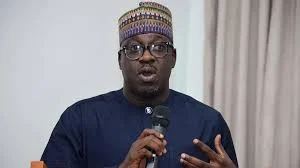
Dr. Aminu Abdurahman Anas Warawa addressing journalists during a media briefing on political nomination fees and democratic reforms in Nigeria.

Former Kano State governorship running mate in the 2023 general election, Dr. Aminu Abdurahman Anas Warawa, has criticised the growing trend of exorbitant nomination fees among political parties in Nigeria, warning that the development threatens democratic inclusion and public confidence in the electoral process. Speaking during a media briefing, Warawa expressed concern over what he described as the increasing commercialisation of political participation, particularly within party primary elections. According to him, internal party processes that should ordinarily strengthen democracy have gradually become sources of division, exclusion, and widespread disenchantment among party members and the electorate. “Party primaries are no longer widely perceived as fair contests of ideas, competence, and leadership capacity,” he said. “Instead, they are increasingly characterised by disputes, allegations of manipulation, and perceptions of exclusion.” Warawa argued that the rising cost of expression of interest and nomination forms has effectively shut out many qualified Nigerians from contesting elective offices, especially young people, professionals, and women without significant financial resources. He warned that the trend sends a dangerous message that political leadership is reserved for wealthy individuals and political elites. The former governorship running mate particularly criticised the recent decision of the African Democratic Congress (ADC) to introduce high nomination fees, describing the move as a departure from the party’s founding principles. According to him, the ADC had previously distinguished itself as a reform-oriented platform by lowering financial barriers and encouraging broader political participation through concessional and, in some cases, free nomination forms. He said the reversal risks undermining the party’s credibility among Nigerians seeking alternatives to the dominant political parties. “By adopting a pricing structure similar to that of the APC, the ADC risks diluting its identity as a reform-oriented platform,” Warawa stated. He added that excessive nomination costs could deepen patronage politics and encourage office holders to view public office as an investment to be recovered after elections. Warawa also drew comparisons with democratic practices in other countries, noting that political parties in the United Kingdom maintain relatively modest administrative fees, while South Africa places greater emphasis on grassroots support and internal vetting processes. He further observed that in the United States, access to party primaries is not conditioned on exorbitant nomination fees despite the influence of campaign financing. Calling for urgent reforms, Warawa proposed a new framework for nomination fees aimed at balancing administrative realities with democratic inclusion. Under his proposal, nomination fees should not exceed ₦500,000 for State House of Assembly seats, ₦1 million for the House of Representatives, ₦3 million for Senate seats, ₦5 million for governorship positions, and ₦10 million for presidential aspirants. He urged political parties, particularly the ADC, to reconsider current policies and prioritise affordability and inclusiveness in their internal processes. “Nigeria’s democracy cannot thrive if access to leadership is determined primarily by wealth rather than competence, vision, and integrity,” he said. Warawa concluded by stressing that the future of Nigeria’s democracy should depend on the quality of leadership aspirants can offer rather than their financial capacity.

2027 Election: Labour Party and Others self-destruct

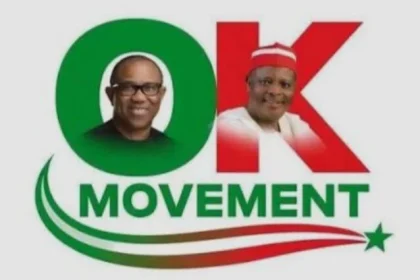
Apart from the New Nigeria Peoples Party, other leading players at the last election except the ruling All People’s Congress seem to be imploding, all as a result of frenzied moves ahead of the 2027 general elections.   For instance, both the PDP and the Labour Party, the first and second runners up at the 2023 presidential election have been neck deep in internal wranglings for no specific reasons other than the machinations of greedy party members to self destruct in favour of an individual’s ambition to conquere power in 2027.   In an apparent redundant move the Labour Party has revoked the automatic tickets previously reserved for its 2023 presidential candidate, Peter Obi, and the Governor of Abia State, Alex Otti, for the 2027 election.   The decision was made during the party’s National Executive Council meeting held on Monday, September 9, in Abuja.   Following the meeting, the party’s National Working Committee, led by Julius Abure, announced that all party tickets, from the presidency to the House of Assemblies, would now be open to all qualified Nigerians.   In a communique signed by the National Chairman of the party, Abure, and National Secretary, Umar Ibrahim, the NEC nullified the decision taken at the stakeholders meeting convened by Otti.   The NEC insisted that there was no vacuum in the leadership of the party after “conducting its National Convention in line with its constitution, the Electoral Act and Constitution of the Federal Republic of Nigeria on March 27, 2024.”