NASS Seeks Take-Off Grants for Otukpo, Other New Teaching Hospitals

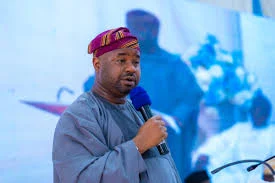
The Joint Committee on Health of Nigeria’s National Assembly has appealed to the Joint Committee on Appropriations to make financial provisions for take-off grants to support newly established federal hospitals across the country. Chairman of the committee, Ipalibo Banigo, made the appeal on Wednesday while presenting the harmonised report of the joint Senate and House Committees on Health on the 2026 budget proposals of ministries, departments and agencies (MDAs). Banigo said the proposed take-off grants were critical to ensuring the effective and efficient operation of the new health facilities, noting that they would provide essential start-up funding to address immediate operational needs. The newly established hospitals include the Federal University Teaching Hospital, Lafia and the Federal University Teaching Hospital, Akure. Others are the Federal University of Health Sciences Teaching Hospital, Otukpo and the Federal University of Health Sciences Teaching Hospital, Ila-Orangun. Banigo stated that the Federal Government is targeting an investment of six per cent of the total national budget allocation to the health sector, net of liabilities, as part of efforts to strengthen healthcare systems nationwide. “The aim is to revitalise our hospitals with medication and better resources, and to care for all Nigerians by procuring essential drugs for distribution to the public, ensuring quality healthcare facilities nationwide,” she said. She disclosed that the 2026 budget proposal for the Federal Ministry of Health and Social Welfare includes N1.17 trillion for personnel costs, N57.03 billion for overheads, and N924.25 billion for capital expenditure, bringing the total allocation to N2.14 trillion. The committee, she added, observed during its review of the 2025 budget performance and the 2026 budget defence that many hospitals were yet to receive 100 per cent of their 2024 appropriations. “Although all of the 2024 appropriation had been uploaded, about 60 per cent of payments are still outstanding, and in some cases as much as 30 per cent of the appropriations remain unpaid,” Banigo said. Responding, the Deputy Chairman of the Joint Committee on Appropriations, Mohammed Monguno, assured lawmakers that the committee would look into the funding concerns raised by the health committee.
NRS Targets N40.7tn Revenue from 2026 Tax Reforms — Adedeji

The Executive Chairman of the National Revenue Service, Mr Zach Adedeji, has said Nigeria’s 2026 tax reforms have positioned the service to generate N40.7 trillion in taxes and royalties. Adedeji disclosed this on Wednesday in Abuja while speaking at a roundtable organised by the House of Representatives Committee on Appropriations for key stakeholders in the financial sector. According to him, the projected revenue reflects the impact of recent reforms that transferred petroleum and solid mineral royalties, alongside other revenue streams, to the National Revenue Service. “In light of the tax reforms transferring petroleum and mineral royalties and other revenues to the NRS, the total target is N40.7 trillion,” Adedeji said. “We believe that with the support of the House, we will achieve what we have proposed.” Strong 2025 Performance The NRS chairman also highlighted the agency’s strong performance in 2025, noting that it exceeded its revenue target by a wide margin. He said the service generated N28.23 trillion in 2025, surpassing its target of N25.2 trillion. “Compared with 2024, we collected N6.5 trillion more in 2025, representing a 30.3 per cent increase, driven largely by non-oil taxes,” he stated. Finance Minister Explains Reform Rationale The Minister of Finance and Coordinating Minister of the Economy, Mr Wale Edun, said Nigeria had previously relied heavily on Ways and Means financing to cover large fiscal deficits. He added that the Nigerian National Petroleum Company had been funding petrol subsidies through an under-recovery arrangement, which he described as unsustainable. Edun said the government was compelled to address these structural distortions and replace them with market-based solutions, leading to the current wave of fiscal and tax reforms. Lawmakers Seek Clarity on Revenue Projections The Chairman of the House Committee on Appropriations, Rep. Abubakar Bichi (APC–Kano), said the roundtable was organised to allow lawmakers to engage directly with the presidential economic team on the 2026 Appropriation Bill. “This is for us to study, consider and approve the request. We decided to engage the President’s team on 2025 performance and the 2026 proposal,” Bichi said. He added that lawmakers also engaged the NRS leadership to gain clarity on the ambitious 2026 revenue projections. “In 2025, we achieved about N28 trillion against a N25 trillion target. We need more information so Nigerians can understand what is going on,” he said.
Skepticism as FG Budgets N6.69bn for Idle Ajaokuta Steel Company

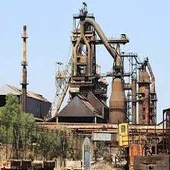
Stakeholders have criticised the Federal Government’s decision to allocate N6.69 billion to the non-functional Ajaokuta Steel Company in the 2026 budget, warning that continued funding without production risks deepening Nigeria’s industrial decline.
Tinubu’s Tax Reset and the Rising Cost of Living: Who Really Pays in 2026?

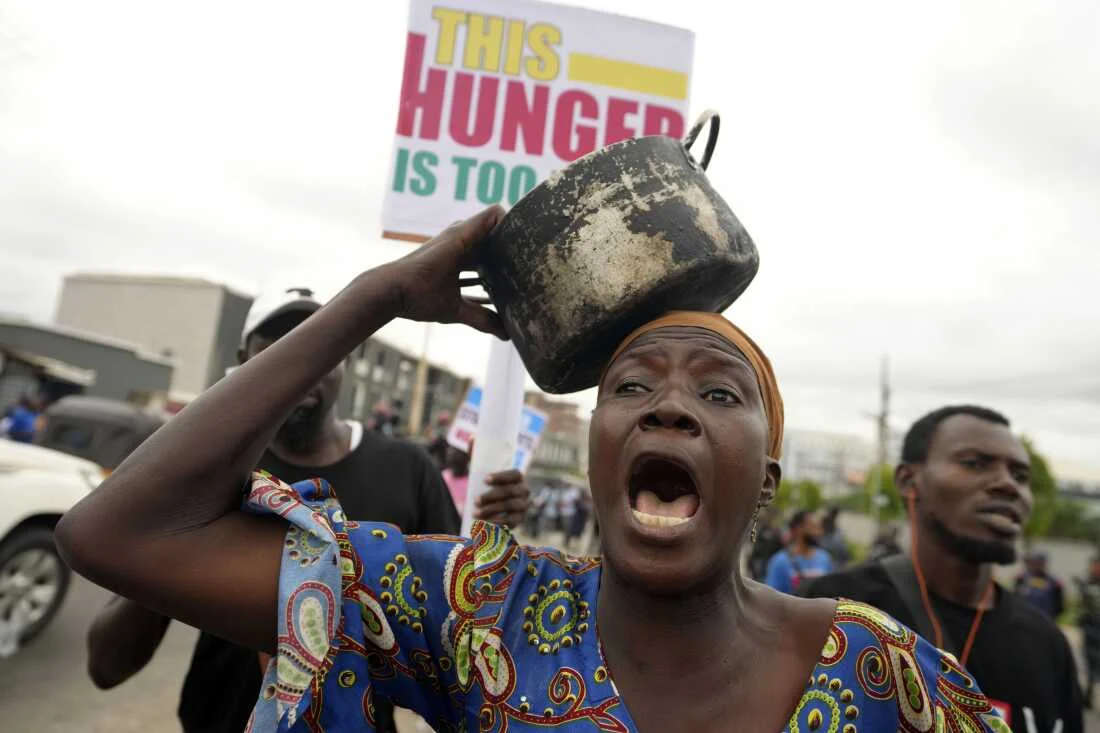
By the start of 2026, the Nigerian economy had crossed a critical psychological threshold. For millions of households, survival, not prosperity, had become the central economic concern. Food prices climbed relentlessly, transportation costs ballooned, electricity tariffs rose, and the naira’s weakness continued to hollow out purchasing power. Wages, meanwhile, remained stubbornly stagnant. In one word: Nigeria’s cost-of-living crisis swirl. This is the economic terrain into which President Bola Tinubu’s administration has launched Nigeria’s most aggressive fiscal overhaul in decades. Framed as reform, sold as necessity, and defended as inevitability, the new tax regime arrives not as a technocratic adjustment but as an additional burden on a population already stretched to its limits. The question confronting Nigerians in 2026 is no longer whether reform is needed, but who bears the cost, and who decides how much pain is acceptable. Reform in the Middle of Hardship The removal of fuel subsidies unleashed a cascade of price increases that reverberated through every sector of the economy. Transport fares surged, food inflation accelerated, and informal businesses, already operating on thin margins, struggled to survive. Electricity tariff hikes followed, further eroding household incomes and raising production costs. Currency policy adjustments compounded the crisis, making imports more expensive and local substitutes scarcer. Rather than pause to stabilize living conditions, the government pressed ahead with sweeping tax reforms. For many Nigerians, the timing alone felt punitive: a state demanding more at the precise moment its citizens had less to give. A New Tax Regime, Old Trust Deficit The overhaul rests on four major laws that replace Nigeria’s chaotic tax framework with a centralized, digitally monitored system. On paper, the logic is compelling: fewer taxes, better enforcement, broader compliance. In reality, centralization without trust risks becoming coercion by another name. Progressive tax bands and exemptions for low-income earners are cited as evidence of fairness. Yet the lived experience tells a different story. Middle-income Nigerians comprising, civil servants, professionals, and small traders, are watching their take-home pay shrink as inflation bites and long-standing reliefs disappear. What remains is a widening gap between what the state demands and what it delivers. “Widening the Net” or Tightening the Noose? Officials insist the reforms are about widening the tax net rather than increasing the burden. But a net cast over a struggling economy does not magically become lighter because it is broader. When energy costs soar, food prices spike, and wages lag inflation, taxation, no matter how elegantly designed, feels punitive. The promise that higher revenue will eventually translate into better schools, hospitals, and infrastructure rings hollow in a country where decades of oil wealth failed to produce durable public value. Nigerians have heard this argument before. Each time, they were asked to be patient. Each time, patience yielded diminishing returns. VAT and Regional Fault Lines: Old Battles, New Weapons No element of Tinubu’s tax reset better exposes Nigeria’s unresolved national question than the proposed restructuring of the Value Added Tax (VAT) sharing formula. Presented by the government as a neutral, efficiency-driven move toward derivation, the reform has instead resurrected the ghosts of Nigeria’s most bitter fiscal conflicts, conflicts never resolved, only postponed. By tilting VAT allocation more decisively toward where consumption and economic activity are recorded, the reform overwhelmingly favours Lagos and a handful of commercially dominant states in the South-West. Lagos’s outsized contribution to VAT revenue is frequently cited to justify this shift. The logic is straightforward: where revenue is generated, revenue should remain. But Nigeria’s history warns that straightforward logic often produces dangerous outcomes. In the First Republic, a strong derivation principle allowed regions to retain up to 50 percent of revenues from cocoa, groundnuts, and palm produce. That system collapsed not because derivation was inefficient, but because widening regional disparities turned it into a political weapon. The fiscal tensions it generated contributed to the instability that ended civilian rule. After the civil war, military governments centralized revenue sharing not out of ideological preference, but because national survival required redistribution. Oil revenues were pooled to hold a fractured country together, not to reward efficiency. The VAT debate now retraces that path, without the trauma that once forced compromise. Many Northern states, heavily dependent on VAT allocations to fund basic services, see the reform not as fiscal federalism but as fiscal punishment. Their argument is blunt: productivity cannot be rewarded fairly in a country where productivity itself has been shaped by decades of uneven federal investment, insecurity, and policy bias. When ports, rail lines, industrial clusters, and financial infrastructure are concentrated in one region, derivation ceases to be neutral, it becomes structural exclusion. The echoes of the Niger Delta struggle are unmistakable. For decades, oil-producing communities watched wealth flow to Abuja while bearing the environmental and social costs of extraction. Today, roles appear reversed: commercially dominant states demand to keep what they generate, while poorer regions warn that redistribution, the glue of the federation, is being quietly dismantled. The federal government’s response, that states should simply “grow their economies,” rings hollow in regions battling insurgency, banditry, collapsing education systems, and mass poverty. Growth is not summoned by rhetoric; it is enabled by security, infrastructure, and human capital, public goods that require funding in the first place. History is unambiguous: Nigeria’s most destabilizing crises often begin as revenue disputes disguised as technical reforms. When groups feel fiscally cornered, resistance follows, political, legal, and sometimes worse. Wether anyone agrees or not, a VAT regime that sharpens inequality without robust equalization mechanisms is not reform, it is deferred instability. The question therefore becomes, wether Nigeria is prepared for another combustive civil disorder? The Lagos Model Goes National The reforms unmistakably bear the imprint of the Lagos model that is notorious for its centralized authority, digital surveillance, and uncompromising enforcement. In Lagos, this model thrived on a dense commercial base and a large formal sector. Nationally, it risks flattening Nigeria’s economic diversity into a one-size-fits-all template. Equally corrosive is the perception, fair or not, that fiscal power is increasingly concentrated within a narrow
Nasarawa Assembly Passes N545.2bn 2026 Appropriation Bill

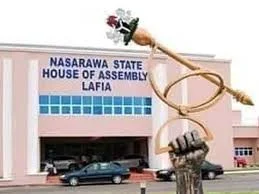
The Nasarawa State House of Assembly has passed the 2026 Appropriation Bill of N545.2 billion into law, following deliberations at plenary in Lafia on Tuesday. The approved budget represents an increase of N27.6 billion over the N517.5 billion proposal earlier presented to the House by Governor Abdullahi Sule. Announcing the passage, Speaker of the House, Danladi Jatau, described the development as a major legislative milestone, noting that the budget would enable the state government to implement people-oriented projects aimed at driving overall development across Nasarawa State. According to Jatau, the approved estimates allocate N316.26 billion for capital expenditure and N228.72 billion for recurrent expenditure. He explained that the increase in the budget size was necessitated by the prevailing inflationary pressure, which has significantly affected the cost of projects and service delivery. He disclosed that security-related votes received an additional N14 billion, while the Ministry of Local Government was allocated an extra N7 billion. The Ministry of Information, Culture and Tourism also got an additional N3.7 billion, alongside funding approval for the 55-kilometre Lafia–Kwandere–Garaku road project. The Speaker commended the House standing committees for what he described as their diligence and thoroughness during the budget defence and review process. He urged the executive arm to ensure full implementation of the budget once it receives the governor’s assent. “A Bill to authorise the issue of N545.18 billion from the Consolidated Revenue Fund of Nasarawa State for the 2026 financial year has scaled third reading and passed,” Jatau said. He subsequently directed the Clerk of the House to prepare a clean copy of the bill for transmission to the governor for assent. Earlier, the Majority Leader, Suleiman Azara, moved the motion for the passage of the bill, which was seconded by the Minority Leader, Luka Zhekaba. The bill was unanimously adopted by members of the House. Governor Sule had presented the initial N517.5 billion budget proposal to the Assembly on November 26, describing it as the “Budget of Strategic Consolidation.” During the presentation, he commended the legislature for its consistent support, particularly in ensuring the timely passage of appropriation bills.
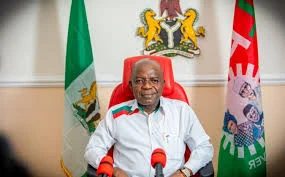
Abia Budgets N1.016 Trillion, Focus Education, Health, Roads in 2026

Umuahia, Abia State – Governor Alex Otti on Tuesday presented a N1.016 trillion Appropriation Bill for the 2026 fiscal year to the Abia State House of Assembly, describing it as the “Budget of Acceleration and New Possibilities.” The proposed budget represents a 13 per cent increase over the 2025 appropriation of N750.28 billion and is aimed at fast-tracking infrastructure expansion, enhancing social services, and deepening ongoing reforms across the state. Of the total outlay, N811.8 billion, or 80 per cent, is earmarked for capital projects, while recurrent expenditure accounts for N204.4 billion, representing 20 per cent of the budget. Compared with 2025, the capital vote increased by 32 per cent, and recurrent expenditure rose by 33 per cent to support daily operations and new personnel. Governor Otti highlighted allocations for key sectors, with education receiving N203.2 billion, including N150.4 billion for salaries of at least 15,000 teachers and new school infrastructure. Plans include constructing 17 model primary and secondary schools, three technical colleges, staff quarters, and over 100 ICT laboratories. Tertiary institutions will receive N52.8 billion for staff salaries and new facilities. The health sector is set to receive N149.7 billion, representing 15 per cent of the budget, for the acquisition of new equipment at Abia State University Teaching Hospital, Aba, 23 other facilities, and the renovation of seven general hospitals. Road construction and rehabilitation will take N169.3 billion, or 16.7 per cent of the budget, with priority given to the Umuahia-Ikot Ekpene, Ahiaeke-Okwuta-Bende, and Umuahia-Umueze-Agwu roads. The transport sector is allocated N11.1 billion, including N6 billion to fund 80 additional electric buses, complete transport terminals, and build bus shelters. Other allocations include over N229 billion for agriculture, entrepreneurship, youth development, sports, ICT, women’s empowerment, housing, environment, and urban renewal. Governor Otti projected the state’s internally generated revenue (IGR) to reach N223.4 billion in 2026, up from a target of about N100 billion in 2025. Recurrent expenses will be fully funded from IGR. Federal allocations are projected at N83.2 billion from FAAC, N67.1 billion from VAT, N26.5 billion from grants, and N168 billion from other federal sources, bringing total revenue to N607.2 billion. The governor indicated a budget deficit of N409 billion, or 40 per cent of the budget, which will be financed through concessionary loans strictly for capital projects. He stressed that loans would not be used to fund recurrent expenditure. Governor Otti urged the House to consider and pass the budget, emphasizing its importance in sustaining the state’s development trajectory. Responding, Speaker Emmanuel Emeruwa noted that the state had inherited a deep fiscal hole in 2023 but praised the administration for restoring stability. He said the 2026 budget reflects growing responsibilities and expanding development needs and commended the governor for prudent fiscal management. Emeruwa assured the governor that the House would thoroughly review the estimates and support initiatives that benefit the state.