National Assembly to Consider Bill Proposing Nigeria’s Return To Regional Government

In a landmark move, the National Assembly is speculated to be planning for a debate and, most likely, pass into into law before October 1, 2024, a bill proposing a return to regional government. Part of the draft bill circulating on social media, seen by SaharaReporters is titled: “A Bill for an Act to Substitute the Annexure to Decree 24 of 1999 with a New Governance Model for the Federal Republic of Nigeria.”  Although the identities of the sponsors of the bill were yet to be ascertained, the Bill, when passed, would be cited as the Constitution of the Federal Republic of Nigeria New Governance Model for Nigeria Act 2024. The sponsors of the Bill explained that the current Constitution of the Federal Republic of Nigeria 1999 (as Amended) is not “autochthonous” as it does not evolve from the deliberations and consensus of the Nigerian people. According to the advocates, the constitution amendment would be subject to a “yes or no” vote in a referendum by the people of the Federal Republic of Nigeria.  The sponsors of the Bill explained that the current Constitution of the Federal Republic of Nigeria 1999 (as Amended) is not “autochthonous” as it does not evolve from the deliberations and consensus of the Nigerian people. According to the advocates, the constitutional amendment would be subject to a “yes or no” vote in a referendum by the people of the Federal Republic of Nigeria. Part of the draft Bill seen by SaharaReporters on Friday partly read:  “PART I – Preliminaries: WHEREAS Nigeria, its Peoples and Government have been governed under Decree 24 of 1999 that was handed down by the then Military Government without the express consent of the people despite the preamble of “We the people.”  “WHEREAS the said Constitution of the Federal Republic of Nigeria 1999 (as Amended) is not autochthonous as it does not evolve from the deliberations and consensus of the Nigerian People. “WHEREAS the Peoples of Nigeria now desire and effectively demand for a change to a Constitution based on Federal/Regional System of Government.  “WHEREAS the Federal and Regional governments are to operate within the provisions of this Constitution, it is within the discretion of the ethnic blocs within the States that constitutes a given region to aggregate or disaggregate as Provinces, Divisions and Districts, while being in control of their affairs without let or hindrance at whatever level of governance. “Whereas the 1999 Constitution as amended is a schedule of a military decree now deemed to be an Act of the National Assembly for which the National Assembly have the powers to amend and/or abrogate as expedient. Whereas the National Assembly where so necessary and expedient can invoke the doctrine of necessity to resolve any point of law for the good governance of the country Nigeria.” On PART 11 – Substitution Clause, the drafters proposed that the National Assembly shall invoke its inherent powers to expunge the schedule attached to decree 24 of 1999 often referred to as 1999 Constitution as amended from the decree, which “is now deemed to be an Act of the National Assembly to which the National Assembly have the powers to so do and replace same with a new governance model for Nigeria effective not later than October 1, 2024.” “This amendment is subject to a yes or no vote in a Referendum by the people of the Federal Republic of Nigeria,” it proposed. On governance structure under PART III – Stipulations for Federal Administration, the sponsors proposed that: “(1) Nigeria shall be a Federation comprising of Regional Territories and a Federal Capital Territory and shall be a Republic to be known by the name of the Federal Republic of Nigeria.  “(2) The territorial jurisdiction of Nigeria shall comprise the territory of the Regional members of the Federation and its bound.

Nigeria Police unveil cybercrime reporting platform

Police confirm killing of 6 persons in Zamfara

The Nigeria Police Force has unveiled a platform for reporting cybercrime. NPF says the platform is in its bid to reinforce its commitment to tackling digital threats. The new portal, managed by the NPF National Cybercrime Centre is now accessible with a new site replacing the old site. The Force spokesperson, ACP Olumuyiwa Adejobi, disclosed this in a statement on Thursday. The statement read, “The Nigeria Police Force is pleased to inform the general public of the launch of a new, more robust, and secure domain for reporting cybercrime-related offences as part of the continued commitment to combating cybercrime and enhancing the safety and security of our digital space. “The new reporting platform, managed by the NPF National Cybercrime Centre (NPF-NCCC), can be accessed at: [https://nccc.npf.gov.ng/ereport/signin]. This upgraded domain replaces the previous site [https://incb.npf.gov.ng] which must be discarded.” The statement stated that the upgraded domain offers enhanced security to protect user information and is user-friendly for efficient reporting. Additionally, it featured improved tracking and response mechanisms for timely action on reported cases, and it urged the public to utilize this platform to aid in the fight against cybercrime in Nigeria. “The upgraded domain includes enhanced security measures to protect user information and ensure confidentiality and is user-friendly for easy and efficient reporting of cybercrime incidents. “It also includes improved tracking and response mechanisms to ensure timely and effective action on reported cases. “The Inspector General of Police urges all members of the public to utilize this new platform for reporting any cybercrime activities as vigilance and prompt reporting can significantly contribute to police efforts in tackling the menace of cybercrime in Nigeria, and even beyond,” it added. It would be recalled that implementing the Cybercrime Act 2015 has been met with different reactions from various quarters. The Act will provide a unified legal, regulatory, and institutional framework for the prohibition, prevention, detection, investigation, and prosecution of cybercrimes in Nigeria.

Old national anthem: ‘Vagabonds in power distracting us —Charly Boy

Nigerian entertainer, Charles Oputa, also referred to as Charly Boy or Area Fada, has joined the chorus of criticism against the reinstatement of the old, colonial national anthem by President Bola Tinubu and the National Assembly, echoing the sentiments of millions of Nigerians. President Tinubu formally initiated the recitation of the old national anthem, “Nigeria, We Hail Thee,” despite widespread disapproval from the public. This decision follows the recent enactment of a bill, signed into law by the President, replacing the current national anthem, “Arise O Compatriots,” with “Nigeria, We Hail Thee,” passed by the Senate on Tuesday and the House of Representatives last week. In his trademark candid manner, Charly Boy, also known as the ‘Senior Advocate of the Masses,’ took to X on Wednesday night to denounce the move, emphasizing that it does not align with the pressing priorities of the Tinubu administration. “Vagabonds in power wan distract us from hunger, kidnapping, high cost of living by organizing useless priorities for us to follow so we no go dey talk as e dey pain us?” “Animals in Agbada fit make me start to sing our olden days National Anthem, imposicant.

Tinubu To Present 2024 Supplementary Appropriation Bill To NASS

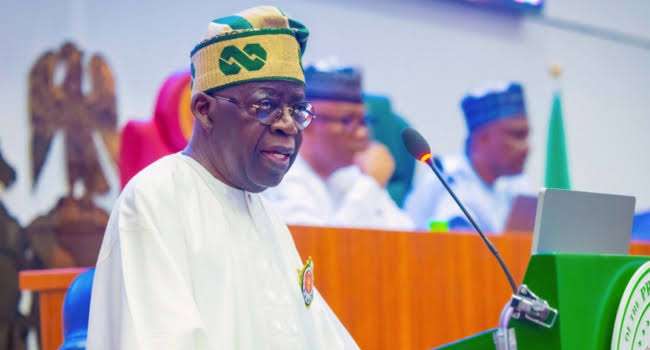
President Bola Tinubu will soon present the 2024 Supplementary Appropriation Bill to the National Assembly (NASS).  “I submitted the last budget to you,” the President said when he addressed a joint sitting of the National Assembly on Wednesday. “You expeditiously passed it. We are walking the talk. I will soon bring the Year 2024 (Supplementary) Appropriation Bill. That is just for your information,” the President said at the joint sitting to mark the Silver Jubilee Of Nigeria’s 4th Republic. In his response, Senate President Godswill Akpabio, said, “Thank you, Mr President, we will be expecting the Supplementary Appropriation Bill of 2024 as soon as possible.” Also, at the joint sitting which coincided with the first anniversary of the Tinubu administration, the President confirmed ‘Nigeria, we hail thee’ as the “latest national anthem”. Tinubu said, “You rang out the latest national anthem, ‘Nigeria, we hail thee’. This is our diversity, representing all characters and how we blend to be brothers and sisters.” The President pleaded with both the Senate and the House of Representatives to continue to collaborate and work together with the administration to build the country on the path of sustained progress and development. “We have no other choice; it is our nation. No other institution or personality will help us unless we do it ourselves. No amount of aid from foreign countries or any other nation (will fix us), they take care of themselves first. Let us work together as we are doing to build our nation, not only for us but for generations unborn. Tinubu had on January 1, 2024, assented to the N28.7 trillion 2024 Appropriation Bill passed by the Senate. The 2024 budget was N1.2 trillion higher than the budget originally proposed by the President to a joint NASS session on November 29, 2023.

National Anthem Reversal: President Tinubu Enacts Bill, Returns “Nigeria, We Hail Thee”

President Bola Tinubu has signed into law the National Anthem Bill 2024, effectively restoring “Nigeria, We Hail Thee” as the country’s official anthem. The decision, announced amidst a backdrop of anticipation and skepticism, marks a significant departure from the anthem “Arise, O Compatriots,” which has held sway since 1978. The National Anthem Bill 2024, a contentious piece of legislation that has garnered attention nationwide, underwent rigorous scrutiny in the National Assembly before receiving the presidential assent. Advocates for the change argue that the reinstated anthem carries deeper historical resonance and a stronger sense of unity, reflective of Nigeria’s diverse cultural heritage. President Tinubu, at the joint national Assembly address following the signing ceremony, emphasized the importance of honoring Nigeria’s past while embracing its future. “Our anthem is more than mere words; it is a symbol of our collective identity and aspirations,” he remarked. “Returning to ‘Nigeria, We Hail Thee’ is a reaffirmation of our commitment to unity in diversity.” However, the decision has not been met without criticism. Opponents of the anthem reversal express concerns about erasing decades of symbolism embedded in “Arise, O Compatriots,” which has served as a rallying cry for generations of Nigerians. Some view the move as a regressive step, undermining efforts towards national cohesion and progress. As the country prepares for the transition, plans are underway to disseminate the reinstated anthem across various platforms, including educational institutions, government functions, and public events. The impact of this reversion on Nigeria’s cultural landscape and national sentiment remains to be seen, as citizens grapple with the implications of this historic decision.

Senate Unanimously Votes for Recall of Senator Abdul Ningi

In a unanimous decision, the Nigerian Senate has voted to recall Senator Abdul Ahmed Ningi, representing Bauchi Central Senatorial District, back to the Senate following a period of suspension. The motion for his recall, titled “Unconditional Recall of Senator Abdul Ningi,” was introduced by Senator Abba Moro, the Minority Leader and senator representing Benue South Senatorial District. Senator Ningi was suspended on March 12, 2024, for a duration of three months due to his involvement in making unverified allegations concerning the 2024 budget. In an interview with the British Broadcasting Corporation (BBC) Hausa Service on March 9, Senator Ningi alleged that the budget had been padded to the tune of N3.7 trillion. The motion for his suspension was initially presented by Senator Solomon Olamilekan Adeola, Chairman of the Senate Committee on Appropriations, citing infractions of legislative rules, misconduct, and unethical behavior. Senator Moro’s motion, tabled on Tuesday, sought the reconsideration of the resolution from the Votes and Proceedings of March 13, 2024, to recall Senator Abdul Ningi and reinstate him for his legislative duties. Notably, the Senate Minority Leadership, under Senator Moro’s guidance, assumed full responsibility for Senator Ningi’s actions and extended apologies on his behalf. The prayer set forth by Senator Moro garnered unanimous approval from the Senate, leading to the immediate recall of Senator Abdul Ningi. This decision underscores the Senate’s dedication to upholding legislative standards and fostering accountability among its members.

Nigerian Senate Debates Reverting to Old National Anthem

Senate Probes 'One Chance' Victim's Tragic Death, Maitama Hospital Negligence

Senator Michael Opeyemi Bamidele, representing the APC Ekiti Central, introduced the National Anthem Bill 2024 (SB. 461), advocating for the restoration of Nigeria’s original anthem, “Nigeria, We Hail Thee,” which was first adopted at the nation’s independence in 1960. Senator Bamidele passionately extolled the historical and ideological significance of the erstwhile anthem, emphasizing its pivotal role in shaping Nigeria’s collective identity and fostering unity among its citizens. With a nostalgic tone, he invoked memories of a bygone era when the anthem served as a symbol of patriotism, instilling pride and solidarity in Nigerians. Amidst the turbulence of contemporary times, Senator Bamidele argued that it is imperative for the nation to utilize all available means to cultivate unity and patriotism. He asserted that reinstating the former anthem would signify a resurgence of national pride and inspire citizens to work towards a more cohesive and prosperous Nigeria. In a poignant gesture, Senator Bamidele recited the verses of the old national anthem, “Nigeria, We Hail Thee,” in their entirety, underscoring its themes of brotherhood, justice, and prosperity. He urged his esteemed colleagues to rally behind the bill, highlighting its alignment with the administration’s ongoing efforts to rejuvenate national values and consciousness. However, amidst the fervent support for the old anthem, dissenting voices arose, cautioning against the abandonment of the current anthem, “Arise, O Compatriots,” which was adopted in 1978. These senators acknowledged the historical significance of “Nigeria, We Hail Thee” but emphasized the importance of considering the contemporary symbolism embodied in the existing anthem. Following extensive debate, the Bill was referred to the Senate Committee on Judiciary and Federal Character for further review, with a mandate to report back within four weeks.

Senate Approves Death Penalty for Drug Traffickers

Senate Probes 'One Chance' Victim's Tragic Death, Maitama Hospital Negligence

The Nigerian Senate has made a bold move by approving a bill that mandates the death penalty for individuals found guilty of drug trafficking within the nation’s borders. The decision, which followed a presentation by Senator Tahir Monguno representing Borno North. The bill, which passed its third reading in the Senate chamber, seeks to modernize existing laws governing drug offenses and strengthen the operations of the National Drug Law Enforcement Agency (NDLEA). Key provisions include updates to the list of prohibited substances and the enhancement of drug testing laboratory facilities. The decision to introduce the death penalty came as an amendment to Section 11 of the current NDLEA Act, which previously stipulated a maximum sentence of life imprisonment for drug trafficking offenses. Senator Ali Ndume spearheaded the amendment, arguing for tougher penalties to deter drug-related activities effectively. During deliberations, Deputy Senate President Barau Jibrin oversaw a clause-by-clause examination of the bill. Despite objections from Senator Adams Oshiomhole regarding the gravity of the decision, the amendment to impose the death penalty was put to a voice vote and passed with a majority in favor. While Senator Oshiomhole expressed concerns about the weightiness of matters concerning life and death, the decision had already been made, as no immediate call for division was made following the ruling. The Senate’s endorsement of the bill underscores Nigeria’s commitment to combating drug trafficking and related offenses. Proponents argue that stricter penalties are necessary to stem the tide of illicit drug activities, while critics warn of the potential for miscarriages of justice and human rights violations. With the bill cleared by the Senate, it now awaits further deliberation and potential amendments in the House of Representatives before it can be enacted into law, pending the President’s approval.

Cybersecurity Levy Not Punitive – Sen Buba,

The Chairman of the Senate Committee on National Security and Intelligence, Senator Shehu Umar Buba, has addressed the controversy surrounding the proposed implementation of the Cybersecurity levy by the Central Bank of Nigeria (CBN). The levy is provided for in the Cybercrimes (Prohibition, Prevention, etc) (Amendment) Act, 2024. He clarified that the levy is not punitive as it has numerous exemptions to protect and relieve ordinary citizens, particularly the poor. According to him, the exemptions include salary payments, intra-account transfers, loan disbursements and repayments, and other financial transactions. Senator Buba said the amendments to the Cybercrimes Act were a collaborative effort with the National Assembly’s ICT and Cyber Security Committee. The committee also underwent a transparent public hearing process, receiving contributions from various stakeholders. Both Houses of the National Assembly unanimously passed it before President Bola Ahmed Tinubu signed it into law. Senator Umar emphasised that the provisions for the cybersecurity levy have been in place since 2015 but were delayed due to unclear interpretations and applications. “The Cybercrimes Act of 2015 has provisions for imposing a cybersecurity levy since its enactment, but the vagueness of Section 44 led to different interpretations until the 2024 amendments. The levy is 0.5%, equivalent to half a per cent of the value of all electronic transactions by businesses specified in the Second Schedule to the Act. “The amendments addressed crucial gaps in the Act and empowered the nation to implement the National Cybersecurity Programme effectively. They also seek to realign and empower the country to combat the inadequate funding and disruptive effects of cyber threats on national security and critical economic infrastructures,” he said. Senator Umar underscored the criticality of the cybersecurity levy’s implementation, stating that its prudent utilisation will bolster the nation’s capacity to evaluate, execute, upgrade, and fortify the security of national critical economic infrastructure, thereby safeguarding the nation’s cyberspace. The Committee commended the Office of the National Security Adviser and the Central Bank of Nigeria (CBN) for initiating the operationalising the cybersecurity levy, highlighting its benefits far outweigh its drawbacks. He expressed appreciation to the leaders and representatives of MDAs at the federal and state levels, as well as to all stakeholders who contributed to this effort’s success. While maintaining that the Committee’s mandate is to create laws that align with the aspirations of Nigerians, he appealed for public support, assuring that the policy will yield maximum benefits for citizens in the shortest possible time. Following the enactment of the Cybercrime (Prohibition, Prevention, etc) (Amendment) Act 2024 and under the provision of Section 44 (2)(a) of the Act, a levy of 0.5 per cent (0.005) equivalent to half per cent of all electronic transactions value by the business specified in the Second Schedule of the Act is to be remitted to the National Cybersecurity Fund, which the Office of the National Security Adviser shall administer. Though the announcement created controversy, the circular exempted some transactions from cybercrime levy. The exemptions included loan disbursements and repayments, salary payments, intra-account transfers within the same bank or between different banks for the same customer, intra-bank transfers between customers of the same bank, and Other Financial Institutions (OFIs) instructions to their correspondent banks. The exemption also applies to interbank placements, banks’ transfers to CBN and vice versa, inter-branch transfers within a bank, cheque clearing and settlements, and Letters of Credit (LCs). Others include banks’ recapitalisation-related funding only bulk funds movement from collection accounts; savings and deposits including transactions involving long-term investments such as treasury bills, bonds; and commercial papers; government social welfare programmes transactions, e.g. pension payments; non-profit and charitable transactions including donations to registered non-profit organisations or charities; educational institutions transactions, including tuition payments and other transaction involving schools, universities, or other academic institutions.  

Review of Judges salary: Bill passes second reading

    A bill seeking to increase the salaries and allowances of judges at all levels has passed second reading in the senate. The bill was considered after Lola Ashiru, deputy majority leader, led the debate during plenary on Thursday. Ashiru said the bill, which was sent by the executive, will enhance the integrity of the judicial arm of government. Contributing to the debate, Tahir Monguno, senator representing Borno north, said improving the welfare of judges will insulate them from corruption. “There is a need to bring up the remuneration of judicial officers that have stagnated over the years,” Monguno said. “This will insulate judicial officers from corruption and give them courage to deliver judgments that are just and fair.” On his part, Orji Uzor Kalu, senator representing Abia north, said increasing the salaries of the judges is the right thing to do. “No right thinking Nigerian will not think that it is right to keep the judiciary comfortable. I want to thank the executive for deeming it fit to increase salaries of judges at all levels,” Kalu said. “We should not stop at the judiciary but look at other sectors of the economy.” Emmanuel Udende, senator representing Benue north-east, said judges have had their morale dampened over the years because of poor remuneration. “For the past 15 years, judicial officers have remained on meagre salaries,” he said. “When you interact with them as a lawyer, you see their morale is dampened, and when the morale is dampened the work will be.” The bill passed second reading after it was put to a voice vote by Senate President Godswill Akpabio.