Senate suspends legislative activities over Rep member Adams’ death

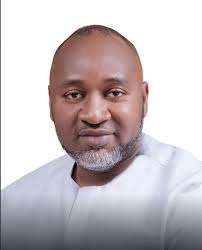
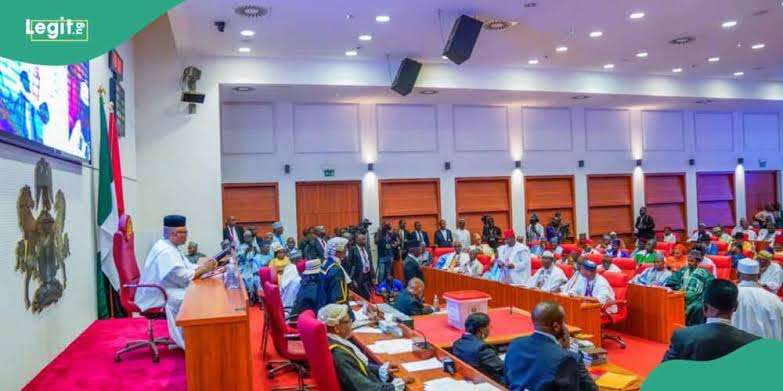
The Senate on Tuesday, July 16, suspended all legislative activities for the day to honour the late Hon. Ekene Abubakar Adams, a member of the House of Representatives. Hon Adams who represented Chikun/Kajuru Federal Constituency in Kaduna state, reportedly died on Tuesday morning after a brief illness. He was the chairman of the House Committee on Sports. Senate President, Godswill Akpabio, announced the death of Adams during the commencement of plenary. The Senate observed a minute silence in honour of the late lawmaker and thereafter adjourned legislative activities for the day.
Tinubu Signs Students Loan Bill Into Law

President Bola Tinubu, on Wednesday, signed the Student Loans (Access to Higher Education) Act (Repeal and Re-Enactment) Bill, 2024, into law. This development follows individual reviews by both the Senate and the House of Representatives of the report from the Committee on Tertiary Institutions and TETFund. The Bill sponsored by Senator representing Ekiti Central Senatorial District of Ekiti State, Bamidele Opeyemi aims to improve the execution of the Higher Education Student Loan Scheme in Nigeria by tackling issues related to the management structure of the Nigerian Education Loan Fund, applicant eligibility criteria, loan purposes, funding sources, and procedures for disbursement and repayment. Under this Bill, the Nigerian Education Loan Fund (NELFUND) would be established as a legal entity with the authority to litigate and be litigated in its own name, and it would possess the power to acquire, hold, and dispose of both movable and immovable property to fulfill its functions. In essence, the Bill enables the Fund to offer loans to eligible Nigerians for their tuition, fees, charges, and living expenses while studying in approved tertiary institutions and vocational training centers in Nigeria. In contrast to the previous 2023 Act, which placed the Fund’s administration under a Special Committee chaired by the Governor of the Central Bank of Nigeria, this Bill proposes changes in the management structure. Furthermore, the Bill eliminates the income-based eligibility criterion set by the existing law, which required an annual income of less than N500,000 for applicants or their families. The Bill also broadens the scope of eligibility, allowing students from federally or state-established tertiary institutions and government-approved vocational institutions to apply, with specific criteria to be determined by the Fund. Additionally, unlike the 2023 Act, which limited loan applications solely to tuition fees, the new Bill permits applicants to request loans to cover various institutional charges and maintenance allowances.
Bill Mandating government officials’ children to attend public schools Set to be transmitted to National Assembly

A private bill seeking to prohibit government officials from sending their children to private schools and also using private hospitals, both within and outside Nigeria, is set for transmission to the National Assembly for legislative action. The bill Proposes that public officials “shall patronise public education system for the education of his/her child or ward at nursery, primary, secondary and first-degree university levels.” The bill, sponsored by the presidential candidate of the African Democratic Congress in the 2023 election, Dumebi Kachikwu, also proposes that “No public officer shall patronise any private hospital within or outside the country for the treatment of any sickness or disease for himself, spouse, child or ward, no matter how grievous or life-threatening or debilitating the disease or sickness confronting the public officer, spouse, child or ward may be or appears to be, provided that where it is established that the public health institution in Nigeria may not be able to treat such sickness or disease, owing to lack of necessary materials or personnel.” It further proposed that where public health facilities cannot take care of the ailment of a public official or their family members “such a public officer may, on his own expense, upon the express permission granted therefore by the Senate, seek treatment in private hospitals within or outside Nigeria.” Furthermore, it proposed that “No public officer shall enroll or register his child or ward in any private school within or outside the country for the purpose of acquiring education at nursery, primary, secondary and first-degree university level.” A copy of the bill titled, “A Bill for an Act to place restriction on certain activities of public officers and directors of specialised businesses and for other matters connected therewith,” was made available to newsmen on Sunday. Speaking on the bill, the sponsor of the bill, Kachikwu, said, “The bill also proposes that civil and public servants are not allowed to have police escorts or protection except when a competent court has ruled that a threat to life exists and the police protection is for a maximum period of three months renewable for a period of one month by the order of a court. “Only the President, Vice President, Senate President, Speaker, governors, their deputies, Speakers, Speakers and Deputy Speakers and state Houses of Assembly and the Chief Judges of the different courts shall be entitled to police protection. “This also applies to directors of companies that require a government license, permit or lease to operate such as banks, telecom companies, oil and solid mineral mining companies, broadcast houses.” Section (1) (i) of the proposed law reads, “The objective of the bill is to promote patriotism among public officers by encouraging public officers to patronise public education system and public health institutions for the education of their children and healthcare services. “To promote confidence in the public education system and the public health system as public officers driving the sectors would devote time, energy, intellect and resources in providing efficient and effective education and healthcare service delivery for the citizens. “To ensure that directors of specialised businesses patronise public education system and public health institutions for the education of their children and healthcare services with a view to preserving foreign exchange earnings of the country and build confidence in the nation’s education and healthcare delivery system.” Under general restrictions, the bill provides that “No public officer shall travel by air for any official assignment within the country except it is proven that restriction of such a travel by air shall impact the national security and well-being of Nigeria,” and any public officer who violates this provision or “who has a generator or borehole in his house or
New Salaries for Judicial Officers

In the latest review of judicial officers’ salaries made by President Bola Tinubu, the Chief Justice of Nigeria, CJN, Olukayode Ariwoola, will now earn N1monthly basic salary and N4.3 million regular allowances. This was contained in an executive bill sent to the National Assembly by the President on Tuesday seeking an upward review of the salaries of judicial officers. After the House of Representatives approved Tinubu’s request to increase the salaries and allowances of judicial officers, the CJN will earn N13.5 million in annual basic salary and N51.2 million in regular allowances, making it a total of N64.7 million. Further analysis of the new salary structure showed that the President of the Court of Appeal will earn N62.4 million annually. In contrast, the justices of the Supreme Court will earn N61.4 million annually. It would be recalled that in October last year, retired Supreme Court Justice Musa Dattijo Muhammad said the CJN N400,000 monthly salary is lower than the N1.2 million earned by the Supreme Court Registrar.
The Fleecing of Nigeria by a profligate Corrupt Legislature… our senate has become the den of thieves

While we might have all been distracted by the drama and hoopla generated by Senator from the north, we all might have missed the bombshell revelations the scandals revealed yesterday. Earlier, a ranking senator from the south made an allegation that some senior senators each received 500 million Naira padding in the 2024 budget. Padding is the code name for the legislative fleecing of our commonwealth with illegal budget allocation in the name of constituent projects. It is a blackmail tactic that Sister Ngozi Eweala made a lot of noise about as the Minister of Finance and the de facto prime minister in which she alleged that senators and House of Rep members routinely blackmail the executive to include these graft as the conditions to pass the annual budget and to fund the budgetary proposals of the executive arm. Well, we just watched the confession video in the speech of Senator Bamidele on the floor of the senate. We might be tempted to gloss over the big news he made during that speech. He confirmed the allegation that some senators actually received 500 million Naira, an allegation by a ranking senator, which the other senators tried to shout down earlier today. Our senate is the den of thieves, who are totally disconnected from the daily struggle and anguish of the citizens. Not only did these leeches allocate hundreds of millions of Naira to order plush SUV for meeting the majesty of their highly exulted offices while their citizen starve to death, but the rut goes even deeper. This Senator Opeyemi Bamidele just confirmed on the floor of the senate the allegations that they each received 500 million Naira. He asked their constituencies to hold them accountable if they didn’t implement more than 500 million Naira investments in Constituent projects like boreholes and solar panels. For goodness sake, in 2024, our senators are celebrating borehole and solar panels, both signs of retrogression and underdevelopment. These people have no respect for us, and it’s our fault because we have abandoned politics to the worst of us and to the degenerates. When did they change the constitution to grant the legislature the executive power to fund and implement projects using their personal bank accounts with no accountability? We need to disband the house of thieves called the Nigerian legislature, where many are double dipping, drawing their pensions as former governors while fleecing our commonwealth through obscene renumeration plus the weekly deposits of illicit fund in their bank accounts. We all heard it on life TV when Senator Akpabio announced hefty Christmas payments into his colleagues’ accounts. It used to be Ghana-must-go bags and mobile phone airtime and wifi credits. Today, it is direct deposits or using the budget of MDAs to launder the fund, which is then clandestinely diverted to their personal account. We learned recently that ministers in the executive branch routinely use their personal bank account to transact official government expenditure. Sister Ngozi Eweala made a lot of noise about the corruption ridden constituency projects, which our legislators routinely used to blackmail the executive branch to pad our annual budget or risk the budget not being passed. No wonder the Senate has become the retirement gig for corrupt ex-governors. They are also bankrupting the country with one of the highest legislative remuneration in the world in a country with one of highest concentration of the poorest of the poor living on less than $2 a day. What an outrage. We need to thrash the plagiarized American presidential constitution and replace it with a homegrown, institutionally, culturally, and financially compatible one. We can’t no longer afford to support these super leeches who are bleeding us to death. They very quickly shot down today with alacrity, a member of cult of thieves who went rogue by spilling the beans about the sleece in the Nigerian Senate. We must break open the code of silence.
Senate Forms Ad-Hoc Committee to Probe Financial Controversies

Amidst mounting controversies surrounding the financial operations of the Buhari administration, senate president, Sen. Godswill Akpabio has inaugurated the Senate Ad-Hoc Committee on Ways and Means on Monday. The committee’s primary mandate, driven by concerns over fund management, includes a thorough investigation into the utilization of resources, notably focusing on the Anchor Borrowers’ Programme and other financial avenues. In his address to stakeholders, the Senate President emphasized the critical need for transparency, accountability, and good governance, especially in light of recent financial controversies. He highlighted the significance of the committee’s mandate and urged members to execute their duties diligently and professionally, prioritizing the interests of the Nigerian people. The establishment of the committee followed consultations with the Federal Government’s Economic Management Team and a subsequent report by the Joint Committees on Banking, Insurance and other Financial Institutions; Finance; National Planning; Agriculture; and Appropriations. The report identified concerns and irregularities in fund utilization, prompting decisive action from the Senate. Furthermore, the Senate President reiterated the importance of the committee’s task amidst ongoing financial debates in Nigeria. He expressed confidence in the committee’s ability to conduct thorough investigations and called for a commitment to justice, fairness, and the public good. Senator Isah Jibrin (Echocho), appointed as the committee’s chairman, emphasized the significance of the Ways and Means controversy and assured Nigerians of a thorough and impartial investigation. He urged stakeholders to cooperate and provide necessary documents for scrutiny. The committee, composed of distinguished senators, is poised to embark on its mission to investigate and address concerns regarding fund management in Nigeria, guided by principles of transparency, integrity, and accountability. Members of the committee include: 1. Senator Isah Jibrin (Chairman) 2. Senator Sahabi Ya’u (Vice Chairman) 3. Senator Adamu Aleiro 4. Senator Adetokunbo Abiru 5. Senator Asuquo Ekpeyong 6. Senator Mohammed Tahir Monguno 7. Senator Victor Umeh 8. Senator Solomon Olamilakan 9. Senator Sani Musa 10. Senator Abdul Ningi 11. Senator Aliyu Wadada 12. Senator Ipalibo Banigho 13. Senator Jimoh Ibrahim 14. Senator Ibrahim Mohammed 15. Senator Joel Thomas Onowakpa 16. Senator Dafinone Ede 17. Senator Aminu Iya Abbas 18.
Parliamentary Staff Association Advocates passage of Harmonised Retirement Age Bill

In response to the ongoing legislative discourse surrounding the retirement age for staff of the National Assembly Service, the Parliamentary Staff Association of Nigeria (PASAN), National Assembly Chapter, has issued a statement urging the Senate to consider and pass the Harmonised Retirement Age for Staff of National Assembly Service in Nigeria Bill, 2024. The association highlights the history of the issue, citing the extension of the retirement age to 65 years or 40 years of service by the 8th National Assembly, which was subsequently reversed due to inconsistencies with existing legislation. Following consultations and the introduction of various bills, the current iteration, introduced by the 10th House of Representatives, has gained significant support within the legislative body. Emphasizing the importance of this legislation, the association underscores the need to address the shortage of qualified staff within the Legislative Arm of Government, which has been exacerbated by instability in career progression and adherence to Public Service Rules. They argue that increasing the retirement age will help fill this vacuum and maximize the knowledge and experience of existing staff, while also building the capacity of younger staff members. Furthermore, the association draws parallels with similar legislation in other sectors, such as the Harmonised Retirement Age for Teachers in Nigeria Act, 2022, and the Retirement Age of Staff of Polytechnics and Colleges of Education (Harmonisation) Act, 2012, to highlight the necessity of aligning retirement policies with international best practices. Also, the Parliamentary Staff Association of Nigeria urges the Senate to pass the Harmonised Retirement Age for Staff of National Assembly Service in Nigeria Bill into law, emphasizing its significance in stabilizing and developing capacity within the National Assembly Service, sustaining democracy, and upholding the doctrine of separation of powers.
Nigerian Senate Establishes 43-Member Committee for Constitution Review

The Nigerian Senate has taken a decisive step towards addressing the longstanding need for constitutional reform by inaugurating a 43-member committee tasked with reviewing the 1999 Constitution of the Federal Republic of Nigeria. Chaired by Deputy Senate President Jibril Barau, with Senate Leader Bamidele Opeyemi serving as Vice Chairman, the committee comprises 43 Senators representing each state of the federation, including the Federal Capital Territory (FCT), as well as an additional six members representing the country’s geopolitical zones and all female senators of the 10th Senate. In his announcement, Senate President Godswill Akpabio emphasized the urgency of revisiting the 1999 constitution, highlighting the necessity for a major review to better serve the interests of Nigerians. Akpabio further directed the Deputy Senate President to engage Speakers of State Houses of Assembly in preparatory discussions prior to commencing the review process. During the inaugural address, Committee Chairman Jibril Barau outlined the committee’s strategic approach, emphasizing collaboration with the House of Representatives and state Houses of Assembly to achieve comprehensive results. Barau underscored the importance of consulting with stakeholders from diverse sectors to ensure the success of the review process, clarifying that the committee’s objective is to amend select sections of the constitution for the benefit of the Nigerian populace. Echoing Barau’s sentiments, Senate Leader Bamidele Opeyemi affirmed the committee’s commitment to delivering tangible outcomes, acknowledging the critical juncture in the nation’s history and assuring Nigerians that the committee’s work would not adhere to conventional practices. Opeyemi emphasized the inclusion of stakeholders from academia, political groups, and other interest groups in the committee’s deliberations. Additionally, lawmakers emphasized the importance of adhering to timelines and collaborating with the executive branch to ensure a holistic approach to constitutional reform. Representatives assigned to the committee from each geopolitical zone include Senator Adamu Aliero (NW), Senator Orji Kalu (SE), Senator Fadahunsi Francis (SW), Senator Bomai Muhammed (NE), Senator Barinad Mpigi (SS), and Senator Umar Sadiq Suleiman. The Senate review committee aims to identify pertinent sections of the constitution requiring amendment to address contemporary national challenges, with inputs solicited from various stakeholders to inform the revision process.
Senate President Administers Oath to Three New Senators

Three new senators, elected during the recent national by-election, were on Tuesday, sworn in by the Senate President Godswill Akpabio as members of the 10th Senate. The ceremony, conducted within the confines of the Senate chamber, saw Mustapha Musa of the All Progressives Congress (APC) representing Yobe East, Professor Anthony Ani of the APC representing Ebonyi South, and Prince Pam Mwadkon of the Action Democratic Party (ADP) representing Plateau North taking their oaths of office and allegiance. With the guidance of Senate Clerk Mr. Chinedu Akubueze, the new senators solemnly pledged their commitment to their legislative duties before being escorted to their designated seats by the Sergeant-At-Arms. The inclusion of these three senators brings about a shift in the Senate’s political landscape, as the distribution of lawmakers across different parties now stands at: APC – 59, PDP – 37, LP – 7, NNPP – 2, SDP – 2, APGA – 1, and ADP – 1. This alteration promises increased diversity and representation within the Upper Chamber, shaping the legislative agenda with varied viewpoints and interests.
INEC Releases Final List of Candidates for February Bye-Elections

The Independent National Electoral Commission (INEC) has officially unveiled the roster of candidates for the upcoming by-elections scheduled for February 3, 2024. The bye-elections are necessitated by the unfortunate death or resignation of members from both the National and State Houses of Assembly. According to a statement issued on Wednesday by INEC National Commissioner Sam Olumekun, the electoral process will span nine states, encompassing two Senatorial Districts, four Federal Constituencies, and three State Constituencies. Notable areas include Ebonyi South, Yobe East, Kebbi State, Lagos State, Ondo State, and Taraba State, among others. The timetable, schedule of activities, as well as the personal particulars and final list of candidates, have been made accessible in INEC state offices and the relevant constituencies. INEC has also adhered to the provisions of Section 29(3) of the Electoral Act, 2022, by publishing this information on their official website and social media platforms. Commissioner Olumekun urged Nigerians to meticulously examine the personal details, including Form EC9 and academic credentials, of the candidates. He emphasized that individuals with reasonable grounds to believe that a candidate provided false information during party primaries can challenge the nomination in a Federal High Court, as stipulated in Section 29(5) of the Electoral Act 2022. Importantly, the commissioner clarified that this publication is exclusively for the upcoming bye-elections, which involve fresh elections with candidates nominated through party primaries. For re-run elections occurring on the same day, the list and personal particulars of candidates were published before the 2023 General Election, as they are not open to new or disqualified candidates.